WHY MAKE IT
A little comfort, a lot of flavor.
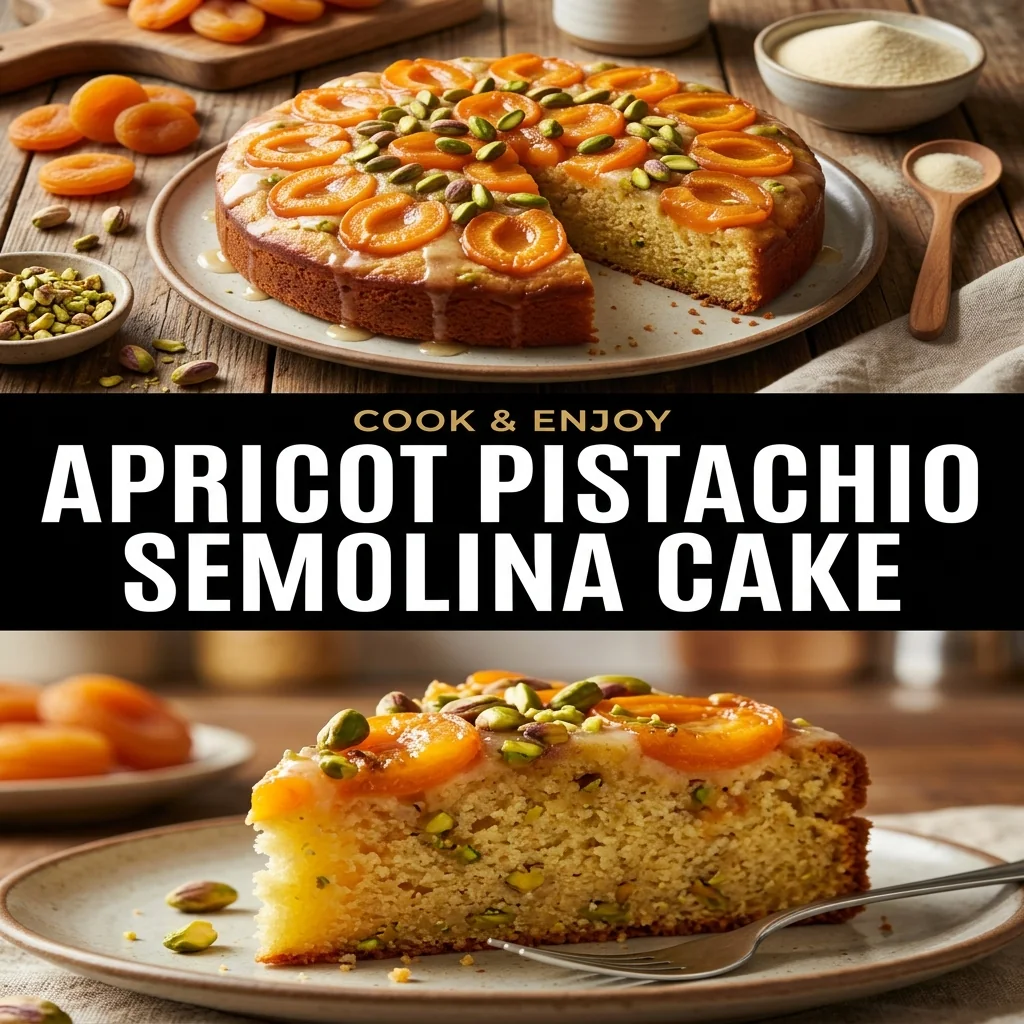
Apricot pistachio semolina cake showcases the beloved texture of syrup-soaked Mediterranean baking. Unlike standard flour-based cakes, semolina grains absorb moisture gradually, yielding a dense yet pleasantly crumbly structure that holds its form when saturated with fragrant lemon simple syrup. Tart dried apricots provide chewy pockets of concentrated orchard sweetness, cutting cleanly through rich whole-milk yogurt and butter. Bright green pistachios add an earthy crunch and visual elegance across the bronzed crust. Ground cardamom introduces warm floral undertones that tie the citrus syrup and fruit together seamlessly. This dessert matures in flavor over several hours, making it an exceptional centerpiece for afternoon tea, family gatherings, or evening dessert platters.
Selecting Semolina Flour
The crumb integrity of this cake depends entirely on semolina grain size. Coarse semolina, milled from hard durum wheat, provides the porous structure necessary to drink up three-quarters of a cup of spiced syrup without dissolving into mush. Fine semolina or durum flour absorbs liquid too rapidly during mixing, creating an excessively heavy, rubbery crumb that rejects subsequent soaking. Seek out golden, sand-textured coarse semolina at international grocers or specialty baking suppliers for authentic crumbly texture.
Syrup Absorption Dynamics
Soaking a semolina cake demands precise fluid management. Pricking the baked surface systematically with a thin wooden skewer establishes vertical channels through which the citrus syrup travels straight down to the base. Ladle the warm syrup gradually in three stages, waiting thirty seconds between additions so the crumb drinks evenly across the center and edges. Rushing the pour creates pooled liquid along pan margins, resulting in dry interior squares and waterlogged perimeter slices.
Balancing Fruit and Nut Inclusions
Chopping dried Turkish apricots into tidy quarter-inch cubes prevents them from sinking to the bottom of the batter during baking. Their firm, moist texture softens further as they absorb hot syrup during the cooling cycle. Dividing the pistachios ensures a dual sensory role: the interior portion softens slightly within the warm crumb, while the raw nuts sprinkled over the wet syrup glaze remain crisp, delivering essential textural variation in every finished bite.
Before you start
Coordinate the temperature of the cake and syrup carefully. The cake should be scorching hot directly from the oven while the lemon syrup should be warm, not boiling. Pouring warm syrup over a hot semolina crumb allows rapid absorption without turning the grains gummy. Coarse semolina provides the signature crumbly, tender bite; do not substitute fine semolina flour or semolina pasta flour, as they compact into a dense, stodgy texture.
THE RECIPE
Apricot Pistachio Semolina Cake
10 servings · 25 minutes preparation · 40 minutes cooking · 60 minutes cooling, chilling or resting
Ingredients
Step-by-step instructions
- Preheat your oven to 350 F (175 C) and grease a 9-inch square light metal baking pan with butter, lining the bottom with parchment paper leaving slight overhang on two sides.
- In a medium bowl, whisk coarse semolina, all-purpose flour, baking powder, baking soda, ground cardamom, and fine salt until uniformly blended.
- In a separate large bowl, whisk 3/4 cup granulated sugar, melted butter, whole-milk yogurt, eggs, and alcohol-free vanilla extract for 2 minutes until pale and cohesive.
- Pour the dry flour mixture into the wet ingredients, folding with a rubber spatula just until combined, then gently fold in the diced dried apricots and half of the chopped pistachios.
- Spread the batter evenly into the prepared pan, smoothing the surface with an offset spatula, and bake at 350 F (175 C) for 32 to 35 minutes until deep golden brown and a cake tester inserted in the center comes out clean.
- While the cake bakes, combine 3/4 cup water, 3/4 cup granulated sugar, lemon juice, and lemon peel strips in a small saucepan; bring to a boil over medium heat, simmer for 5 minutes, then remove from heat.
- Remove the baked cake from the oven, immediately prick the hot surface all over with a wooden skewer, discard the lemon peels, and ladle the warm citrus syrup slowly over the entire cake.
- Scatter the remaining chopped pistachios evenly over the glistening surface, then allow the cake to rest at room temperature for at least 60 minutes so the syrup absorbs completely before slicing into squares.
Kitchen notes
Coordinate the temperature of the cake and syrup carefully. The cake should be scorching hot directly from the oven while the lemon syrup should be warm, not boiling. Pouring warm syrup over a hot semolina crumb allows rapid absorption without turning the grains gummy. Coarse semolina provides the signature crumbly, tender bite; do not substitute fine semolina flour or semolina pasta flour, as they compact into a dense, stodgy texture.
Storage & make-ahead
Store cooled cake squares in an airtight container at room temperature for up to 2 days, or refrigerate for up to 4 days. Chill promptly within 2 hours of serving. If serving chilled slices, let them sit at room temperature for 20 minutes to soften butter fats, or warm in a low oven until reheated to 165 F (74 C).
An original recipe guide inspired by themes in our Pinterest research. Recipe has not been independently kitchen-tested. AI-generated image is illustrative; your finished dish may look different.
Frequently asked questions
Can I replace the apricots with dried dates or figs?
Yes, dried figs or pitted dates cut to the same quarter-inch size work well. However, reduce the soaking syrup sugar by two tablespoons, as dates and figs contain significantly higher natural sugar levels than tart dried apricots.
Why did my semolina cake turn soggy after adding the syrup?
Sogginess occurs if cold syrup is dumped over a lukewarm cake, or if fine semolina flour was used instead of coarse. Always combine hot cake with warm syrup, allowing it to rest undisturbed for the full hour to absorb.
Is whole-milk yogurt necessary or can I use Greek yogurt?
Regular whole-milk yogurt provides optimal hydration and acidity. If using thick Greek yogurt, whisk 3 tablespoons of whole milk into the yogurt before measuring to ensure the batter remains loose enough to hydrate the semolina grains properly.