WHY MAKE IT
A little comfort, a lot of flavor.
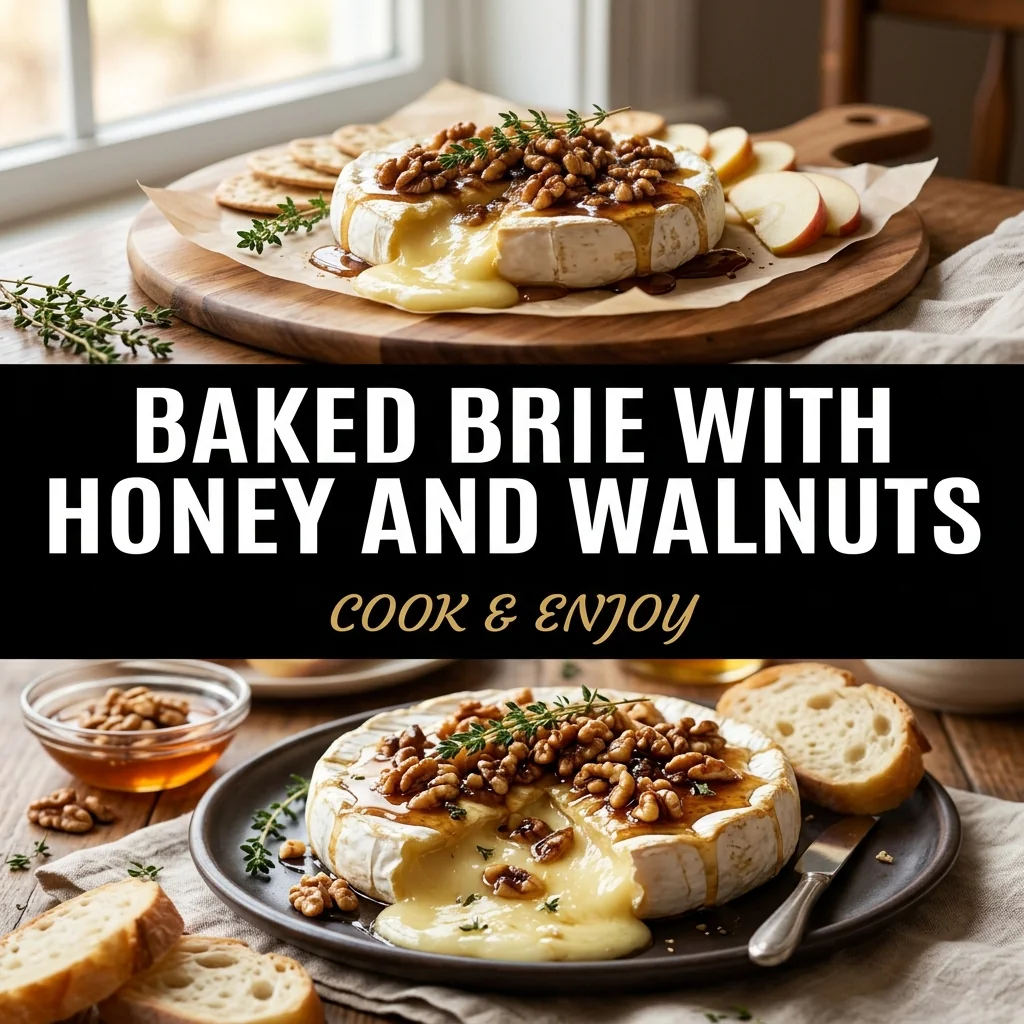
Baked Brie with honey and walnuts is an effortless yet sophisticated appetizer that bridges the worlds of savory creaminess and sticky sweet crunch. When heated gently in an oven, the interior paste of soft-ripened Brie transforms into a luxurious, spreadable fondue held together by its edible bloomy rind. Pouring a warm stovetop glaze of butter, floral clover honey, and toasted walnuts over the warm surface creates stunning visual contrast and rich textural complexity. Fresh woody herbs like rosemary and thyme cut through the decadence of the butterfat, while a subtle whisper of cinnamon and flaky sea salt highlights the deep earthiness of the melted cheese.
Selecting and Preparing Brie
Choose a traditional double-cream Brie wheel sold in a circular wooden box or parchment wrap. The cheese should feel firm yet springy to the touch before baking. Avoid ultra-ripe wheels with brown discoloration or ammoniated aromas, as intense aging weakens the rind walls and results in premature ruptures during baking. Keep the wheel cold until you are ready to place it in the baking dish; starting from refrigerator temperature allows the cheese to heat through evenly to its core without collapsing its delicate structural rind prematurely.
Toasting Nuts and Balancing Glaze
Walnuts possess natural oils and delicate skins that can turn bitter if scorched. Toasting them gently in melted unsalted butter softens their raw astringency, unlocking deep buttery notes that complement the cow's milk cheese. When the honey is introduced to the skillet, it should bubble briefly to integrate with the herb oils without scorching. Clover or wildflower honey works best, providing clean floral sweetness that complements pungent rosemary and earthy thyme without dominating the delicate dairy base.
Serving Temperature and Timing
Timing plays a decisive role in the presentation of baked soft cheeses. Straight out of the oven, the interior of the cheese wheel is intensely hot and liquid. Allowing the dish to rest for five minutes stabilizes the molten core, ensuring that when the rind is punctured, the cheese oozes outward slowly rather than rushing across the plate. Serve the skillet warm alongside neutral crusty baguette slices, crisp apple wedges, or water crackers that won't compete with the aromatic honey topping.
Before you start
Leave the natural white rind completely intact on your wheel of Brie cheese before baking. The edible rind serves as a vital structural vessel that contains the liquifying paste as it warms. If you slice off the top or puncture the sides prior to cooking, the cheese will escape onto the skillet surface and separate into oil, losing its cohesive molten texture.
THE RECIPE
Baked Brie with Honey and Walnuts
6 servings · 10 minutes preparation · 15 minutes cooking · 5 minutes cooling, chilling or resting
Ingredients
Step-by-step instructions
- Preheat the oven to 350 F (175 C) with an oven rack positioned in the middle position.
- Place the whole wheel of Brie cheese in the center of a small ovenproof ceramic baking dish or six-inch cast-iron skillet, keeping the rind intact.
- Transfer the baking dish to the oven and bake the cheese for twelve to fifteen minutes at 350 F (175 C) until the top rind puffs visibly and gives gently when tested with the back of a spoon.
- While the cheese bakes, melt the unsalted butter in a small skillet over medium-low heat on the stovetop.
- Add the chopped walnuts to the melted butter and toast for three minutes, stirring frequently, until fragrant and lightly browned.
- Stir the clover honey, chopped fresh rosemary, fresh thyme leaves, and ground cinnamon into the walnuts, cooking for one additional minute until bubbling and warm.
- Carefully remove the hot baked cheese from the oven, pour the warm honey-walnut sauce directly over the center of the wheel, and let it rest for five minutes.
- Garnish with a pinch of flaky sea salt and serve immediately alongside fresh baguette rounds for dipping.
Kitchen notes
Leave the natural white rind completely intact on your wheel of Brie cheese before baking. The edible rind serves as a vital structural vessel that contains the liquifying paste as it warms. If you slice off the top or puncture the sides prior to cooking, the cheese will escape onto the skillet surface and separate into oil, losing its cohesive molten texture.
Storage & make-ahead
Refrigerate perishables promptly within two hours. Transfer leftover cheese and nuts to an airtight container and store in the refrigerator for up to three days. To reheat, transfer the cheese to an oven-safe dish, cover loosely with foil, and bake at 325 F (163 C) for ten to twelve minutes until the center reaches an internal temperature of 165 F (74 C). In hot conditions above 90°F (32°C), refrigerate perishable food within 1 hour.
An original recipe guide inspired by themes in our Pinterest research. Recipe has not been independently kitchen-tested. AI-generated image is illustrative; your finished dish may look different.
Frequently asked questions
Is the white rind on the Brie cheese edible?
Yes, the bloomy white rind is completely edible and highly flavorful. It holds the molten cheese together during baking and imparts earthy, mushroom-like notes that balance the sweet honey and rich, creamy paste inside.
Can I substitute pecans for the walnuts?
Pecans make an excellent direct replacement for walnuts. Toast them using the exact same technique in butter, watching carefully as pecans contain higher sugar levels and brown slightly faster than walnuts.
How do I know when the cheese is finished baking?
The cheese is ready when its center gives gently under the back of a spoon and the rind looks slightly puffed. Keep hands away from the hot cheese and baking dish.