WHY MAKE IT
A little comfort, a lot of flavor.
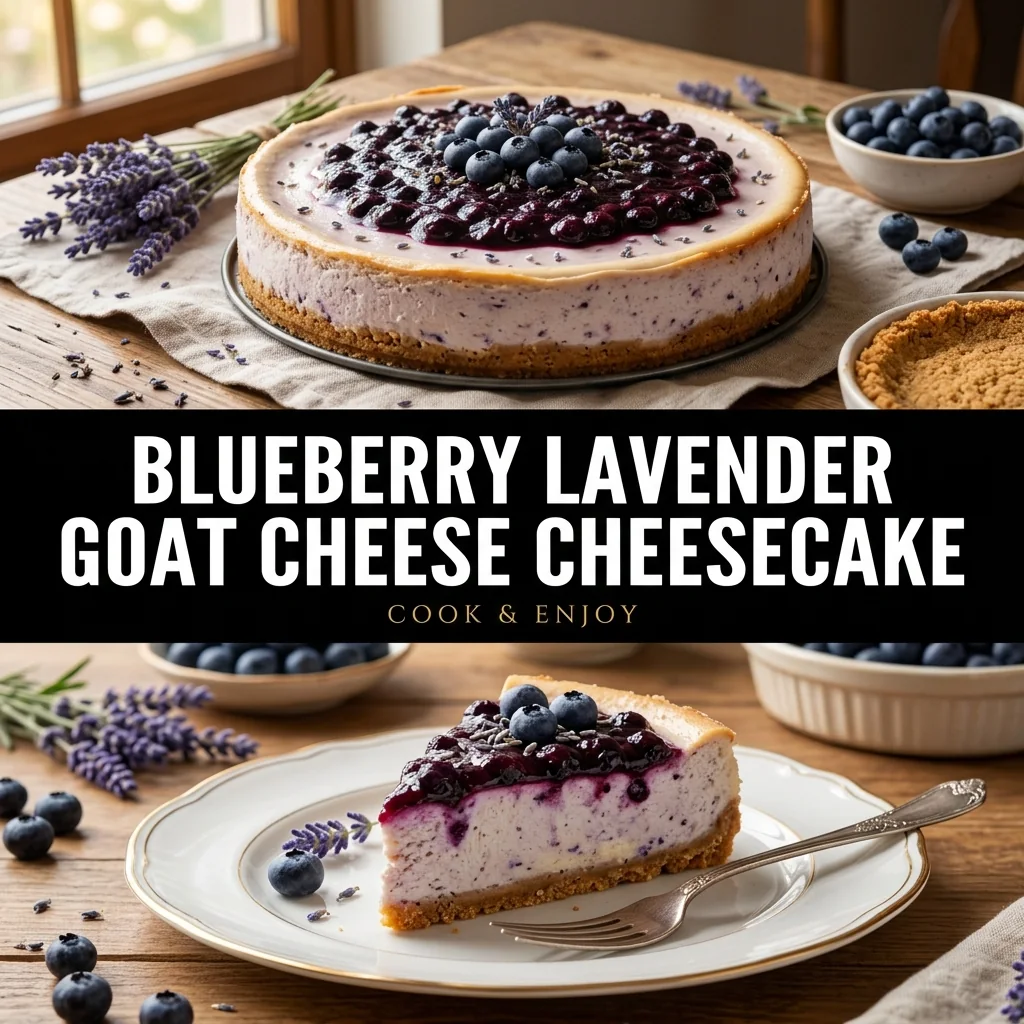
Blueberry lavender goat cheese cheesecake brings an earthy sophistication to traditional dessert tables by blending fresh, tangy chèvre with classic cream cheese. The goat cheese contributes a mild grassy acidity that cuts the sweetness of the custard, providing a velvety and clean mouthfeel. Beneath, a rustic oat digestive biscuit crust introduces toasted grain notes that complement the dairy base. The cheesecake is crowned with a vibrant topping of wild blueberries simmered alongside culinary lavender blossoms and fresh lemon juice. Lavender's floral aroma melds into the deep fruit juices, producing a glossy compote that cuts through the dense filling. This cheesecake delivers a refined balance of sweet, tart, and floral notes without overwhelming the palate.
Balancing Chèvre with Cream Cheese
Pure goat cheese cheesecakes can sometimes turn overly crumbly and assertive. Incorporating a higher ratio of standard full-fat cream cheese softens the chèvre's grassy profile while contributing essential moisture and milk fats. The lactic acid present in fresh, rindless goat log acts naturally to brighten the palate. Choosing fresh chèvre without any aged bloomy rind is critical; rindless varieties integrate seamlessly into the batter, ensuring an entirely uniform, silk-like custard texture throughout every bite.
Lavender Infusion Techniques
Culinary lavender is potent; excessive steeping or high quantities can easily impart a medicinal, perfumed flavor resembling soap. Simmering whole dried buds briefly with acidic wild blueberries and lemon juice extracts just the delicate top notes of linalool. The natural pectin in wild blueberries binds the liquid as it cools, forming a glossy sauce that clings neatly to the sliced cheesecake rather than weeping liquid across the surface and softening the crust.
The Benefit of a Gentle Water Bath
Goat cheese proteins coagulate firmly under rapid heat, which can lead to grainy curdling or unsightly surface cracks. Baking the springform pan within a hot water bath (bain-marie) moderates thermal conduction, maintaining the pan perimeter near 100 C (212 F). This gentle environment allows the egg proteins to set smoothly from edge to center, while the inclusion of cornstarch provides starch gelatinization that buffers against overcooking.
Before you start
Use only culinary-grade lavender buds, which are harvested specifically for cooking and contain softer floral oils. Crush the dried buds lightly between your fingers before adding to the saucepan to release aroma without rendering the compote soapy. Choose a fresh, rindless goat cheese log that feels moist and supple. Cold goat cheese will create stubborn lumps; allow both the chèvre and cream cheese to sit at room temperature for an hour before mixing.
THE RECIPE
Blueberry Lavender Goat Cheese Cheesecake
10 servings · 35 minutes preparation · 65 minutes cooking · 420 minutes cooling, chilling or resting
Ingredients
Step-by-step instructions
- Preheat your oven to 165 C (330 F). Lightly grease a 20 cm (8-inch) springform pan and line the base with parchment paper.
- In a medium bowl, combine 180 g crushed oat digestive biscuits and 75 g melted butter; press the mixture firmly across the bottom of the pan and bake at 165 C (330 F) for 10 minutes, then set aside to cool.
- In a large mixing bowl, beat 600 g cream cheese, 250 g mild goat cheese, and 140 g granulated sugar on medium-low speed for 3 minutes until smooth and thoroughly combined.
- Whisk 1.5 tablespoons cornstarch into the cheese mixture on low speed until no white streaks remain.
- Add 3 large eggs and 1 egg yolk one by one, beating on low speed until just blended after each addition.
- Pour in 80 ml heavy cream and 1 teaspoon alcohol-free vanilla extract, folding gently with a silicone spatula to keep the batter dense and smooth.
- Wrap the exterior base of the springform pan in two layers of heavy-duty aluminum foil, pour the batter over the crust, place in a large roasting pan filled with 2 cm of hot water, and bake at 165 C (330 F) for 50 minutes until edges are gently set and center moves slightly. Verify the center reaches 160 F (71 C); continue baking gently if necessary.
- Turn off heat, prop the oven door open slightly, and let the cheesecake rest in the water bath inside the oven for 60 minutes; remove to a wire rack to cool completely for 1 hour at room temperature, then chill in the refrigerator for 5 hours.
- While the cake chills, place 300 g wild blueberries, remaining 40 g sugar, 1 teaspoon culinary lavender buds, 1 tablespoon lemon juice, and 60 ml water in a small saucepan over medium heat; simmer gently for 5 minutes until berries burst and juices thicken lightly, then chill compote completely and spoon over the cold cheesecake before slicing.
Kitchen notes
Use only culinary-grade lavender buds, which are harvested specifically for cooking and contain softer floral oils. Crush the dried buds lightly between your fingers before adding to the saucepan to release aroma without rendering the compote soapy. Choose a fresh, rindless goat cheese log that feels moist and supple. Cold goat cheese will create stubborn lumps; allow both the chèvre and cream cheese to sit at room temperature for an hour before mixing.
Storage & make-ahead
Keep the cheesecake refrigerated promptly within 2 hours of serving, storing leftover slices covered with plastic wrap or in an airtight container for up to 4 days. Keep the blueberry lavender compote in a separate glass jar if garnishing per slice, or chilled on top of the cake. Do not freeze the cheesecake with the fruit topping applied, as thawed berries release water and soften the cheese layer.
An original recipe guide inspired by themes in our Pinterest research. Recipe has not been independently kitchen-tested. AI-generated image is illustrative; your finished dish may look different.
Frequently asked questions
Can I substitute regular blueberries for wild blueberries?
Yes, standard cultivated blueberries work well. Because cultivated varieties contain more water and less pectin than smaller wild berries, cook the compote for an extra 2 to 3 minutes until the liquid reduces and coats the back of a spoon.
How do I know if my goat cheese contains halal-suitable rennet?
Check the ingredient label to ensure the cheese is crafted with microbial, vegetarian, or fungal enzymes rather than animal rennet. Many commercial goat logs use microbial coagulants, which are fully permissible under halal dietary guidelines.
Why did my water bath leak into the cheesecake?
Springform pans are rarely completely watertight. To prevent seepage, wrap the bottom and sides with wide heavy-duty aluminum foil, or set the springform pan inside a slightly larger solid round cake pan before placing it into the roasting water bath.


