WHY MAKE IT
A little comfort, a lot of flavor.
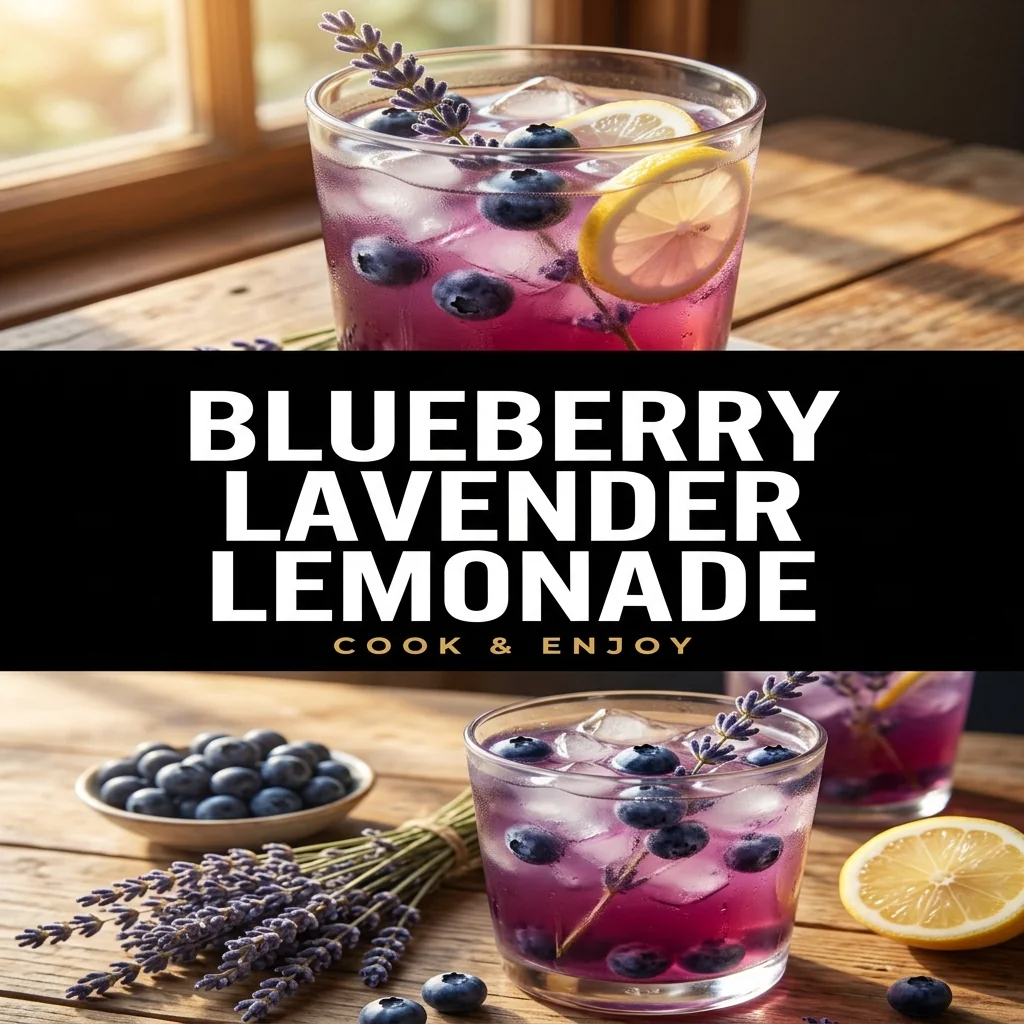
Blueberry Lavender Lemonade offers a sophisticated twist on classic homemade lemonade by pairing vibrant citrus acidity with delicate herbal botanicals and mellow summer berries. Culinary lavender delivers an aromatic perfume that complements the tartness of hand-squeezed lemons, while plump muddled blueberries lend deep color, natural fruit sugars, and light textural depth. Making the lavender syrup from scratch allows complete control over strength and sweetness, avoiding the artificial flavorings and synthetic dyes common in mass-produced alternatives. Whether served at an outdoor luncheon or kept chilled for a restorative midday pause, this nonalcoholic cooler delivers layered refreshment that feels both refined and accessible.
Selecting and Steeping Culinary Lavender
Using the correct botanical variety is essential when brewing floral syrups. True culinary English lavender yields a sweet, herbaceous profile reminiscent of mint and rosemary, whereas decorative floral-craft stems carry astringent medicinal oils. Simmering the buds briefly followed by a measured off-heat steep extracts pure aromatic esters while leaving harsh lignins behind. Strain the syrup thoroughly through fine mesh; stray buds left in the mixture will turn grey and release unpalatable bitterness into the finished lemonade over prolonged storage.
Balancing Lemon Acidity with Berry Sweetness
Freshly squeezed lemon juice contains natural citric and ascorbic acids that require precise balancing to prevent palate fatigue. While standard simple syrup softens sharp citrus, the addition of fresh blueberries introduces subtle malic acid alongside fruit fructose. Muddling ripe berries directly into the pitcher releases both cloudy fruit pulp and rich anthocyanin pigment. Stirring thoroughly ensures the floral syrup bridges the gap between the tart citrus base and the sweet berry juices, resulting in a cohesive, balanced sip.
Presentation and Ice Management
Crushed ice accelerates chilling and creates an attractive suspended-fruit aesthetic in tall Collins glasses. However, because crushed ice melts faster than solid cubes, the lemonade base must be sufficiently chilled prior to serving. Chilling the combined lemonade in the refrigerator for twenty minutes before pouring prevents excessive dilution upon contact with ice. For heightened presentation, reserve a few whole blueberries and float thin, seedless Meyer or Lisbon lemon wheels across the top of each poured glass.
Before you start
Culinary lavender must be labeled specifically for food use (Lavandula angustifolia). Ornamental varieties often contain high concentrations of camphor, which can impart a bitter, soapy flavor to syrups. Steep the buds for exactly twenty minutes after boiling; steeping longer extracts bitter tannins that overwhelm the gentle sweetness of the berries. Always roll room-temperature lemons firmly on the counter before slicing to maximize juice extraction without requiring electric presses.
THE RECIPE
Blueberry Lavender Lemonade
4 servings · 15 minutes preparation · 5 minutes cooking · 60 minutes cooling, chilling or resting
Ingredients
Step-by-step instructions
- Combine 100 grams of granulated cane sugar, 120 milliliters of filtered water, and 1 tablespoon of culinary lavender buds in a small 1-quart stainless steel saucepan over medium heat.
- Bring the mixture to a gentle simmer for 3 minutes, stirring constantly until the sugar crystals dissolve completely, then remove the saucepan from heat.
- Allow the lavender syrup to steep off the heat for 20 minutes, then pour through a fine-mesh sieve into a small bowl to discard the lavender buds, and refrigerate the clear syrup for 20 minutes until cool.
- Place 200 grams of fresh blueberries into a large glass pitcher and crush them thoroughly using a wooden drink muddler until skins break and juices release.
- Pour the cooled lavender syrup, 180 milliliters of freshly squeezed lemon juice, and 600 milliliters of cold filtered water into the pitcher with the muddled berries.
- Stir vigorously with a long bar spoon, place in the refrigerator for 20 minutes to chill and infuse, then serve over crushed ice garnished with lemon wheels.
Kitchen notes
Culinary lavender must be labeled specifically for food use (Lavandula angustifolia). Ornamental varieties often contain high concentrations of camphor, which can impart a bitter, soapy flavor to syrups. Steep the buds for exactly twenty minutes after boiling; steeping longer extracts bitter tannins that overwhelm the gentle sweetness of the berries. Always roll room-temperature lemons firmly on the counter before slicing to maximize juice extraction without requiring electric presses.
Storage & make-ahead
Store the prepared lemonade in a sealed glass container in the refrigerator promptly within two hours of assembly. Consume within three days for optimal floral notes and bright citrus acidity. The natural blueberry pigments will deepen into an intense purple hue as the drink rests in refrigeration.
An original recipe guide inspired by themes in our Pinterest research. Recipe has not been independently kitchen-tested. AI-generated image is illustrative; your finished dish may look different.
Frequently asked questions
Can I use frozen blueberries instead of fresh?
Yes, frozen blueberries work very well. Thaw 200 grams completely in a bowl before muddling so they release their juices easily. You can include any thawed juice collected in the bowl directly into the pitcher.
Can I make the lavender syrup several days ahead?
Yes, the lavender simple syrup can be prepared up to one week in advance. Store it in a sealed glass jar in the refrigerator at 38°F to 40°F (3°C to 4°C) until ready to assemble the fresh lemonade.
Should I strain out the blueberry skins before serving?
Straining is optional based on personal preference. Leaving the muddled berry solids provides rustic texture and rich color, but you may pour the finished drink through a fine strainer if you prefer crystal-clear liquid.