WHY MAKE IT
A little comfort, a lot of flavor.
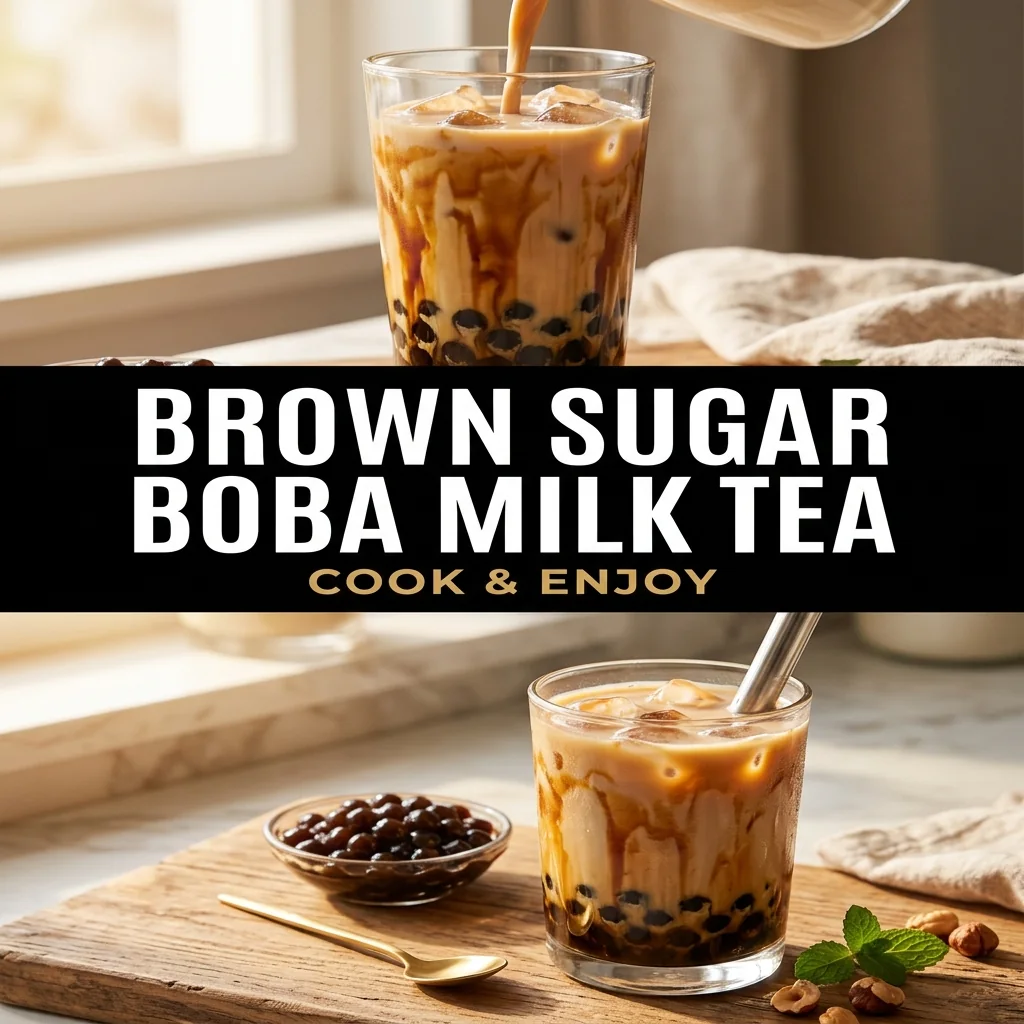
Brown sugar boba milk tea represents a harmonious balance of temperatures, textures, and deep caramel sweetness. The foundation of an authentic glass relies on freshly prepared tapioca pearls simmered in unrefined brown sugar until they take on a glossy, dense chewiness known culinarily as Q texture. When paired with strongly extracted Assam tea, the malty tannins cut through the heavy richness of full-fat dairy, preventing the beverage from tasting cloying. Tilting the glass spreads thick amber syrup along the inner walls, creating dramatic marbling against cold ivory milk. Sipped through a wide straw, every draw delivers warm, springy pearls against frosty, fragrant milk tea. Preparing the components fresh at home yields far superior texture and flavor balance than powdered alternatives.
Selecting Tea and Tapioca Pearls
A robust tea base is critical for balancing dense brown sugar syrup. Robust Assam black tea provides the brisk maltiness required to withstand heavy whole milk and melting ice. Delicate white or green teas will simply vanish beneath the syrup. For the boba, use standard dark tapioca pearls made from cassava root starch. Ensure your pearls are fresh and stored in an airtight pantry container; stale pearls absorb water unevenly and break apart during boiling. Do not rush the post-boil resting period, as steam penetrates the pearl cores to eliminate hard centers.
Creating the Brown Sugar Glaze
The depth of this drink comes from dark muscovado or dark brown sugar containing high amounts of natural molasses. White sugar combined with artificial coloring lacks the necessary bitter-sweet balance and mineral backbone. When cooking the syrup, keep the heat at medium-low once the sugar dissolves to avoid scorching. The syrup should coat the back of a metal spoon smoothly. Simmering the drained pearls directly in the syrup allows the starches to marry with the sugar, creating the viscous, clinging quality essential for painting the walls of the glassware.
Assembly and Temperature Management
Temperature contrast is the hallmark of artisanal brown sugar milk tea. The freshly simmered boba must remain warm and yielding at the base of the glass, while the ice, milk, and concentrated tea should be thoroughly chilled. When the cold dairy meets the warm syrup on the glass surface, it momentarily sets the sugar trail into distinct visual ribbons. Instruct guests to insert their wide straw to the bottom for the initial warm, sweet sip, then stir vigorously to blend the rich components into a harmonious milk tea.
Before you start
For the signature tiger-stripe visual effect, assemble the drinks while the brown sugar tapioca syrup is still warm. Rolling the glass gently allows the viscous syrup to cling to the cold glass sides before adding ice. Never chill cooked tapioca pearls in the refrigerator before assembling, as cold temperatures cause the amylose starches in tapioca to retrograde rapidly, turning the soft, chewy pearls dense, unpleasantly chalky, and tough within minutes.
THE RECIPE
Brown Sugar Boba Milk Tea
2 servings · 10 minutes preparation · 30 minutes cooking · 20 minutes cooling, chilling or resting
Ingredients
Step-by-step instructions
- Steep the loose Assam tea in 1 1/2 cups boiling water in a heatproof pitcher for 10 minutes, strain the leaves completely, and let the concentrated tea cool at room temperature for 10 minutes before chilling.
- Bring 4 cups of water to a rolling boil in a medium saucepan over high heat, stir in the tapioca pearls, reduce heat to medium, and boil uncovered for 15 minutes while stirring occasionally to prevent sticking. Follow the package cooking time if it differs.
- Remove the saucepan from heat, cover tightly with a lid, and allow the pearls to sit undisturbed for 10 minutes to finish softening through to their centers. Check that the centers are soft; extend cooking or resting according to the packet if needed.
- Drain the tapioca pearls thoroughly through a fine-mesh sieve and rinse them briefly under warm running water to remove excess surface starches.
- Combine the dark brown sugar and 1/4 cup water in the small saucepan over medium heat, bringing it to a simmer until the sugar dissolves into a glossy syrup, then add the drained pearls and simmer for 5 minutes until thick and syrupy.
- Divide the warm brown sugar pearls and syrup evenly between two tall serving glasses, tilting each glass horizontally to coat the interior walls with dark amber streaks.
- Fill both glasses to the brim with crushed ice, pour 3/4 cup cold whole milk into each, and gently float 1/2 cup chilled concentrated black tea over top before serving immediately with wide boba straws.
Kitchen notes
For the signature tiger-stripe visual effect, assemble the drinks while the brown sugar tapioca syrup is still warm. Rolling the glass gently allows the viscous syrup to cling to the cold glass sides before adding ice. Never chill cooked tapioca pearls in the refrigerator before assembling, as cold temperatures cause the amylose starches in tapioca to retrograde rapidly, turning the soft, chewy pearls dense, unpleasantly chalky, and tough within minutes.
Storage & make-ahead
Serve cooked tapioca pearls promptly for the best texture. Refrigerate leftovers within 2 hours, or within 1 hour if the room is above 90�F (32�C), and use within 24 hours. Refrigerated pearls may harden; reheat in boiling water until fully hot and softened before use. Keep brewed tea and fruit components covered in the refrigerator for up to 24 hours. Discard pearls left out beyond these limits.
An original recipe guide inspired by themes in our Pinterest research. Recipe has not been independently kitchen-tested. AI-generated image is illustrative; your finished dish may look different.
Frequently asked questions
Can I substitute the whole milk with plant-based alternatives?
Yes, barista-grade oat milk or unsweetened soy milk provide excellent creaminess and foam stability. Avoid very watery nut milks like thin almond milk, as they lack sufficient body to balance the robust Assam tea and heavy brown sugar syrup.
Why did my tapioca pearls turn hard in the drink?
Tapioca starch firms up quickly when exposed to low temperatures. If the drink sits on ice for longer than twenty to thirty minutes, the pearls will inevitably lose their softness. Consume the beverage promptly after assembling for the best chewy texture.
Can I prepare the brown sugar pearls the day before?
Tapioca pearls cannot be made a day in advance because refrigeration hardens their starch core irreversibly. Brew the Assam tea ahead and refrigerate it, but cook and glaze the tapioca pearls within four hours of serving for optimal texture.