WHY MAKE IT
A little comfort, a lot of flavor.
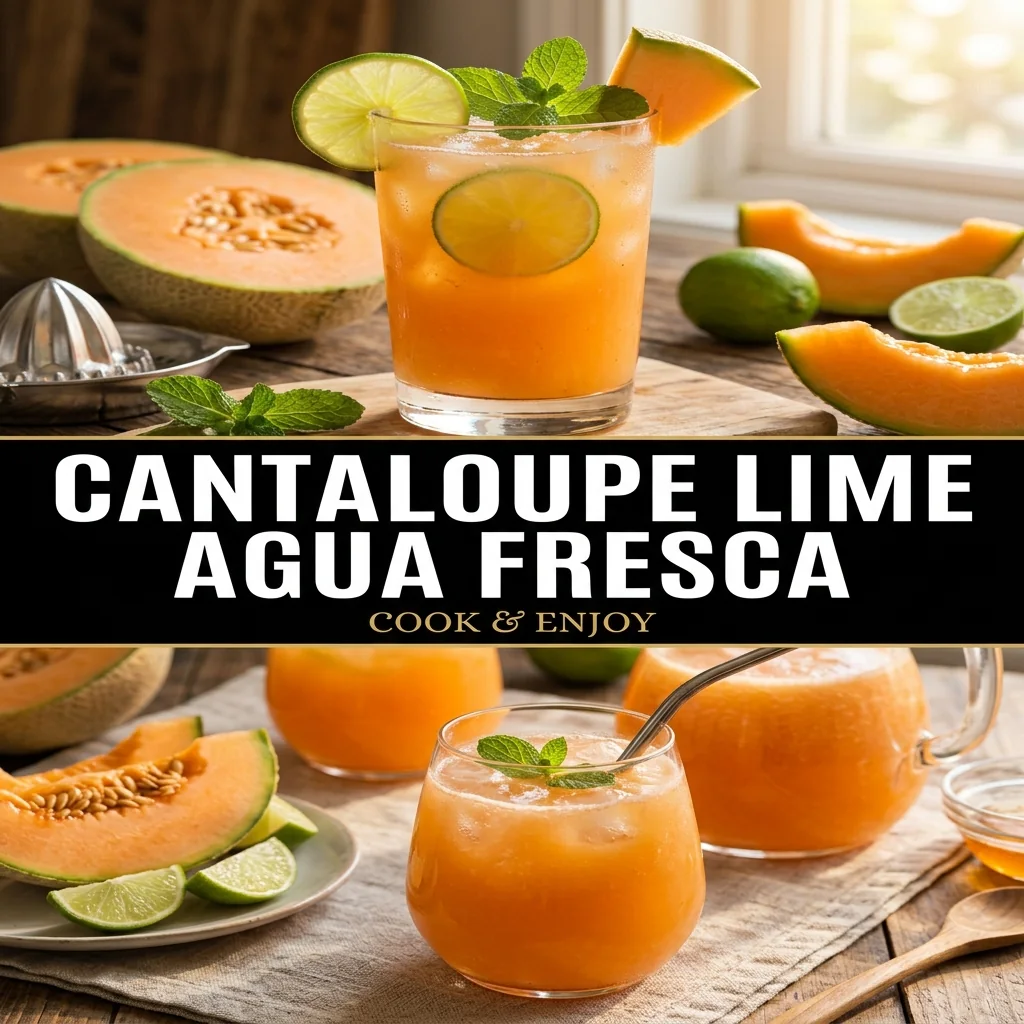
Cantaloupe Lime Agua Fresca is an intensely hydrating, traditional Latin American cooler designed to combat stifling heat with the pure essence of fresh fruit. Known in Spanish as agua de melón, this beverage relies on ripe cantaloupe pureed with clean water rather than heavy dairy or syrupy concentrates. Cantaloupe possesses high water content and natural sweetness, making it particularly suited for cold blending. The addition of sharp, fresh key lime or Persian lime juice provides an indispensable counterweight, cutting through the musky density of the melon while keeping every sip clean and crisp. Served over crystal-clear ice, it is an effortless, wholesome cooler for outdoor lunches, family gatherings, and everyday hydration.
Selecting and Preparing Ripe Melon
An underripe cantaloupe produces a watery, bland beverage with a crunchy residual grit. Inspect the stem end of the melon: it should show a clean indentation, indicating it naturally slipped from the vine at maturity. Avoid melons with soft bruised patches or dark watery indentations. When peeling, carve away all trace of green rind just beneath the skin, as this layer is tough and slightly bitter. Ripe cantaloupe flesh should be soft, juicy, and deeply orange, yielding effortlessly to blender blades.
Texture: Strained Versus Unstrained
Agua fresca preparations vary between rustic, thick presentations and strained, clarified styles. High-speed blending liquefies cantaloupe remarkably well, leaving minimal pulp. However, running the puree through a fine-mesh stainless steel sieve removes residual frothy foam and coarse cellulose fiber, yielding a silky, velvety mouthfeel that glides across the palate. If you prefer a thicker, smoothie-adjacent consistency with dietary fiber intact, you can skip straining, though straining delivers a much lighter, more thirst-quenching drink suited for hot weather.
The Role of Lime and Salt
Cantaloupe has a delicate, honeyed flavor that can occasionally lean flat or one-dimensional when served cold without an acid source. Fresh lime juice supplies bright citric acid, lifting melon aromas and adding thirst-quenching bite. Never substitute bottled lime juice, which often tastes oxidized and dull. A precise pinch of fine sea salt acts as an acoustic tuner for the palate, subduing any vegetal notes while drawing out the melon's inherent floral sweetness without requiring excessive refined sugar.
Before you start
The secret to an exceptional cantaloupe agua fresca lies in the ripeness of the melon. Look for a melon that feels dense and heavy, displays a raised tan netting over a warm creamy-yellow background rather than green skin, and gives off an unmistakably sweet, musky floral scent at the stem end. Adding a tiny pinch of sea salt does not make the drink salty; instead, it suppresses slight bitterness and enhances the melon's natural sweetness and aromatic volatile compounds.
THE RECIPE
Cantaloupe Lime Agua Fresca
4 servings · 15 minutes preparation · 0 minutes cooking · 30 minutes cooling, chilling or resting
Ingredients
Step-by-step instructions
- Halve the ripe cantaloupe, scoop out and discard the seeds and fibrous interior strings using a spoon, slice off the outer rind, and cut the orange melon flesh into rough 2-inch chunks.
- Transfer the cantaloupe chunks into a high-powered blender, add 240 milliliters of the cold filtered water, and blend on medium-high speed for 60 seconds until completely smooth and liquefied.
- Pour the blended puree through a fine-mesh sieve set over a large pitcher, using a silicone spatula to gently press the liquid through while catching excess fibrous pulp for an extra-silky texture.
- Add the remaining 240 milliliters of cold filtered water, the freshly squeezed lime juice, granulated cane sugar, and fine sea salt to the pitcher.
- Whisk vigorously until the sugar and salt crystals are completely dissolved, then place the pitcher into the refrigerator to chill for 30 minutes.
- Fill four 350-milliliter glasses with 100 grams of ice cubes each, stir the chilled agua fresca thoroughly, pour evenly into each glass, and garnish with a fresh lime wheel and a cantaloupe wedge.
Kitchen notes
The secret to an exceptional cantaloupe agua fresca lies in the ripeness of the melon. Look for a melon that feels dense and heavy, displays a raised tan netting over a warm creamy-yellow background rather than green skin, and gives off an unmistakably sweet, musky floral scent at the stem end. Adding a tiny pinch of sea salt does not make the drink salty; instead, it suppresses slight bitterness and enhances the melon's natural sweetness and aromatic volatile compounds.
Storage & make-ahead
Store leftover cantaloupe agua fresca in a tightly covered pitcher or sealed glass jar in the refrigerator at or below 40 F (4 C) for up to 48 hours. Melon beverages naturally settle into layers over time; simply stir well with a long spoon before pouring. Do not store with ice melted into the pitcher to avoid unwanted dilution.
An original recipe guide inspired by themes in our Pinterest research. Recipe has not been independently kitchen-tested. AI-generated image is illustrative; your finished dish may look different.
Frequently asked questions
Can I make this agua fresca completely sugar-free?
Yes. If your cantaloupe is exceptionally sweet and peak-season, you can omit the sugar entirely. Alternatively, substitute thirty milliliters of light agave nectar or raw honey to taste, stirring thoroughly until fully integrated into the melon puree.
Can I use honeydew melon instead of cantaloupe in this recipe?
Absolutely. Ripe honeydew melon works exceptionally well using the exact same proportions. Honeydew produces a pale green, subtly floral agua fresca that pairs beautifully with lime and fresh mint or cucumber slices.
Why does foam form on top of the agua fresca after blending?
Blending whips air into the melon proteins and natural pectin, creating a frothy head. Straining removes most of this foam, and letting the pitcher rest in the refrigerator for thirty minutes allows residual air bubbles to rise and dissipate naturally.