WHY MAKE IT
A little comfort, a lot of flavor.
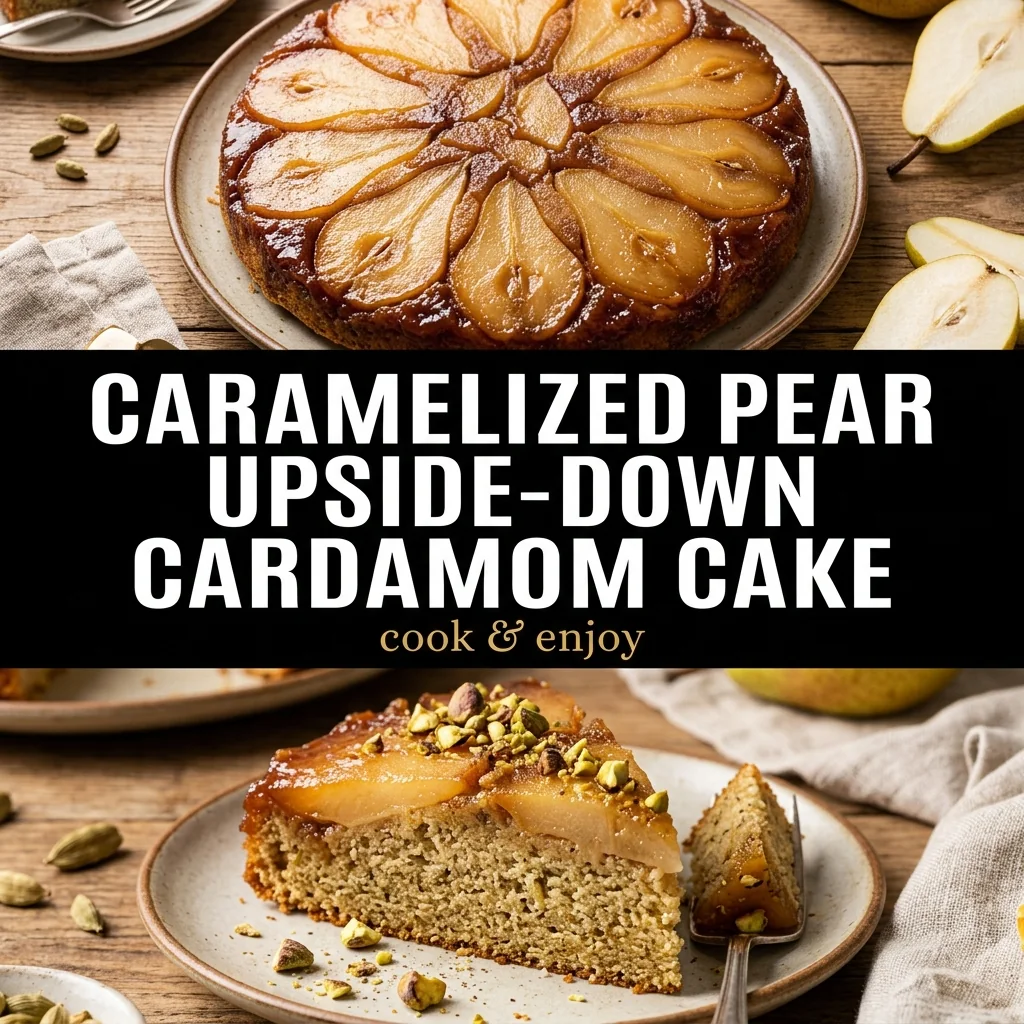
Caramelized pear upside-down cardamom cake transforms simple pantry staples into an elegant centerpiece dessert with an aromatic profile. Inverting a baked cake reveals fruit that has softened gently while absorbing bubbling caramel formed from brown sugar and melted butter on the pan floor. The cake batter itself features finely ground green cardamom, providing herbal, citrusy warmth that cuts through rich caramel sweetness. Using firm Bosc pears guarantees the fruit slices hold their defined fan pattern instead of dissolving into mush during the 50-minute bake. This recipe requires no specialized upside-down cake equipment, relying instead on a dependable solid cake pan and a careful inversion method to deliver a glistening fruit top and tender crumb.
Pear Selection and Arrangement
Selecting the right pear variety ensures the structural success of an upside-down cake. Bosc pears remain ideal because their dense flesh holds clean geometric edges under high heat without weeping excess moisture. Anjou pears provide a suitable alternative if they are firm to the touch. Slice the peeled fruit evenly to 6 millimeters so each piece cooks through at the identical rate. Laying the slices tightly in concentric circles creates visual appeal while preventing the raw batter from seeping through the fruit layer to touch the pan floor.
Working with Whole Cardamom
Ground cardamom rapidly loses its volatile essential oils once crushed, leaving commercial powders tasting flat or camphoraceous. For this recipe, crack whole green cardamom pods, remove the dark inner seeds, and crush them finely using a granite mortar and pestle. The resulting powder carries notes of citrus peel, pine, and sweet mint that elevate both the pear fruit and rich butter base. Ensure the spice is whisked uniformly into the dry flour mixture so that its assertive aromatic profile distributes evenly without concentrated pockets.
Executing the Inversion
Timing the pan inversion requires precision to keep the caramelized fruit intact. Inverting the cake immediately out of the oven risks hot liquid caramel splashing, while waiting too long allows the cooling sugar to seize and stick to the pan bottom. Ten minutes of cooling on a wire rack allows the caramel to thicken slightly while keeping it fluid enough to release cleanly. Run a thin offset spatula around the cake perimeter, invert the serving platter over the pan, and flip firmly in one fluid motion.
Before you start
Select firm pears such as Bosc or Anjou that yield only slightly to firm thumb pressure at the stem end. Overripe pears release excess juice during baking, which dilutes the caramel base and produces a soggy crumb texture. Grinding whole green cardamom seeds in a mortar right before incorporating yields a much brighter floral warmth than pre-ground powders that have oxidized on store shelves. Use an offset spatula to spread the dense batter slowly over the fruit arrangement.
THE RECIPE
Caramelized Pear Upside-Down Cardamom Cake
8 servings · 25 minutes preparation · 50 minutes cooking · 20 minutes cooling, chilling or resting
Ingredients
Step-by-step instructions
- Preheat the oven to 175 C (350 F) and grease the sides of a solid 23 cm (9-inch) round cake pan with unsalted butter, lining the base with parchment paper.
- Pour the 60 ml of melted unsalted butter over the bottom of the prepared pan and sprinkle the 100 g of packed light brown sugar evenly across the surface.
- Arrange the sliced Bosc pear wedges in concentric overlapping circles over the brown sugar mixture, pressing them gently into the butter layer.
- Whisk together the 200 g of all-purpose flour, 1 1/2 tsp of baking powder, 1/2 tsp of fine sea salt, and 1 1/2 tsp of freshly ground green cardamom seeds in a medium bowl until thoroughly combined.
- Beat the 115 g of softened unsalted butter and 150 g of granulated white sugar in a stand mixer fitted with the paddle attachment on medium speed for 3 minutes until pale and fluffy.
- Add the 2 large eggs one at a time to the butter mixture, beating well after each addition, then mix in the 1 tsp of alcohol-free vanilla extract.
- Alternate adding the dry flour mixture and the 120 ml of whole milk into the batter in three additions, beginning and ending with the dry ingredients, mixing on low speed just until combined.
- Dollop the batter gently over the arranged pears and smooth the top evenly with an offset spatula without disturbing the fruit underneath.
- Bake at 175 C (350 F) for 45 to 50 minutes until a wooden skewer inserted into the center of the cake crumb comes out clean, cool in the pan on a wire rack for 10 minutes, then invert onto a serving platter and rest 10 minutes more before slicing.
Kitchen notes
Select firm pears such as Bosc or Anjou that yield only slightly to firm thumb pressure at the stem end. Overripe pears release excess juice during baking, which dilutes the caramel base and produces a soggy crumb texture. Grinding whole green cardamom seeds in a mortar right before incorporating yields a much brighter floral warmth than pre-ground powders that have oxidized on store shelves. Use an offset spatula to spread the dense batter slowly over the fruit arrangement.
Storage & make-ahead
Refrigerate leftover cake promptly within 2 hours of serving in a sealed airtight container for up to 3 days. To reheat, warm individual slices on a parchment-lined baking sheet in an oven heated to 165 C (325 F) until the center registers 74 C (165 F), approximately 8 to 10 minutes, or serve chilled.
An original recipe guide inspired by themes in our Pinterest research. Recipe has not been independently kitchen-tested. AI-generated image is illustrative; your finished dish may look different.
Frequently asked questions
Can I use canned pears for this upside-down cake?
Canned pears are not recommended because they carry high moisture levels that prevent the brown sugar from caramelizing properly, resulting in a soggy, collapsed batter beneath the fruit layer.
Why did my caramel stick to the bottom of the cake pan?
Caramel sticks when the cake cools too long before flipping, causing melted sugars to harden, or when the pan was inverted too quickly without resting the full 10 minutes post-bake.
Can I bake this cake in a springform pan instead?
Springform pans often leak melted butter and hot sugar syrup through their base seams into your oven; a seamless solid cake pan or deep cast-iron skillet prevents caramel loss and burning.