WHY MAKE IT
A little comfort, a lot of flavor.
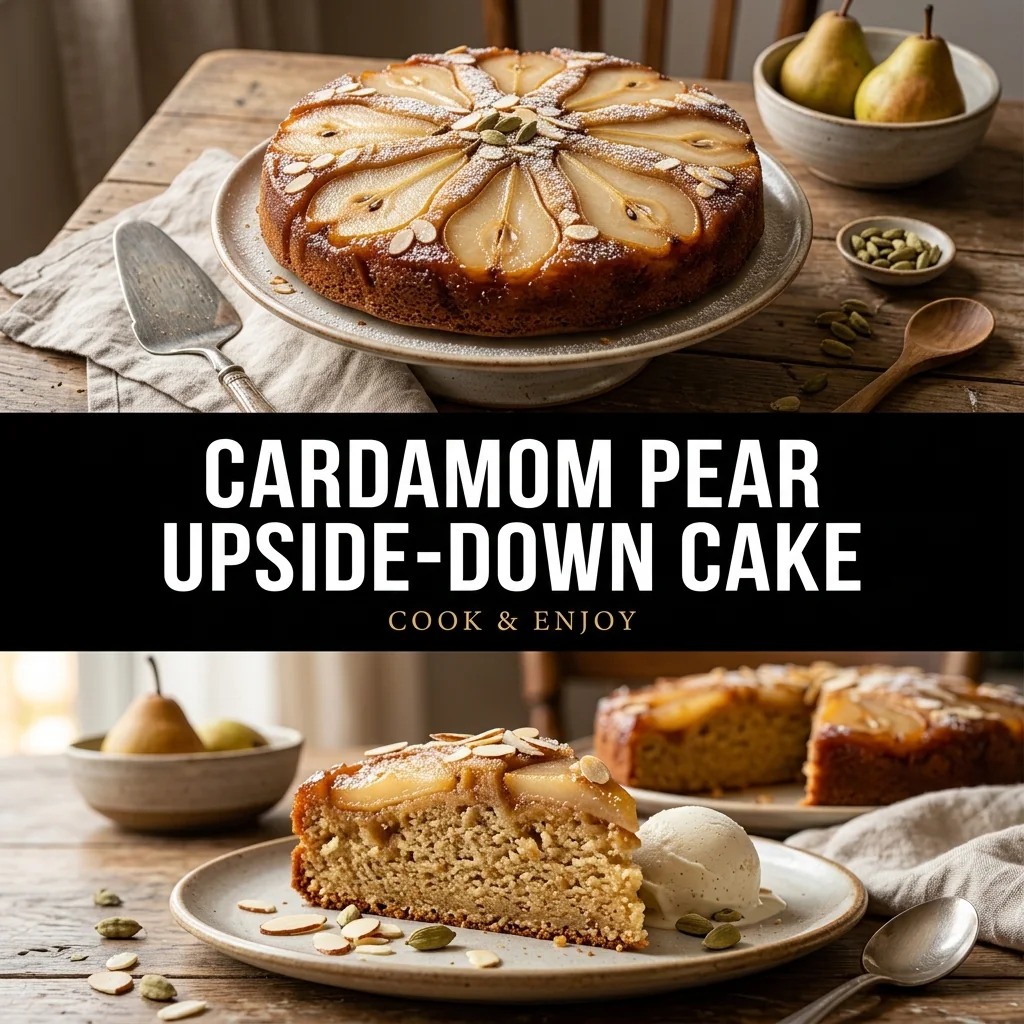
Upside-down cakes provide a dramatic presentation with rustic charm, showcasing fruit that cooks directly in a bubbling layer of butter and sugar. In this variation, firm Bosc pears replace standard orchard fruits, pairing naturally with the bold, citrusy warmth of ground cardamom. Baking the dessert in a heavy cast-iron skillet yields exceptional heat retention, producing deep caramelization on the fruit base while encouraging a light, even rise throughout the buttermilk batter. Once baked, the cake is carefully inverted while warm, revealing glossy, amber-tinted fruit nestled over a tender, fragrant crumb. This comforting dessert makes an impressive centerpiece for autumn dinners or weekend gatherings, requiring only simple pantry staples and fresh market produce.
Selecting and Slicing Pears
Fruit density directly impacts moisture control in upside-down bakes. Ripe, juicy pears release excessive moisture into the sugar bed, causing the underlying cake batter to become soggy rather than springy. Firm Bosc pears offer high fiber density, holding crisp edges through the stovetop simmer and 45-minute bake. Slicing them uniformly to a quarter-inch thickness ensures that each wedge softens evenly without collapsing into puree under the weight of the buttermilk crumb.
The Power of Cardamom
Ground green cardamom brings complex herbal notes, mild eucalyptus brightness, and peppery sweetness that cuts through dense brown sugar caramel. Unlike heavy baking spices that can dominate tender orchard fruits, cardamom enhances pear flavor naturally. Sifting the spice alongside the flour distributes the aromatic essential oils uniformly throughout the crumb, ensuring each bite offers a balanced floral warmth rather than concentrated bursts of spice.
Cast Iron Heat Mechanics
Heavy cast iron serves as both the cooking vessel and the baking pan. Its dense walls absorb heat slowly and radiate it steadily across the caramel layer, ensuring the sugar melts into the butter without hot spots or scorching. When placed in the oven, this stored base heat immediately activates the chemical leaveners in the batter, forcing rapid lift before the heavy sliced fruit can settle downward into the raw dough.
Before you start
Select pears that are firm to the touch with little give at the neck. Bosc or Anjou varieties maintain their structural integrity during prolonged baking, whereas softer varieties like Bartlett release excess juice and turn mushy. Timing the inversion is critical: flip at precisely 15 minutes post-bake. Flipping too soon risks hot, liquid caramel running everywhere, while waiting too long allows the cooled sugar to weld the fruit firmly to the cast iron.
THE RECIPE
Cardamom Pear Upside-Down Cake
8 servings · 25 minutes preparation · 50 minutes cooking · 15 minutes cooling, chilling or resting
Ingredients
Step-by-step instructions
- Preheat the oven to 350 F (175 C) with a rack positioned in the center.
- Melt 4 tablespoons of the unsalted butter in a 10-inch cast-iron skillet over medium-low heat for 3 minutes. Stir in the light brown sugar until moistened and bubbling gently, then remove the skillet from heat.
- Arrange the pear wedges in concentric overlapping circles over the brown sugar mixture, starting from the outer perimeter and working toward the center.
- In a medium bowl, whisk together the all-purpose flour, ground cardamom, ground cinnamon, baking powder, baking soda, and fine sea salt until thoroughly blended.
- In a separate large bowl, melt the remaining 4 tablespoons of butter. Whisk in the granulated sugar, eggs, buttermilk, and alcohol-free vanilla extract until smooth and pale.
- Pour the dry flour mixture into the wet buttermilk batter, folding gently with a spatula just until no dry flour pockets remain; avoid overmixing.
- Carefully spoon the batter over the arranged pears in the skillet, spreading it evenly with an offset spatula without disturbing the fruit pattern underneath.
- Transfer the skillet to the oven and bake at 350 F (175 C) for 45 to 47 minutes, until the cake top is golden brown and a wooden skewer inserted into the center emerges clean.
- Rest the skillet on a wire rack for exactly 15 minutes. Run a thin knife around the skillet edges, invert a large serving platter over the skillet, and firmly flip both together, tapping the skillet bottom before lifting it away.
Kitchen notes
Select pears that are firm to the touch with little give at the neck. Bosc or Anjou varieties maintain their structural integrity during prolonged baking, whereas softer varieties like Bartlett release excess juice and turn mushy. Timing the inversion is critical: flip at precisely 15 minutes post-bake. Flipping too soon risks hot, liquid caramel running everywhere, while waiting too long allows the cooled sugar to weld the fruit firmly to the cast iron.
Storage & make-ahead
Cover leftover cake tightly or transfer slices to an airtight container and refrigerate promptly within 2 hours of baking. The cake keeps well refrigerated for up to 4 days. Serve chilled or reheat individual slices in a 300 F (150 C) oven for 8 minutes until warm and reaching an internal temperature of 165 F (74 C).
An original recipe guide inspired by themes in our Pinterest research. Recipe has not been independently kitchen-tested. AI-generated image is illustrative; your finished dish may look different.
Frequently asked questions
What should I do if some pear slices stick to the pan after flipping?
Do not panic; use a small offset spatula or butter knife to gently lift the stuck pear slices from the hot pan and reposition them onto the cake surface. The warm, sticky caramel easily disguises any minor patching.
Can I bake this in a standard cake pan instead of cast iron?
Yes. Prepare the caramel in a saucepan first, pour it into a greased 9-inch round solid cake pan, layer the pears, top with batter, and bake at 350 F for 42 to 45 minutes.
Why did my cake batter sink in the middle?
Sinking usually indicates underbaking or opening the oven door too early, which causes temperature drops before the egg structure sets. Always test the center with a toothpick to confirm it is fully baked.