WHY MAKE IT
A little comfort, a lot of flavor.
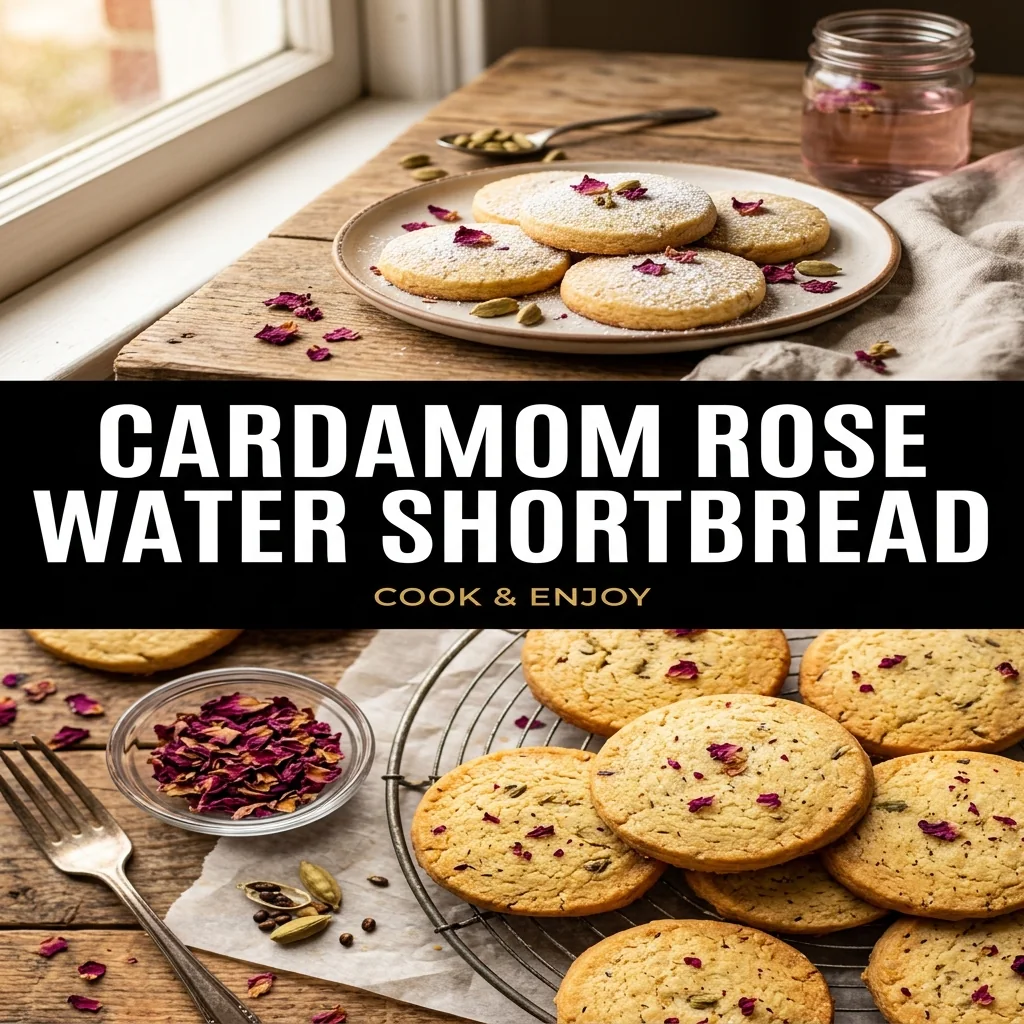
Cardamom rose water shortbread is a celebratory tribute to classic Persian flavor profiles, where floral aromatics and warming spices enhance simple, buttery pastry. Achieving a classic crumb that snaps crisply before melting across the tongue relies on cornstarch blended into the wheat flour, which lowers total gluten development. Using confectioners' sugar instead of granulated crystals ensures an extraordinarily velvety mouthfeel with no residual grittiness. Infusing the dough with pure culinary rose water and freshly crushed cardamom seeds produces a complex, perfumed cookie that is elegant and comforting. Garnished with jewel-toned dried rose petals, these pale cookies make an exquisite addition to holiday platters, tea services, and gift boxes.
Cardamom and Rose Water Synergy
The pairing of rose water and green cardamom forms the aromatic cornerstone of Middle Eastern and Persian confectionery. Cardamom brings a piney, slightly citrus-warm depth that balances the heady, floral essence of distilled rose water. Because both ingredients carry assertive flavor compounds, precision is necessary. Measuring the rose water with a kitchen spoon rather than freehand pouring avoids a soapy finish. Grinding cardamom seeds fresh from the pod right before creaming releases volatile essential oils that perfume the entire shortbread cleanly without the dusty, stale undertones typical of long-stored commercial spice jars.
The Science of Tender Shortbread
Traditional shortbread relies exclusively on fat, sugar, and flour without leaveners or liquid eggs. The high butter proportion coats flour particles, inhibiting gluten formation for a crumbly, crumb-soft texture. Incorporating a measured portion of cornstarch dilutes the wheat flour protein, yielding an even finer snap that melts instantly on the palate. Keeping butter at cool room temperature—around 18°C (65°F)—allows it to cream smoothly with powdered sugar without turning greasy. Chilling the shaped dough before rolling prevents slumping in the oven, ensuring crisp edges and sharp cutter impressions.
Baking and Final Garnishing
Shortbread should bake slowly at a moderate 160°C (325°F) to dry out moisture without developing excessive surface browning. The surface should stay pale and milky, with only the bottom edge showing a faint touch of golden brown. Applying crushed edible rose petals immediately when the cookies emerge from the oven allows the residual surface heat and butter fat to anchor the petals naturally. Never bake the petals in the oven, as excessive heat chars their delicate margins and turns their vibrant magenta color to an unappealing dark gray.
Before you start
Cracking open whole green cardamom pods and grinding the inner black seeds in a mortar right before mixing makes an enormous difference compared to pre-ground spice jars. Pre-ground cardamom oxidizes quickly and loses its vibrant citrusy eucalyptus top notes. Be measured when adding rose water; culinary waters vary in potency, and too much will easily overpower the gentle, buttery sweetness of the shortbread crumb.
THE RECIPE
Cardamom Rose Water Shortbread
24 servings · 20 minutes preparation · 18 minutes cooking · 45 minutes cooling, chilling or resting
Ingredients
Step-by-step instructions
- In a large mixing bowl, beat the 225 g softened unsalted butter and 70 g sifted powdered sugar on medium speed using a hand mixer for 3 minutes until smooth, creamy, and pale ivory.
- Add the 5 ml culinary rose water and 3 g freshly ground green cardamom, beating on low speed for 30 seconds until the aromatic flavorings are thoroughly distributed.
- In a separate bowl, whisk together the 240 g all-purpose flour, 30 g cornstarch, and 1.5 g fine sea salt to disperse the starch evenly.
- Add the dry flour mixture to the creamed butter in two additions, mixing on lowest speed or folding with a wooden spoon just until a tender dough pulls together without visible dry pockets.
- Shape the soft dough into a smooth flat disk, wrap tightly in plastic wrap, and refrigerate for 30 minutes to firm the butter and make rolling manageable.
- Preheat your oven to 160°C (325°F) and line two large rimmed baking sheets with parchment paper.
- Unwrap the chilled dough onto a lightly floured silicone mat and roll to an even 6 mm (1/4-inch) thickness using a rolling pin.
- Cut cookies using a 5 cm (2-inch) fluted round or fluted square cutter, transferring rounds onto the baking sheets spaced 2.5 cm (1 inch) apart; re-roll dough scraps once to yield 24 total cookies.
- Sprinkle the tops with the 15 g granulated sugar and bake at 160°C (325°F) for 16 to 18 minutes until the tops remain pale and the undersides show a faint pale gold.
- Transfer the baking sheets to wire racks, scatter the 3 g crushed culinary rose petals over the warm cookies immediately so they adhere, and cool completely on the trays for 15 minutes before serving.
Kitchen notes
Cracking open whole green cardamom pods and grinding the inner black seeds in a mortar right before mixing makes an enormous difference compared to pre-ground spice jars. Pre-ground cardamom oxidizes quickly and loses its vibrant citrusy eucalyptus top notes. Be measured when adding rose water; culinary waters vary in potency, and too much will easily overpower the gentle, buttery sweetness of the shortbread crumb.
Storage & make-ahead
Keep completely cooled shortbread cookies inside an airtight tin or glass jar at room temperature for up to 10 days. Moisture softens the crisp snap, so avoid storing them with humid cakes or breads. Dough can be mixed and refrigerated up to 48 hours ahead before rolling and baking. Baked shortbread freezes reliably for up to 3 months when stored in sealed freezer bags; thaw uncovered at room temperature for 30 minutes before enjoying.
An original recipe guide inspired by themes in our Pinterest research. Recipe has not been independently kitchen-tested. AI-generated image is illustrative; your finished dish may look different.
Frequently asked questions
Can I substitute rose extract for the culinary rose water?
Rose extract is significantly more concentrated than distilled rose water. If you must use rose extract, reduce the measurement to 1 ml (about 1/4 teaspoon) to avoid an overwhelming perfume flavor that will mask the butter and cardamom.
Why did my shortbread cookies spread and lose their shape?
Spreading happens when butter is overly warm during creaming or if the dough skips the required chilling stage. Ensure butter is cool-softened rather than melted, and keep cut shapes thoroughly chilled before sliding the pans directly into a fully preheated oven.
Can I make these cookies without a rolling pin?
Yes, you can roll the dough into a tight 5 cm (2-inch) diameter log, chill for 45 minutes until firm, and slice into 6 mm (1/4-inch) thick rounds using a sharp knife before placing them directly onto the prepared baking sheets.