WHY MAKE IT
A little comfort, a lot of flavor.
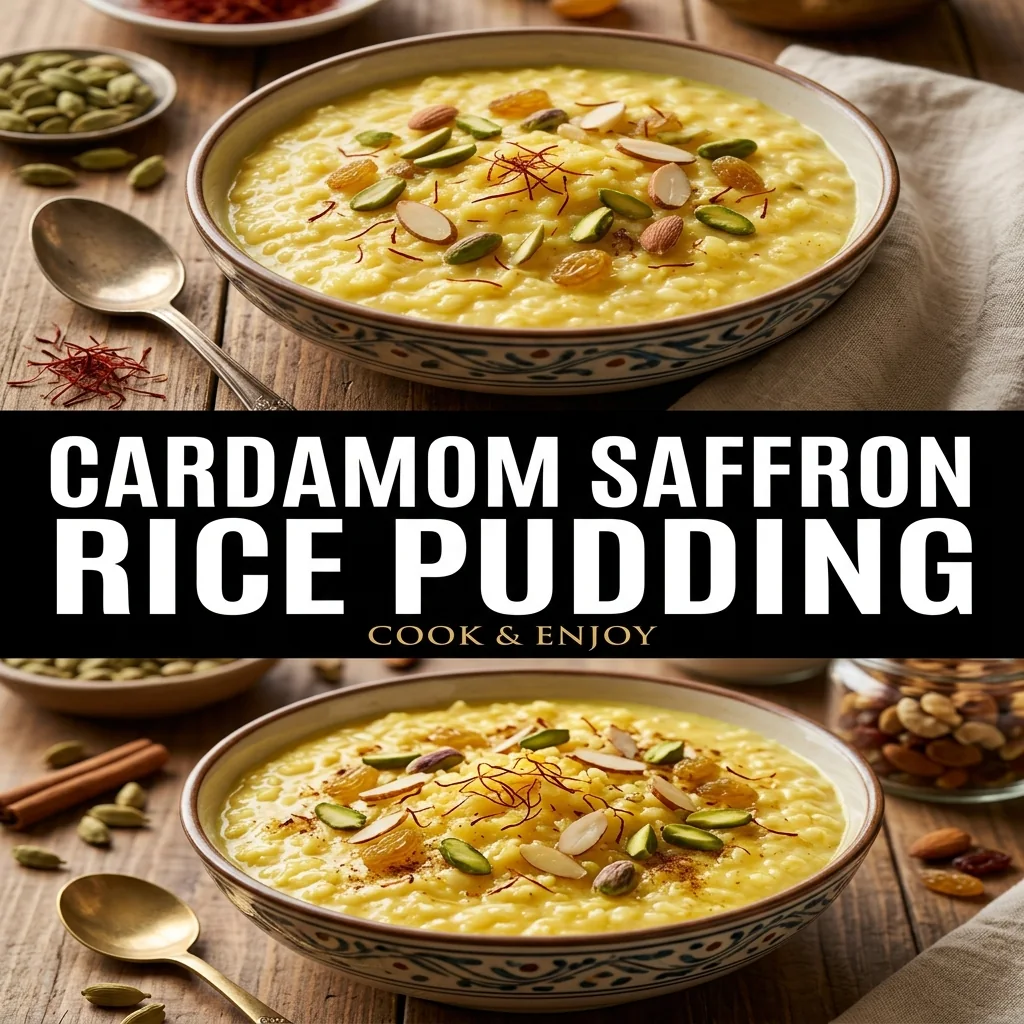
Cardamom Saffron Rice Pudding is a fragrant, comforting dessert rooted in traditional dairy preparations across South Asia and the Middle East. Simmered patiently on the stovetop, long-grain basmati rice gradually releases its starches into gently bubbling whole milk, yielding a naturally thick custard consistency without relying on artificial thickeners or cornstarch. Infusing the dairy with cracked green cardamom introduces citrusy, floral warmth, while blooming threads of pure saffron imparts both a luminous golden color and a delicate earthy aroma. Finished with a touch of heavy cream, pure cane sugar, and chopped nuts, this pudding provides an elegant sweet course that is as soothing when served warm as it is refreshing when thoroughly chilled.
Rice Selection and Preparation
Selecting aged long-grain basmati rice yields the best balance between individual grain texture and sauce thickness. Washing the rice thoroughly under cold water removes surface dust and excess unattached starches that could cause the milk to become overly gummy rather than silky. Coarsely crushing a small portion of the grains late in the simmering process releases internal starch directly into the dairy, creating a creamy emulsion that suspends the remaining intact grains uniformly without requiring cornstarch, tapioca, or egg yolks.
Maximizing Saffron and Cardamom Flavor
Cardamom and saffron must be handled thoughtfully to extract their full aromatics without introducing harshness. Lightly bruising the cardamom pods opens the papery exterior, allowing the essential oils inside the dark seeds to seep into the milk over prolonged low heat. Saffron threads benefit from gentle crushing between the fingers before steeping in warm milk for at least fifteen minutes. This pre-soaking step draws out crocin, the pigment responsible for the golden hue, and helps the aroma disperse evenly through the dessert.
Simmering Control and Heat Management
Milk simmered over stove heat is vulnerable to boiling over and burning onto the vessel floor. A wide, thick-bottomed saucepan distributes heat evenly and minimizes hot spots. Stirring regularly with a flat-edged wooden spoon ensures that rice grains do not rest undisturbed against hot metal. Keep the burner at a delicate simmer where small bubbles gently break the surface. If bubbles vigorously roll, lower the temperature immediately to protect the dairy sugars from caramelizing prematurely or curdling.
Before you start
To prevent milk from scorching at the bottom of the pan, always use a heavy-bottomed stainless steel or enameled cast-iron pot. Rinse the basmati rice until the water runs clear to wash away excess surface powder while retaining intact starch granules. If the pudding thickens too much during the cooling period, stir in 2 to 3 tablespoons of warm whole milk just before serving to re-establish a luscious, spoonable consistency.
THE RECIPE
Cardamom Saffron Rice Pudding
6 servings · 15 minutes preparation · 45 minutes cooking · 60 minutes cooling, chilling or resting
Ingredients
Step-by-step instructions
- Place the lightly crushed saffron threads into a small heatproof bowl with 2 tablespoons of warm whole milk; set aside to bloom for 15 minutes.
- In a heavy-bottomed 4-quart stainless steel saucepan or Dutch oven, combine the remaining 5 cups of whole milk and the crushed cardamom pods over medium heat, bringing the mixture just to a gentle simmer while stirring frequently.
- Add the rinsed and drained basmati rice along with the fine sea salt to the simmering milk, stirring well to ensure no grains settle or stick to the base of the pan.
- Reduce the heat to medium-low and simmer uncovered for 30 to 35 minutes, stirring scraping the bottom and sides every 3 to 4 minutes to prevent scorching, until the rice grains are thoroughly softened and swollen.
- Using the back of a wooden spoon or a potato masher, gently crush about one-third of the softened rice grains directly against the side of the pot to release additional starches and thicken the base.
- Pour in the bloomed saffron milk, granulated sugar, heavy cream, and alcohol-free vanilla extract, stirring continuously over low heat for another 8 to 10 minutes until the pudding turns a golden yellow and coats a spoon thickly.
- Fold in 1 tablespoon of slivered pistachios and 1 tablespoon of slivered almonds, reserving the rest for garnish.
- Remove the saucepan from the heat, fish out and discard the empty cardamom pod husks if desired, and transfer the pudding to a large heatproof bowl or individual serving dishes to rest and cool for 60 minutes before serving warm or chilling.
Kitchen notes
To prevent milk from scorching at the bottom of the pan, always use a heavy-bottomed stainless steel or enameled cast-iron pot. Rinse the basmati rice until the water runs clear to wash away excess surface powder while retaining intact starch granules. If the pudding thickens too much during the cooling period, stir in 2 to 3 tablespoons of warm whole milk just before serving to re-establish a luscious, spoonable consistency.
Storage & make-ahead
Transfer cooled pudding into an airtight container and refrigerate promptly within 2 hours. Store in the refrigerator for up to 4 days. Serve chilled directly from the refrigerator, or gently reheat individual portions in a small saucepan over low heat with a splash of milk until the mixture reaches an internal temperature of 165 F (74 C), stirring continuously.
An original recipe guide inspired by themes in our Pinterest research. Recipe has not been independently kitchen-tested. AI-generated image is illustrative; your finished dish may look different.
Frequently asked questions
Can I use ground cardamom instead of whole pods?
Yes, you can substitute the whole pods with 1/2 teaspoon of freshly ground green cardamom. Add it along with the sugar and saffron near the end of cooking so its delicate, volatile oils do not dissipate during the long reduction process.
Why is my rice pudding thinner than expected when hot?
Rice pudding thickens considerably as it cools because the released starches set upon dropping in temperature. Remove the saucepan from the stove when the pudding leaves a clear trail across the back of a spoon; it will firm up during resting.
Can I substitute low-fat milk for whole milk?
Whole milk is strongly recommended because its higher fat content prevents curdling during prolonged cooking and provides the necessary mouthfeel. Low-fat or skim milk yields a watery pudding with a thinner texture and a greater tendency to scorch against the pan.