WHY MAKE IT
A little comfort, a lot of flavor.
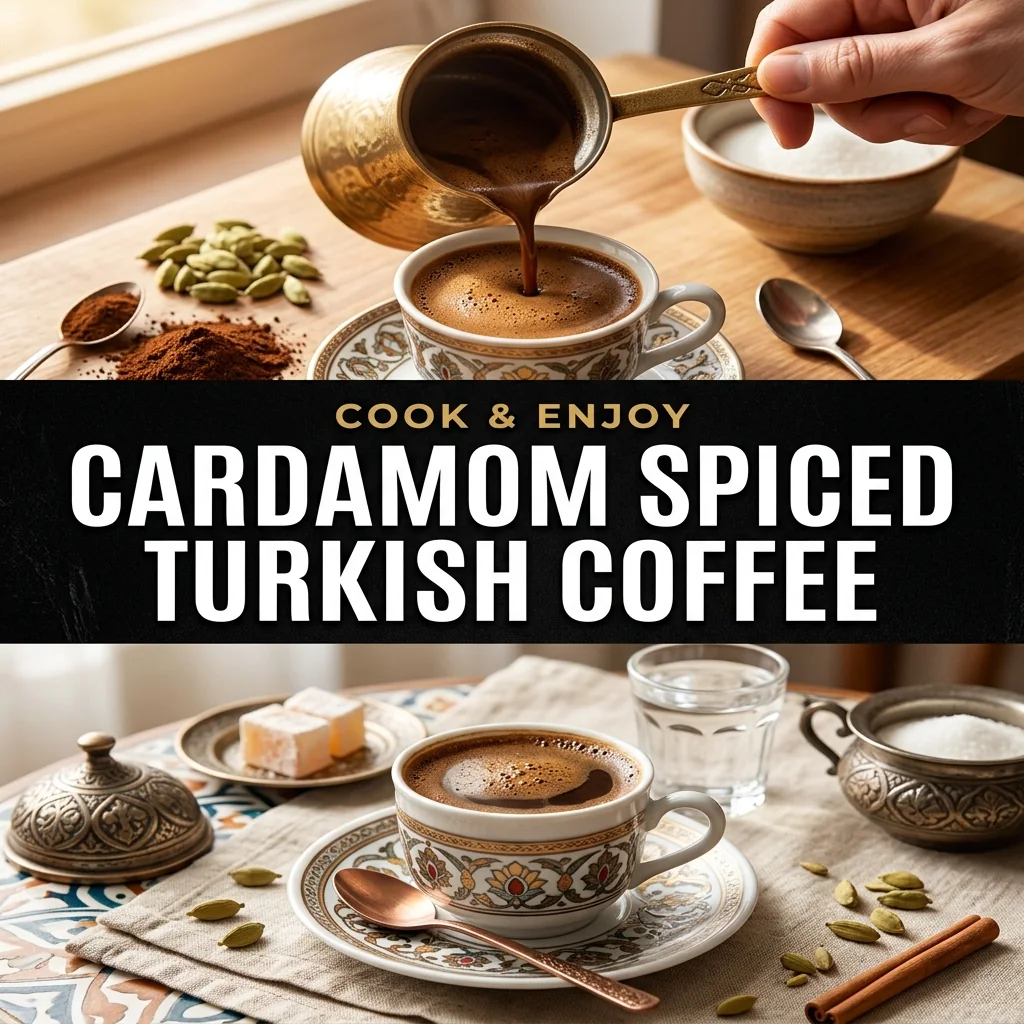
Cardamom Spiced Turkish Coffee is a centuries-old preparation that celebrates the sensory beauty of finely ground beans and aromatic spices. Prepared in a specialized small pot known as a cezve or ibrik, this method uses an extra-fine powder grind that suspends effortlessly in cold water. Slowly simmered over low heat, the brew releases deep roasted notes that intertwine with the citrusy, herbal fragrance of crushed whole cardamom pods. Unlike filtered preparations, Turkish coffee is served completely unfiltered, producing an iconic layer of dense, velvety crema on top while the fine grounds settle gently to the base of the cup. Rich, fragrant, and meditative to prepare, it transforms an ordinary coffee pause into a mindful cultural ritual.
The Importance of the Powder Grind
The definitive characteristic of Turkish coffee is its grind size, which must resemble fine, powdery cocoa rather than standard espresso grounds. Standard household grinders rarely achieve this level of pulverized fineness; therefore, utilizing a specialized Turkish hand mill or purchasing beans ground explicitly for cezve preparation is essential. The microscopic size of the particles allows them to remain briefly suspended in hot water to produce rich foam without creating gritty bitterness, eventually settling into a smooth sediment at the bottom of the cup once poured.
Infusing Whole Green Cardamom
Green cardamom is a beloved aromatic companion in Middle Eastern coffee traditions, imparting an invigorating herbal sweetness and piney citrus undertone. Using whole pods rather than pre-ground cardamom powder yields a cleaner flavor profile without introducing murky sediment. Cracking the pods gently with the flat of a knife exposes the fragrant black seeds inside, allowing essential oils to steep directly into the cold water as it warms gradually. This controlled extraction complements the dark roast without overpowering the nuanced taste of the coffee beans.
Mastering the Foam and Pour
A rich, persistent head of foam is the ultimate benchmark of a properly brewed Turkish coffee. Heating the mixture slowly over gentle heat encourages gas and emulsified oils to rise steadily to the surface without breaking. Dividing this velvety crema among the cups before completing the brew guarantees that every serving enjoys an equal share of texture. Allowing the finished cups to rest undisturbed for several minutes after pouring lets the micro-grounds compact neatly at the bottom, ensuring every sip is smooth and aromatic.
Before you start
Never allow Turkish coffee to reach a rapid, rolling boil. Boiling breaks the delicate surface tension of the oils, dissipating the prized thick foam (köpük) and scorching the fine coffee particles into bitterness. Keep your stove burner set to low and remain beside the vessel throughout the brew. Pouring the liquid very gently down the side of tilted demitasse cups preserves the collected foam on top, creating the traditional layered presentation.
THE RECIPE
Cardamom Spiced Turkish Coffee
4 servings · 5 minutes preparation · 8 minutes cooking · 4 minutes cooling, chilling or resting
Ingredients
Step-by-step instructions
- Pour the cold filtered water into a traditional copper cezve or small heavy stainless-steel saucepan.
- Add the extra-fine Turkish-grind coffee, crushed green cardamom pods, and granulated sugar directly into the cold water, stirring briskly with a small spoon for 15 seconds until the sugar dissolves and the grounds are fully moistened.
- Place the pot over low heat on the stovetop and let it warm slowly without any further stirring, allowing the coffee grounds to settle naturally toward the bottom while heat gently extracts the cardamom.
- Watch the surface closely as dark foam begins to form around the edges after 4 to 5 minutes; just as the thick crema rises toward the rim of the pot without coming to a rolling boil, remove the pot immediately from the heat.
- Use a teaspoon to gently skim off portions of the thick foam and divide it evenly among four small demitasse cups, return the cezve to the low heat for 15 to 20 seconds to raise a second foam, then slowly pour the hot coffee down the inside wall of each cup and let rest undisturbed for 4 minutes before sipping.
Kitchen notes
Never allow Turkish coffee to reach a rapid, rolling boil. Boiling breaks the delicate surface tension of the oils, dissipating the prized thick foam (köpük) and scorching the fine coffee particles into bitterness. Keep your stove burner set to low and remain beside the vessel throughout the brew. Pouring the liquid very gently down the side of tilted demitasse cups preserves the collected foam on top, creating the traditional layered presentation.
Storage & make-ahead
Cardamom Spiced Turkish Coffee is crafted to be enjoyed fresh immediately after brewing, as reheating destroys its aromatic foam and delicate volatile oils. If you have extra brewed coffee, strain out the grounds and cardamom pods and store the liquid in an airtight jar in the refrigerator for up to 24 hours to use as a chilled spiced coffee base over ice.
An original recipe guide inspired by themes in our Pinterest research. Recipe has not been independently kitchen-tested. AI-generated image is illustrative; your finished dish may look different.
Frequently asked questions
Can I make this recipe without a traditional copper cezve?
Yes, a small, heavy-bottomed stainless steel saucepan or butter warmer works well. Choose a narrow, tall vessel rather than a wide skillet so the rising foam concentrates effectively at the surface rather than dispersing and evaporating quickly.
Do I drink the sediment at the bottom of the cup?
No, Turkish coffee is served unfiltered, so the fine powder naturally settles into a thick layer of sediment at the bottom. Sip the top liquid slowly and leave the final half-inch of liquid and grounds undisturbed in the cup.
Can I omit the sugar entirely?
Absolutely. Turkish coffee is traditionally prepared to personal sweetness preferences, ranging from sade (plain without sugar) to sekerli (sweet). Adjust or omit the granulated sugar during the initial cold water mixing stage to match your personal palate.