WHY MAKE IT
A little comfort, a lot of flavor.
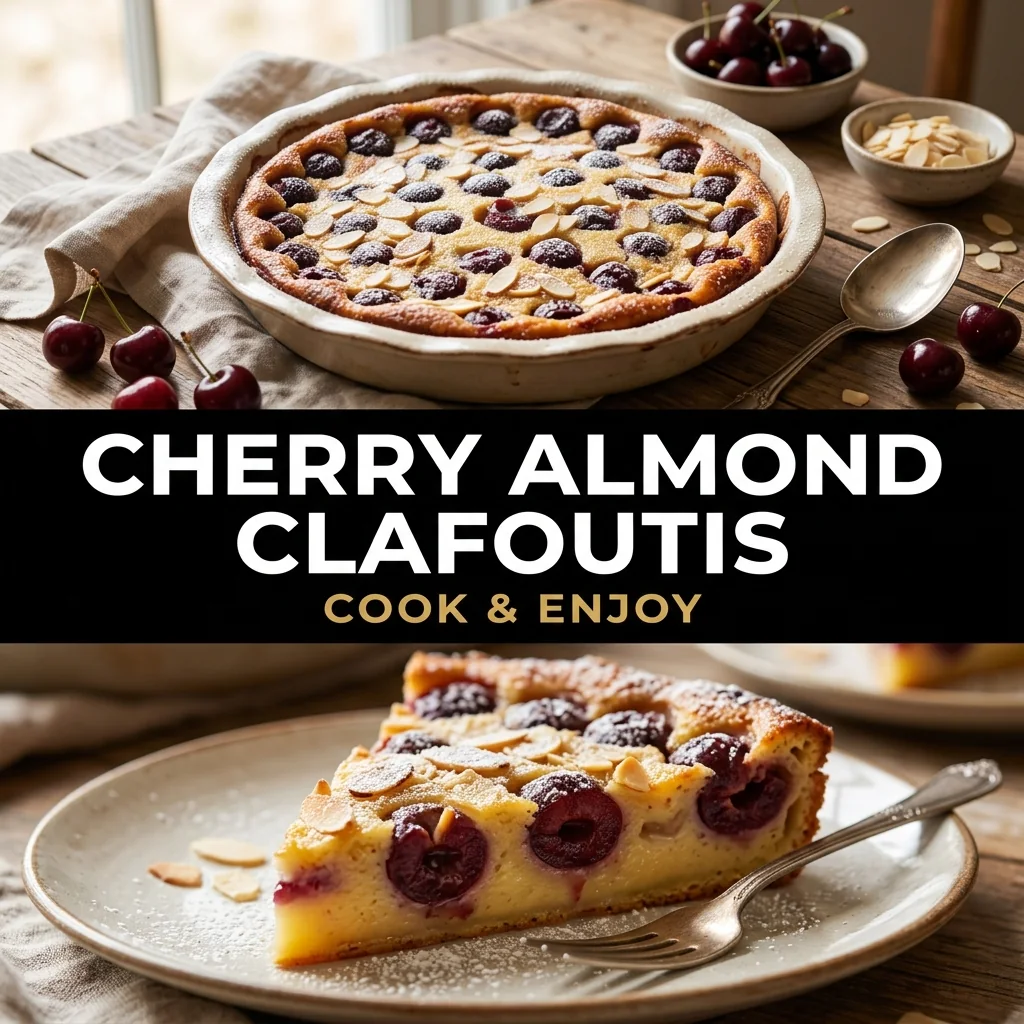
Cherry almond clafoutis represents rustic French home baking at its finest, bridging the boundary between a delicate flan and a tender Dutch baby pancake. Originating from the Limousin region, this preparation suspends plump, sweet dark cherries within a smooth, dairy-rich batter infused with hints of almond and vanilla. Baking the cherries causes their natural juices to concentrate and gently perfume the surrounding egg custard. While traditional rustic methods occasionally leave pits intact to release subtle almond notes, using pitted cherries paired with alcohol-free almond extract provides identical nutty depth while ensuring ease of enjoyment for all diners. Sliced almonds toasted atop the golden surface introduce a welcoming crunch against the silky custard interior.
Selecting and Preparing Fruit
Fresh dark sweet cherries such as Bing or Rainier varieties provide the structural integrity required to withstand the hot custard bath without disintegrating into mush. Avoid canned pie fillings, which contain excessive cornstarch and artificial sweeteners that disrupt the delicate milk-and-egg ratio. If fresh cherries are out of season, unthawed frozen pitted sweet cherries may be used, provided they are thoroughly drained and patted dry to avoid adding excess water to the delicate batter matrix.
Batter Consistency and Blending
The batter for an authentic clafoutis should resemble crêpe batter: fluid, light, and easily pourable. Sifting the flour eliminates compact pockets that resist liquid absorption. Whisking eggs with sugar initially dissolves the granules and forms a stable emulsion with the whole milk and heavy cream. Over-mixing introduces excessive air bubbles, which can cause the baked dessert to rise unevenly and collapse abruptly. A gentle, steady hand ensures a velvety crumb.
Serving and Temperature Dynamics
Clafoutis is remarkably dynamic depending on serving temperature. Fresh from the oven, it presents a dramatically puffed rim that settles gently within fifteen minutes of resting. Serving it warm highlights the rich cream notes and soft, juicy cherries. Alternatively, thorough chilling in the refrigerator sets the custard into a clean-slicing consistency reminiscent of traditional European flan, making it a versatile dessert for casual luncheons or elegant evening dinners alike.
Before you start
Pat your pitted cherries dry with paper towels before placing them into the greased baking vessel. Excess cherry juice pooling at the bottom can thin the batter locally, resulting in soggy patches that prevent the custard from setting evenly. Whisk the batter gently rather than whipping aggressively; introducing too much air causes the clafoutis to balloon excessively in the oven and deflate into a wrinkled, rubbery pancake rather than a delicate, creamy custard.
THE RECIPE
Cherry Almond Clafoutis
6 servings · 20 minutes preparation · 40 minutes cooking · 15 minutes cooling, chilling or resting
Ingredients
Step-by-step instructions
- Preheat oven to 350 F (175 C) and thoroughly grease a 10-inch round ceramic or cast-iron baking dish with 1 tablespoon softened unsalted butter.
- Arrange 1 pound stemmed and pitted sweet dark cherries in an even, single layer across the bottom of the prepared dish.
- Whisk 3 room-temperature eggs and 1/2 cup granulated sugar in a mixing bowl for 2 minutes until pale, slightly thickened, and frothy.
- Add whole milk, heavy cream, alcohol-free almond extract, alcohol-free vanilla extract, and fine sea salt, whisking until fully incorporated.
- Gradually sift 2/3 cup all-purpose flour into the liquid mixture, whisking gently from the center outward until a smooth, thin batter forms without lumps.
- Carefully pour the batter over the arranged cherries in the baking dish, ensuring the fruit remains evenly distributed across the surface.
- Scatter 1/3 cup sliced blanched almonds evenly across the top of the batter.
- Bake at 350 F (175 C) for 40 minutes until edges are puffed and golden brown, the center is set, and a tester inserted near the middle reaches 160 F (71 C).
- Remove from oven, rest on a wire rack for 15 minutes to allow the custard to settle from its puffed state, and dust with powdered sugar before serving warm.
Kitchen notes
Pat your pitted cherries dry with paper towels before placing them into the greased baking vessel. Excess cherry juice pooling at the bottom can thin the batter locally, resulting in soggy patches that prevent the custard from setting evenly. Whisk the batter gently rather than whipping aggressively; introducing too much air causes the clafoutis to balloon excessively in the oven and deflate into a wrinkled, rubbery pancake rather than a delicate, creamy custard.
Storage & make-ahead
Allow leftover clafoutis to cool completely, then refrigerate promptly within 2 hours, tightly covered, for up to 3 days. Serve chilled straight from the refrigerator, or reheat individual portions in an oven preheated to 325 F (163 C) for 10 minutes until heated through to 165 F (74 C).
An original recipe guide inspired by themes in our Pinterest research. Recipe has not been independently kitchen-tested. AI-generated image is illustrative; your finished dish may look different.
Frequently asked questions
Why did my clafoutis turn rubbery rather than creamy?
A rubbery texture is caused by over-baking or over-whisking the flour. High oven temperatures toughen egg proteins, while vigorous mixing develops too much gluten. Keep the oven calibrated to 350 F (175 C) and stop mixing as soon as the flour incorporates smoothly into the wet ingredients.
Can I use gluten-free flour for this clafoutis recipe?
Yes, a 1:1 commercial gluten-free baking blend works effectively because clafoutis relies primarily on egg coagulation for structure rather than a strong gluten network. Ensure your blend contains xanthan gum to help bind the milk and cream evenly during baking.
How do I tell when the custard center is completely cooked?
The clafoutis is ready when the edges are puffed and lightly browned, and the center jiggles only slightly when nudged. An instant-read food thermometer inserted into the custard halfway between edge and center should register 160 F (71 C) without wet batter adhering.