WHY MAKE IT
A little comfort, a lot of flavor.
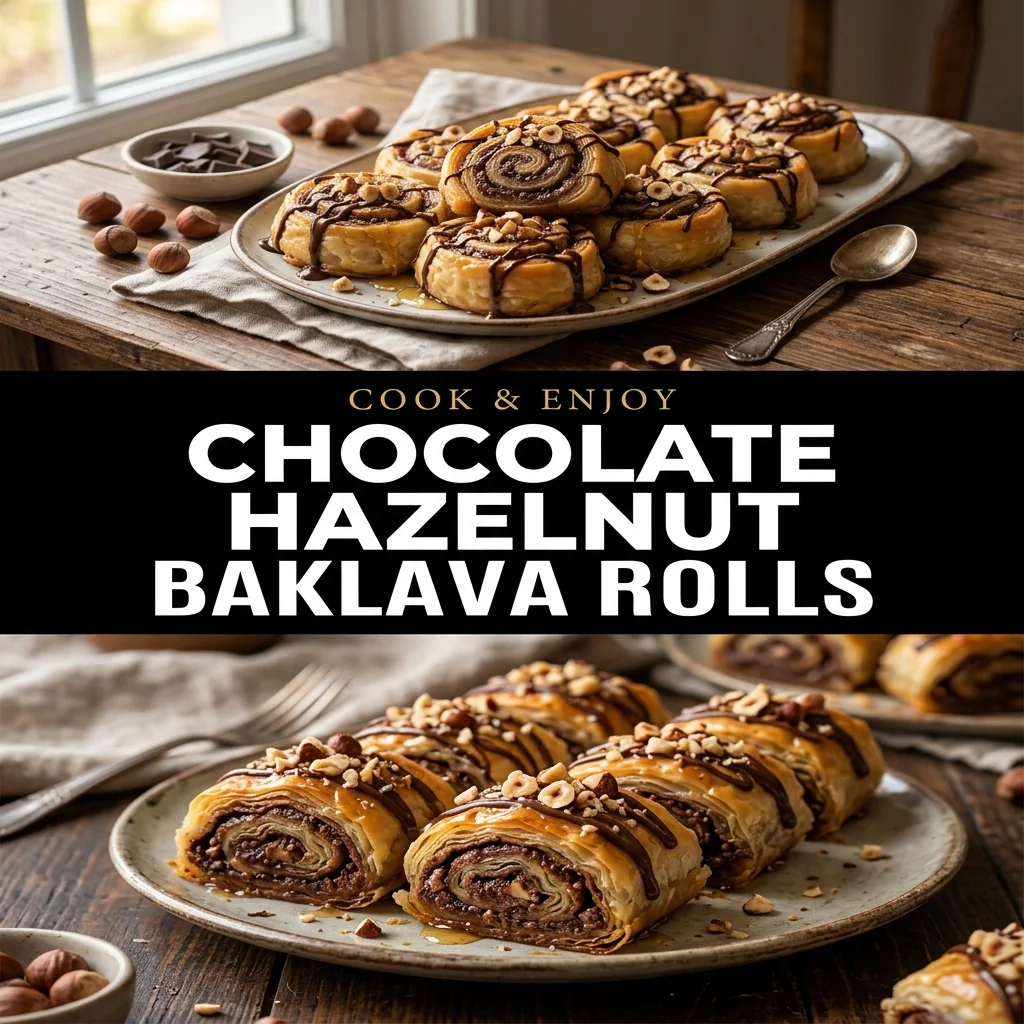
These chocolate hazelnut baklava rolls present an aromatic twist on traditional Middle Eastern and Mediterranean layered sweets. Instead of wide pan layers, the delicate phyllo pastry is rolled around a robust filling of roasted hazelnuts, high-quality Dutch-process cocoa, and sweet cinnamon. Rolled baklava offers a higher proportion of crispy outer crust to tender nutty center, ensuring every piece delivers textural contrast. A cool, citrus-infused sugar syrup is poured over the rolls the moment they leave the oven, sealing in richness and creating a glossy, crackling shell. It makes an elegant accompaniment to traditional black tea or robust cardamom coffee.
Preparing the Nut and Cocoa Filling
Roasting raw hazelnuts loosens the papery outer skin and intensifies their sweet, buttery core. Wrap the warm roasted nuts in a kitchen towel and rub them briskly together to shed the bitter skins before grinding. When pulsing the nuts, aim for a gritty meal with tiny flecks rather than a paste. Dutch-process cocoa provides a deep, earthy foundation without acidic bitterness, balancing the sweetness of the syrup. Mixing the dry spices with the crushed nuts ensures consistent distribution throughout the rolled pastry layers.
Handling and Rolling Phyllo
Working with phyllo demands speed and gentle handling. Thaw frozen pastry slowly overnight in its original packaging in the refrigerator to prevent condensation from turning sheets sticky. Use a broad, soft-bristled pastry brush to apply the melted butter sparingly; puddling butter makes the roll greasy, while too little causes dry tears. Rolling the pastry firmly prevents gaps where filling might spill out, but pressing too hard will compress the delicate micro-layers that expand during baking to produce the signature flaky crunch.
The Science of Crisp Syrup Absorption
The defining rule of baklava is combining contrasting temperatures: cold syrup over hot pastry, or warm syrup over chilled pastry. In this method, pouring cool syrup over freshly baked, sizzling rolls forces rapid capillary uptake of the sugar solution into the inner layers while the exterior steam drives off excess moisture. The lemon juice in the syrup prevents sugar crystallization and cuts through the intense richness of the butter and chocolate. Allow two full hours of absorption before moving pieces.
Before you start
Phyllo dough dries out within minutes of exposure to room air, turning brittle and impossible to roll. Keep a lightly damp, lint-free tea towel draped over the unused stack while you assemble each cylinder. Make sure the syrup is completely cooled to room temperature before pouring it over the piping-hot baklava straight out of the oven. This temperature contrast creates an instant sizzle and guarantees the layers stay crunchy rather than turning limp and soggy.
THE RECIPE
Chocolate Hazelnut Baklava Rolls
12 servings · 35 minutes preparation · 50 minutes cooking · 120 minutes cooling, chilling or resting
Ingredients
Step-by-step instructions
- Preheat the oven to 175 C (350 F), spread 200 g hazelnuts on a rimmed baking sheet, and roast for 8 to 10 minutes until fragrant and loose-skinned, then rub off skins in a clean towel and cool.
- Pulse the roasted hazelnuts in a food processor until finely crushed with gravel-sized pieces, then transfer to a bowl and mix with 30 g cocoa powder, 3 g cinnamon, and 50 g granulated sugar.
- In a small saucepan over medium heat, combine 200 g granulated sugar, 180 ml water, and 15 ml lemon juice, bring to a boil, then reduce heat and simmer for 10 minutes; remove from heat, stir in 5 ml alcohol-free vanilla extract, and let cool completely.
- Lay one sheet of thawed phyllo pastry onto a dry, clean work surface, keeping remaining sheets under a slightly damp kitchen towel, and brush lightly with melted unsalted butter.
- Layer a second sheet of phyllo directly on top, brush with butter, and scatter 35 g of the chocolate hazelnut mixture evenly over the surface, leaving a 1/2-inch border along the edges.
- Roll the layered phyllo tightly from the shorter end into a compact cylinder, brush the outer seam with butter to seal, and place seam-side down into a buttered 9x13-inch baking dish; repeat with remaining phyllo and filling to make 8 rolls.
- Slice each long cylinder into three equal bite-sized pieces with a sharp serrated knife, then brush the tops thoroughly with any remaining melted butter.
- Bake at 175 C (350 F) for 30 minutes until deep golden and crisp, remove immediately from the oven, and slowly pour the cooled syrup over the hot rolls, allowing them to rest and absorb for 2 hours before serving.
Kitchen notes
Phyllo dough dries out within minutes of exposure to room air, turning brittle and impossible to roll. Keep a lightly damp, lint-free tea towel draped over the unused stack while you assemble each cylinder. Make sure the syrup is completely cooled to room temperature before pouring it over the piping-hot baklava straight out of the oven. This temperature contrast creates an instant sizzle and guarantees the layers stay crunchy rather than turning limp and soggy.
Storage & make-ahead
Keep cooled baklava rolls uncovered or loosely draped with parchment paper in a dry, cool place for up to 4 days; do not seal in an airtight container as trapped moisture degrades the pastry's crispness. If storing longer, refrigerate promptly within 2 hours in a covered container for up to 4 days, bringing to room temperature before serving.
An original recipe guide inspired by themes in our Pinterest research. Recipe has not been independently kitchen-tested. AI-generated image is illustrative; your finished dish may look different.
Frequently asked questions
Can I substitute other nuts for the hazelnuts?
Yes, roasted walnuts, pistachios, or blanched almonds work well in equal weight. Ensure nuts are roasted and finely chopped to maintain the proper texture and allow tight rolling without puncturing the delicate phyllo.
Why did my baklava rolls turn soggy?
Baklava rolls turn soggy if warm syrup is poured over warm pastry, or if they are sealed in an airtight container while still releasing moisture. Always use cooled syrup on hot pastry and store loosely covered.
Why must I cut the rolls before baking?
Cutting baked, brittle phyllo will shatter the delicate pastry into shards. Slicing the raw, buttered cylinders prior to baking ensures clean, uniform portions and allows hot butter and syrup to penetrate every cut edge.