WHY MAKE IT
A little comfort, a lot of flavor.
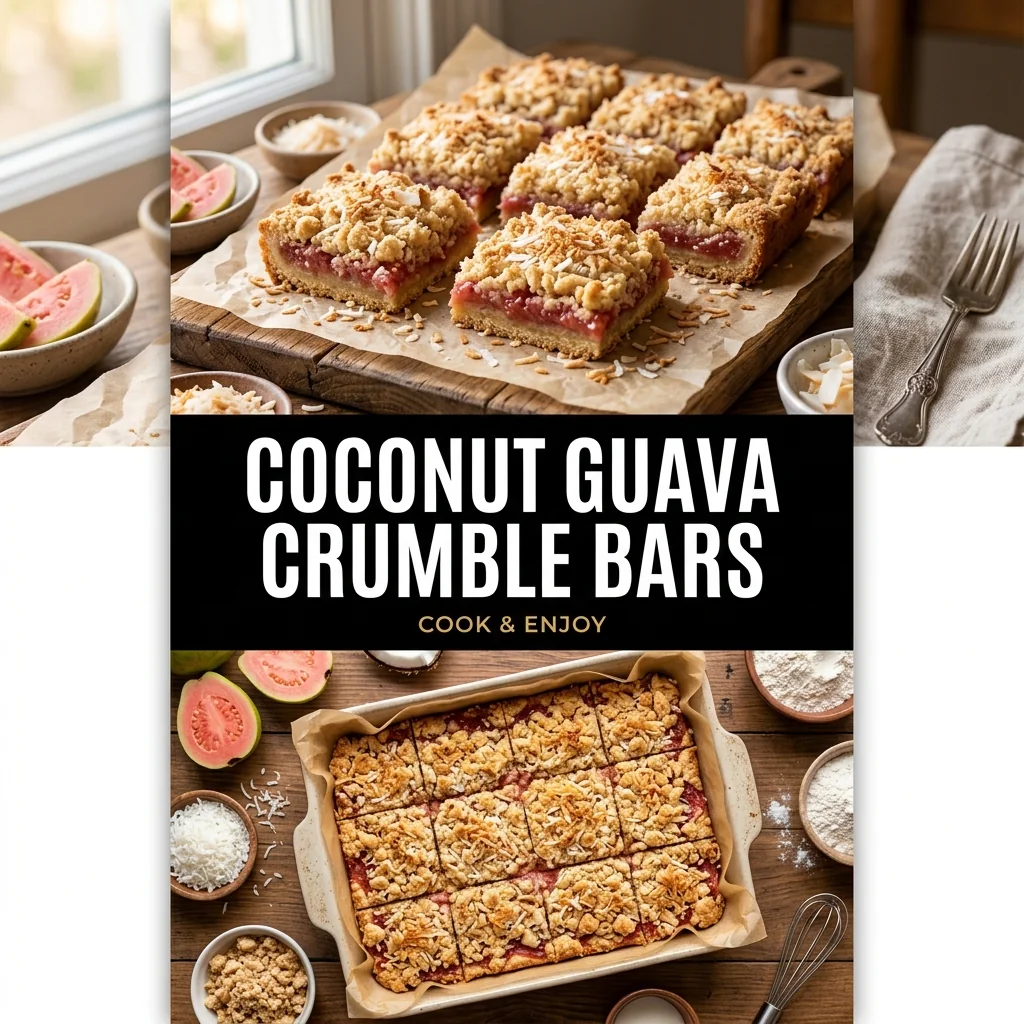
Coconut Guava Crumble Bars unite two distinct tropical textures: dense, concentrated fruit paste and rich, crumbly shortbread. Guava paste offers an intensely aromatic, floral profile that balances naturally against the mild dairy richness of real unsalted butter. Adding desiccated coconut directly into the shortbread dough yields an earthy chewiness that contrasts sharply with the smooth fruit filling. Pre-baking the base prevents the fruit layer from turning the bottom soggy during the final oven stage. A light scatter of rolled oats in the topping introduces extra structure, allowing the upper coconut flakes to toast without burning. These layered squares slice neatly when thoroughly chilled, making them an elegant sweet bite for gatherings or quiet afternoon tea services.
Handling and Melting Guava Paste
Solid guava paste, often sold in compact blocks or tins, requires gentle thermal encouragement to convert into a pourable pastry filling. Dicing the block into small cubes accelerates the breakdown process in your saucepan. Maintain medium-low heat and stir continually with a heatproof spatula or wire whisk. Incorporating citrus juice cuts the high sweetness while loosening the thick pectin chains. Avoid high heat, which scorches the sugars and creates a sticky, unmanageable glue. The target consistency resembles warm fruit butter that flows smoothly across the par-baked crust.
Mastering the Coconut Streusel
The streusel base does double duty as both foundation and crowning crust. Working with chilled butter ensures distinct pockets of fat, yielding a tender crumb rather than a dense paste. When blending the dry elements, unsweetened coconut provides textural lift without increasing sweetness. The reserved portion gets tossed with additional shredded coconut and rolled oats right before topping. This targeted addition ensures the surface exhibits varied golden tones and pronounced crunch, safeguarding the tender guava layer beneath from drying out under direct oven heat.
Chilling for Precise Slices
Warm fruit bars resist neat portioning due to liquefied sugars and tender, hot shortbread fats. Allow the baked pan to rest on a wire rack at room temperature for one full hour so structural steam can escape. Transfer the pan to the refrigerator for another hour until the guava gel sets firm. Use the parchment paper sling to lift the entire slab onto a clean cutting board. Slice with a long, sharp chef's knife, wiping the blade clean between cuts for immaculate edges.
Before you start
Guava paste softens much easier when gently warmed with a splash of water and acid rather than spreading cold. If the paste remains stiff, add one extra teaspoon of water over low heat and whisk briskly until glossy. Never spread the guava layer too close to unlined edges of the pan, as molten fruit paste caramelizes aggressively and can adhere firmly to bare metal walls, complicating bar removal.
THE RECIPE
Coconut Guava Crumble Bars
16 servings · 25 minutes preparation · 40 minutes cooking · 120 minutes cooling, chilling or resting
Ingredients
Step-by-step instructions
- Preheat the oven to 350°F (175°C) and line an 8-inch square metal baking pan with parchment paper, leaving an overhang on two sides.
- Combine 2 cups all-purpose flour, 0.5 cup granulated sugar, 0.25 cup brown sugar, and 0.5 teaspoon sea salt in a large bowl.
- Work 1 cup chilled cubed unsalted butter into the flour mixture using a pastry blender until pea-sized crumbles develop, then stir in 1 teaspoon alcohol-free vanilla extract and 0.75 cup shredded coconut.
- Press two-thirds of the crumble mixture firmly and evenly into the base of the prepared 8-inch pan, reserving the remaining one-third for the topping.
- Bake the crust at 350°F (175°C) for 15 minutes until lightly set and pale golden around the perimeter, then transfer to a wire rack.
- Place 14 ounces sliced guava paste, 3 tablespoons warm water, and 1 tablespoon lime juice into a small saucepan over medium-low heat, whisking constantly for 4 to 5 minutes until completely smooth and spreadable.
- Pour the warm guava mixture over the par-baked crust, smoothing it gently to the edges with an offset spatula.
- Toss the remaining one-third crumble mixture with 0.25 cup rolled oats and the remaining 0.5 cup shredded coconut, then scatter evenly over the guava layer.
- Bake at 350°F (175°C) for 25 minutes until the streusel is deeply golden, let cool 60 minutes at room temperature, then chill in the refrigerator for 60 minutes before slicing into 16 bars.
Kitchen notes
Guava paste softens much easier when gently warmed with a splash of water and acid rather than spreading cold. If the paste remains stiff, add one extra teaspoon of water over low heat and whisk briskly until glossy. Never spread the guava layer too close to unlined edges of the pan, as molten fruit paste caramelizes aggressively and can adhere firmly to bare metal walls, complicating bar removal.
Storage & make-ahead
Store sliced bars in an airtight container between sheets of parchment paper in the refrigerator for up to 5 days. For longer storage, freeze wrapped bars for up to 1 month and thaw in the refrigerator overnight. Perishables must be refrigerated within 2 hours.
An original recipe guide inspired by themes in our Pinterest research. Recipe has not been independently kitchen-tested. AI-generated image is illustrative; your finished dish may look different.
Frequently asked questions
Can I use sweetened coconut flakes instead of unsweetened?
Unsweetened desiccated coconut works best because guava paste is already exceptionally sweet. If using sweetened shredded coconut, decrease the granulated sugar in the shortbread dough by 2 tablespoons to avoid an overly cloying bar.
What should I do if my guava paste becomes too thick while spreading?
Return the saucepan to low heat immediately and whisk in an extra teaspoon of warm water until it re-emulsifies. Work efficiently to pour and spread the paste over the crust while warm, as it begins firming rapidly once cool.
Why did my crust stick to the baking pan?
Guava sugars stick aggressively to exposed metal. Always line the bottom and two opposing sides of your baking dish with parchment paper to create handles. Grease any exposed metal surfaces thoroughly before pressing the bottom dough layer.