WHY MAKE IT
A little comfort, a lot of flavor.
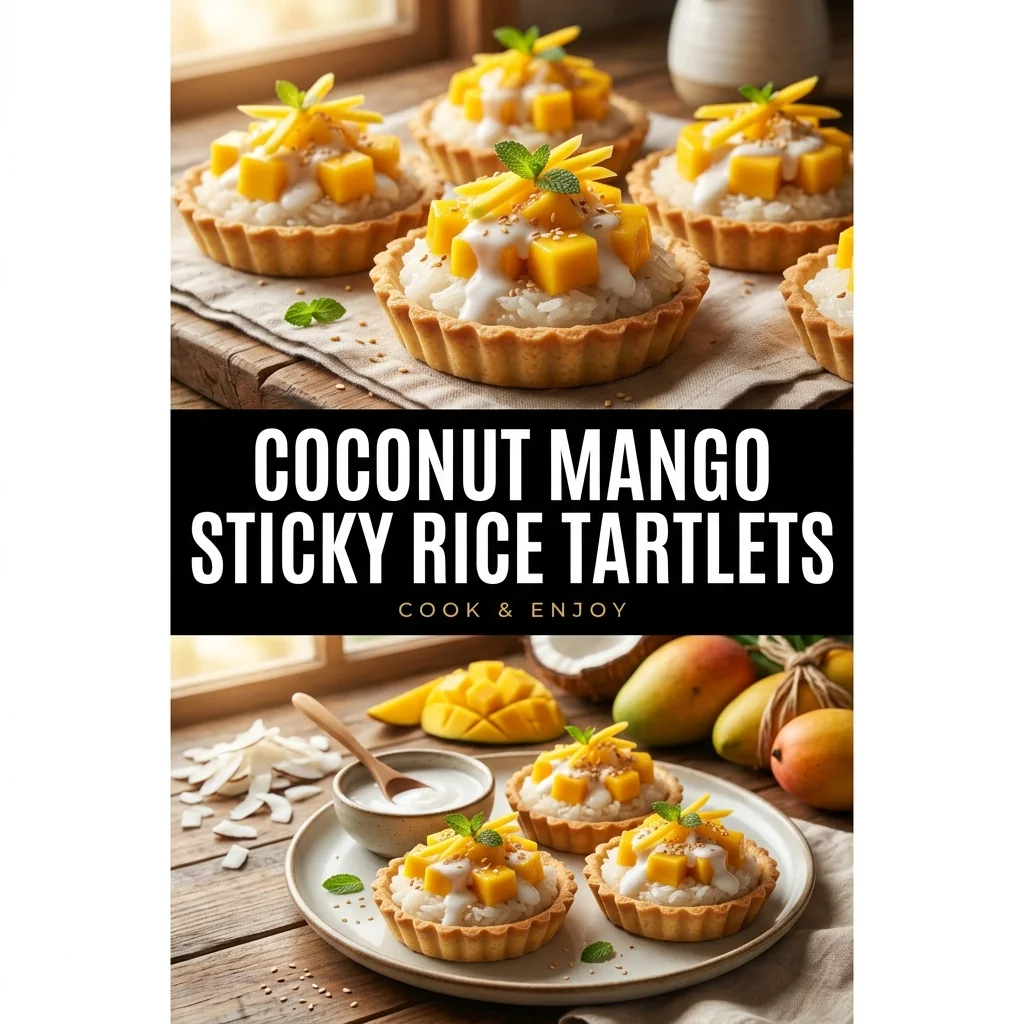
Coconut mango sticky rice tartlets reimagine Thailand's beloved street-food dessert into elegant, handheld party pastries. Traditionally served on a flat plate with sliced fruit alongside a mound of coconut-infused glutinous rice, this adaptation houses the sweet, fragrant grains inside crisp, toasted coconut macaron-style tartlet shells. The buttery crunch of the desiccated coconut shell provides an enjoyable textural contrast to the soft, chewy bite of warm steamed rice. Ataulfo mangoes, prized for their honey-like sweetness and fiber-free, velvety flesh, crown each cup with bright tropical flavor. Finished with a velvety coconut reduction and nutty toasted sesame seeds, these bite-sized desserts deliver a harmonious balance of salty, sweet, creamy, and crisp elements in every mouthful.
Constructing the Toasted Coconut Shells
The tartlet crust relies on finely shredded unsweetened desiccated coconut bound simply with pasteurized egg white and melted coconut oil. Avoid sweetened baker's coconut flakes, which contain excess moisture and high sugar levels that scorch quickly in the oven. Pressing the damp coconut mixture firmly against the muffin tin contours creates a dense wall that holds its shape upon baking. As the egg white proteins coagulate and the shredded coconut toasts to a pale amber hue, the shells develop a remarkably sturdy, crisp structure that comfortably supports the moist, heavy sticky rice filling.
Mastering Thai Glutinous Sticky Rice
Authentic sticky rice requires steaming rather than boiling in water. Boiling causes the high-starch grains to disintegrate into mush, whereas steaming suspended over boiling water cooks the grains through while keeping each distinct kernel intact. Soaking the rice for an hour prior to steaming hydrates the grain core, ensuring uniform tenderness. Once steamed to a translucent finish, the hot grains are immediately steeped in warm, salted coconut milk. Covering the bowl allows the rice to drink in the fragrant coconut fat and sugar, resulting in a glossy, rich, and cohesive filling.
Selecting Mangoes and Balancing Salt
The secret to authentic Southeast Asian coconut desserts lies in generous salt balancing. A measured pinch of fine sea salt in both the rice soak and the topping sauce highlights the sweet richness of the coconut milk and enhances the fruit. For the fruit topping, select ripe Ataulfo or champagne mangoes displaying deep golden skins with slight wrinkling near the stem. These varieties possess a silky, non-stringy pulp with intense honeyed acidity that cuts effortlessly through the decadent coconut cream, providing a refreshing burst of tropical flavor.
Before you start
Use authentic long-grain Thai glutinous rice, often labeled sweet rice, rather than standard sushi or jasmine rice. Standard rice varieties lack the high amylopectin content required to produce the characteristic tender, cohesive stickiness of authentic sticky rice. Additionally, ensure the coconut milk mixture is hot when poured over the freshly steamed rice; hot grains quickly absorb the seasoned coconut liquid, resulting in plump, flavorful grains rather than a soggy, separated pudding.
THE RECIPE
Coconut Mango Sticky Rice Tartlets
12 servings · 30 minutes preparation · 35 minutes cooking · 85 minutes cooling, chilling or resting
Ingredients
Step-by-step instructions
- Rinse 1 cup glutinous sweet rice until the water runs clear, soak in cold water for 60 minutes, and drain thoroughly in a fine-mesh sieve.
- Preheat the oven to 350°F (175°C) and lightly grease the cups of a standard 12-cup muffin tin with coconut oil.
- In a medium bowl, combine 1 1/2 cups shredded desiccated coconut, 1 large pasteurized egg white, 2 tablespoons melted coconut oil, 2 tablespoons of the sugar, and 1/8 teaspoon of the salt, stirring until evenly moistened.
- Divide the coconut mixture evenly among the 12 muffin cups, pressing firmly into the bottoms and up the sides with the back of a spoon to create tartlet shells.
- Bake the coconut shells at 350°F (175°C) for 10 to 12 minutes until the edges are golden brown, then transfer the tin to a wire rack to rest and cool for 15 minutes before gently lifting out the crusts.
- Steam the drained glutinous rice in a cheesecloth-lined steamer basket set over boiling water for 20 minutes until the grains are translucent, tender, and chewy.
- While the rice steams, warm 1 cup of coconut milk, 6 tablespoons of sugar, and 1/4 teaspoon salt in a saucepan over medium-low heat for 3 minutes until dissolved, pour over the hot steamed rice in a bowl, cover, and let rest for 10 minutes to absorb.
- In the same saucepan, simmer the remaining 1/2 cup coconut milk, remaining 1/8 teaspoon salt, and the cornstarch slurry over low heat for 2 minutes until glossy and thickened into a coconut drizzle.
- Spoon the warm coconut sticky rice into the 12 cooled tartlet shells, top generously with diced Ataulfo mango, drizzle with the warm coconut cream sauce, and sprinkle with toasted sesame seeds.
Kitchen notes
Use authentic long-grain Thai glutinous rice, often labeled sweet rice, rather than standard sushi or jasmine rice. Standard rice varieties lack the high amylopectin content required to produce the characteristic tender, cohesive stickiness of authentic sticky rice. Additionally, ensure the coconut milk mixture is hot when poured over the freshly steamed rice; hot grains quickly absorb the seasoned coconut liquid, resulting in plump, flavorful grains rather than a soggy, separated pudding.
Storage & make-ahead
Store leftover assembled tartlets in an airtight container in the refrigerator within 2 hours. Chilled tartlets remain fresh for up to 2 days. Because glutinous rice hardens when cold, gently rewarm the sticky rice filling by microwaving individual tartlets for 10 to 15 seconds on medium power until slightly warm and soft to 165°F (74°C) before serving. For best texture, store diced mango separately and add fresh.
An original recipe guide inspired by themes in our Pinterest research. Recipe has not been independently kitchen-tested. AI-generated image is illustrative; your finished dish may look different.
Frequently asked questions
Can I use jasmine rice instead of glutinous sweet rice?
No, jasmine rice will not work. Glutinous sweet rice contains high amylopectin starch, which creates the chewy, cohesive texture necessary for sticky rice. Jasmine rice produces separate, soft grains that cannot hold together in the tartlet shells.
Can I prepare the coconut tartlet shells in advance?
Yes, bake the coconut shells up to 24 hours in advance. Once fully cooled, store them in an airtight container at room temperature lined with paper towels to preserve their crisp texture until assembly.
How do I choose the right canned coconut milk?
Select full-fat canned coconut milk containing only coconut extract and water, without guar gum or thickeners whenever possible. Avoid light coconut milk or refrigerated carton coconut beverages, which are too watery to enrich the rice.