WHY MAKE IT
A little comfort, a lot of flavor.
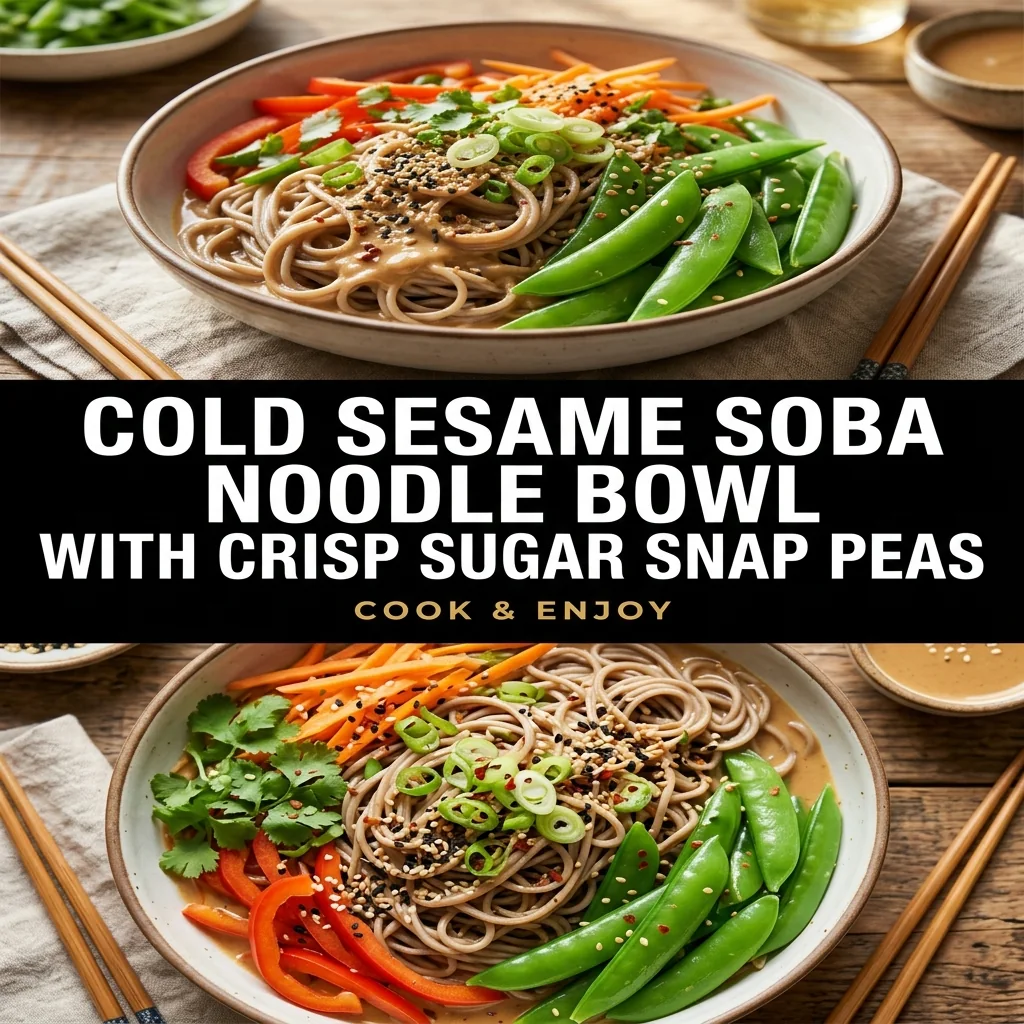
When warm weather arrives, refreshing chilled noodle dishes offer deeply satisfying nourishment without the heaviness of hot soups or braises. Soba noodles, crafted from earthy buckwheat flour, boast a distinct nuttiness, delicate spring, and subtle gray-brown hue that makes them an elegant base for fresh raw vegetables. In this vibrant bowl, sweet sugar snap peas are slivered into slender ribbons, retaining their loud, thirst-quenching crunch alongside finely shredded purple cabbage and crisp cucumber matchsticks. Everything is bound by a luscious sauce made from deeply toasted sesame paste, cold-pressed sesame oil, fresh ginger, and savory halal tamari. Chilled to perfection, this bowl is a balance of nutty, savory, sweet, and crisp components.
Understanding and Cooking Soba Noodles
Soba noodles are made from buckwheat flour, often blended with wheat flour to provide structural elasticity. Because buckwheat contains no gluten, soba behaves differently in boiling water than durum wheat pasta. The cooking window is brief—usually between four and five minutes. Never salt the cooking water, as it alters the hydration and texture of buckwheat. Overcooked soba becomes mushy rapidly. Test a strand at four minutes; it should yield cleanly with a delicate firm center before being drained immediately.
The Science of Rinsing and Chilling
Skipping the post-boil rinse is the primary reason home cooks end up with gummy soba. Buckwheat noodles exude loose starches that cling to the exterior during boiling. Placing the drained colander directly under cold running water and gently working the strands with your fingers washes away this viscous coating. Submerging the noodles in an ice water bath for ten minutes completely chills the core, contracting the starches and yielding the firm, pleasant snap characteristic of Japanese cold noodle service.
Emulsifying the Toasted Sesame Dressing
Pure sesame paste or tahini contains concentrated fats and solids that naturally seize when first mixed with water-based liquids like tamari and rice vinegar. As you begin whisking, the sauce will initially separate and appear unpleasantly grainy. Continue whisking steadily while adding warm water by the tablespoon. The emulsion will suddenly relax into a velvet-smooth, creamy dressing. The sauce should coat the back of a spoon cleanly so that it adheres evenly to slippery soba strands without weighing them down.
Before you start
Rinsing soba noodles aggressively under cold running water is the most critical step in cooking buckwheat noodles. Unlike wheat pasta, soba releases a dense film of surface starch that turns gummy and clumpy if left unwashed. Rubbing the strands gently between your palms under cold water halts cooking instantly and preserves their signature springy, clean bite. Ensure noodles are completely drained before dressing.
THE RECIPE
Cold Sesame Soba Noodle Bowl with Crisp Sugar Snap Peas
4 servings · 20 minutes preparation · 6 minutes cooking · 10 minutes cooling, chilling or resting
Ingredients
Step-by-step instructions
- Bring a large 4-quart pot of unsalted water to a rapid rolling boil over high heat.
- Add the 8 ounces of dry soba noodles, stirring gently with wooden chopsticks to separate strands, and cook for 4 to 5 minutes until tender with a slight chew, being careful not to overcook.
- Drain the soba noodles immediately in a colander set in the sink and rinse thoroughly under cold running water, tossing with your fingers for 2 minutes to wash away surface starches.
- Transfer the drained noodles to an ice water bath and allow them to chill and rest for 10 minutes until completely cold, then drain thoroughly, shaking off all excess water.
- Prepare the sesame dressing in a medium mixing bowl by whisking together the toasted sesame paste, toasted sesame oil, halal tamari, maple syrup, rice vinegar, grated ginger, and grated garlic.
- Whisk 2 to 3 tablespoons of warm water into the sesame dressing, one tablespoon at a time, until the sauce transforms from a thick paste into a smooth, pourable ribbon.
- Place the chilled soba noodles in a wide salad bowl along with the sliced sugar snap peas, shredded purple cabbage, julienned cucumber, and julienned carrot.
- Pour the sesame dressing over the noodles and vegetables, then toss thoroughly using tongs until every strand and vegetable ribbon is evenly coated.
- Divide the dressed soba salad among four shallow bowls and garnish each portion with sliced scallions and toasted sesame seeds before serving.
Kitchen notes
Rinsing soba noodles aggressively under cold running water is the most critical step in cooking buckwheat noodles. Unlike wheat pasta, soba releases a dense film of surface starch that turns gummy and clumpy if left unwashed. Rubbing the strands gently between your palms under cold water halts cooking instantly and preserves their signature springy, clean bite. Ensure noodles are completely drained before dressing.
Storage & make-ahead
Store leftover dressed soba noodles in an airtight glass container in the refrigerator within 2 hours. Keep chilled for up to 3 days. If the noodles absorb the dressing and seem dry upon removing from the refrigerator, toss with 1 teaspoon of warm water and a splash of toasted sesame oil to restore a silky texture. Serve chilled or at cool room temperature. Do not freeze.
An original recipe guide inspired by themes in our Pinterest research. Recipe has not been independently kitchen-tested. AI-generated image is illustrative; your finished dish may look different.
Frequently asked questions
Can I use peanut butter instead of toasted sesame paste?
Yes, unsweetened smooth natural peanut butter or sunflower seed butter works well as a direct 1:1 substitute. It will impart a distinct peanut flavor rather than the earthy, deep roasted flavor of sesame, but pairs deliciously with the ginger and snap peas.
Are soba noodles naturally gluten-free?
Pure 100% buckwheat soba (known as juwari soba) is naturally gluten-free, but many standard commercial soba varieties blend buckwheat with wheat flour (nihachi soba) to improve elasticity. Check the ingredient packaging carefully if avoiding gluten is a requirement for your household.
Can I make this bowl ahead of time for meal prep?
Yes. For optimal crispness over multiple days, store the cooked chilled noodles, prepped raw vegetables, and whisked sesame dressing in separate airtight containers in the refrigerator. Toss them together just before serving to keep the snap peas and cabbage completely crisp.