WHY MAKE IT
A little comfort, a lot of flavor.
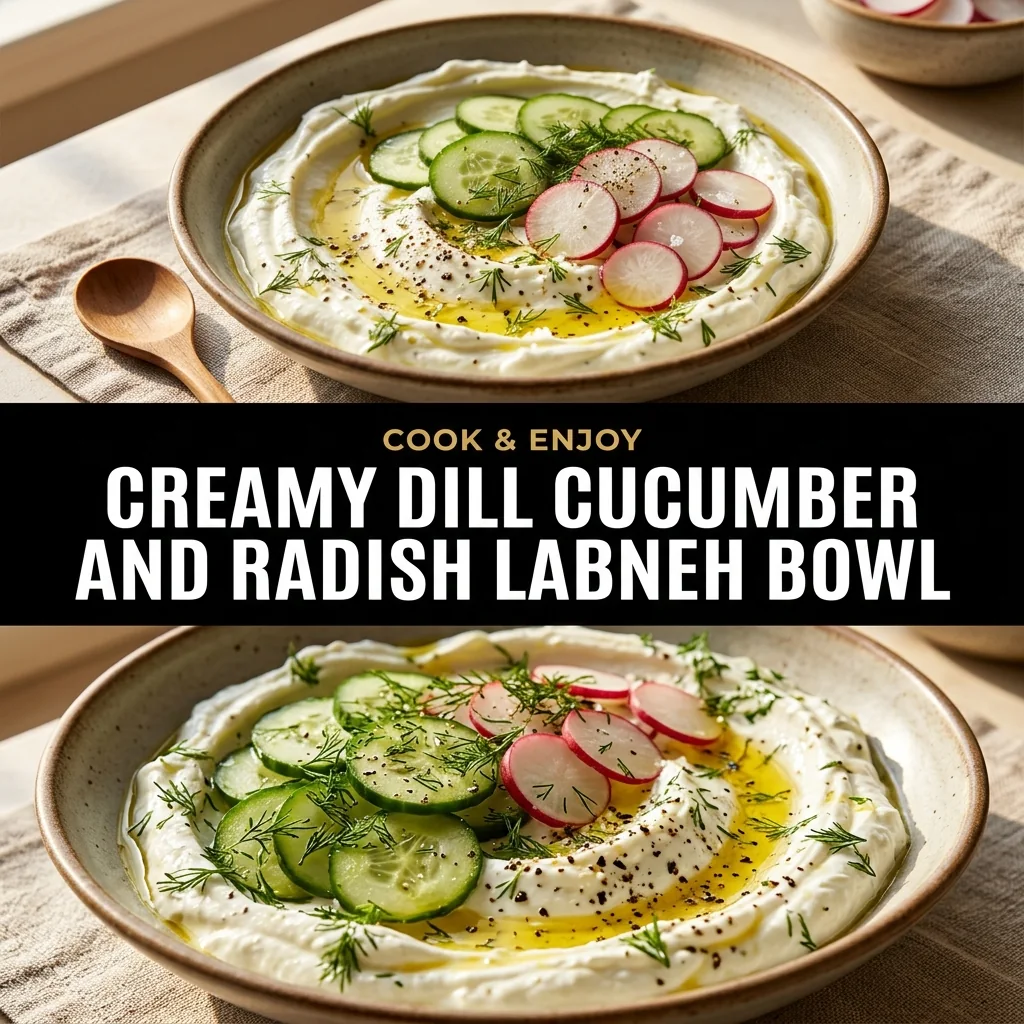
This creamy dill cucumber and radish labneh bowl celebrates the crisp simplicity of raw produce paired with cooling Middle Eastern dairy. Strained halal-certified labneh provides a velvety, protein-rich foundation accented with grated garlic and fragrant lemon juice. English cucumbers and bright red radishes are lightly purged of excess moisture to preserve their vibrant snap, then folded with garden-fresh dill, mint, and scallions. Finished with fruity extra-virgin olive oil, cracked coriander seeds, and mild Aleppo pepper flakes, this composed bowl delivers an invigorating interplay of silky, crisp, peppery, and citrus notes, ideal as a light lunch or refreshing meal component.
The Qualities of Halal Labneh
Labneh is a dense strained yogurt traditional throughout the Levant, prized for its spreadable texture and lactic acidity. When selecting labneh, ensure it carries reliable halal certification or consists solely of pasteurized halal milk, live bacterial cultures, and salt, devoid of unverified gelatin or animal-sourced thickeners. The straining process extracts whey, yielding a consistency similar to soft cream cheese while retaining a tart, refreshing profile. Whisking in a small measure of grated garlic and lemon balances the natural richness of the dairy without overwhelming the delicate herbs.
Managing Produce Hydration and Crunch
Texture is the primary contrast in this dish, making moisture control critical. English cucumbers are favored for their delicate skin and minimal seed development, which eliminates the need for peeling. Slicing both cucumbers and radishes thinly creates an elegant fold, but their cellular structure releases significant water when exposed to ambient room temperature. Sprinkling the raw rounds with fine salt draws out excess liquid via osmosis. Thoroughly blotting the slices prior to plating guarantees that the thick labneh remains decadent rather than diluted.
Layering Botanical Aromatics
Aromatic balance in a no-cook dish requires thoughtful herb distribution. Fresh dill brings an anise-like grassy brightness that harmonizes naturally with the peppery bite of sliced radishes. Fresh spearmint leaves contribute coolness, while scallions provide mild allium pungency without the harsh bite of raw onions. The final garnish of lightly bruised toasted coriander seeds introduces floral, citrus notes that bridge the herbal topping and the rich olive oil, while mild Aleppo chili flakes lend warm color and gentle, non-overpowering heat.
Before you start
Salting and draining the sliced cucumbers and radishes for fifteen minutes is an essential step that prevents the finished dish from turning watery. Cucumbers are over ninety percent water; if added directly to strained labneh, their natural juices rapidly thin the emulsion into a loose soup. Patting the salted slices thoroughly dry preserves their snap while keeping the seasoned labneh luxuriously thick, rich, and velvety throughout service.
THE RECIPE
Creamy Dill Cucumber and Radish Labneh Bowl
4 servings · 20 minutes preparation · 0 minutes cooking · 15 minutes cooling, chilling or resting
Ingredients
Step-by-step instructions
- Place the sliced English cucumbers and sliced radishes into a colander set over a bowl, sprinkle with 0.25 teaspoon of fine sea salt, toss gently, and let rest for 15 minutes to draw out excess moisture.
- Transfer the drained cucumbers and radishes onto a double layer of clean paper towels and press gently to blot away surface water.
- In a medium ceramic bowl, combine the thick halal labneh, grated garlic, fresh lemon juice, and the remaining 0.25 teaspoon of fine sea salt, whisking with a spoon until smooth and creamy.
- Fold half of the chopped dill and half of the chopped mint directly into the seasoned labneh base.
- Divide the herbed labneh evenly among four shallow wide serving bowls, using the back of a large spoon to spread it toward the edges while creating decorative swirls and wells in the center.
- Toss the blotted cucumbers, radishes, and sliced scallions together in a mixing bowl with 1 tablespoon of extra-virgin olive oil.
- Mound the dressed crisp vegetables into the center of the prepared labneh wells across all four bowls.
- Drizzle the remaining 1 tablespoon of extra-virgin olive oil evenly over the top of the vegetables and surrounding labneh.
- Garnish each bowl with the remaining chopped dill, chopped mint, crushed toasted coriander seeds, and Aleppo pepper flakes before serving.
Kitchen notes
Salting and draining the sliced cucumbers and radishes for fifteen minutes is an essential step that prevents the finished dish from turning watery. Cucumbers are over ninety percent water; if added directly to strained labneh, their natural juices rapidly thin the emulsion into a loose soup. Patting the salted slices thoroughly dry preserves their snap while keeping the seasoned labneh luxuriously thick, rich, and velvety throughout service.
Storage & make-ahead
Store the assembled labneh bowl or individual components in an airtight container in the refrigerator within 2 hours. This cold dish keeps safely for up to 2 days. Because vegetables continue to release moisture over time, gently drain any pooled liquid that forms on the surface before serving again. Do not freeze this dish.
An original recipe guide inspired by themes in our Pinterest research. Recipe has not been independently kitchen-tested. AI-generated image is illustrative; your finished dish may look different.
Frequently asked questions
Can I make my own halal labneh from whole milk yogurt?
Yes, line a fine-mesh sieve with cheesecloth, add 4 cups of halal-certified whole milk plain yogurt mixed with 0.5 teaspoon salt, set over a bowl, and chill in the refrigerator for 24 to 36 hours until very thick.
What can I substitute for Aleppo pepper?
If Aleppo pepper is unavailable, substitute with an equal mixture of sweet Hungarian paprika and a small pinch of cayenne pepper, or use mild Maras pepper flakes to provide warm color and gentle, fruit-forward heat.
Can Persian cucumbers be used instead of English cucumbers?
Yes, small Persian cucumbers work exceptionally well. They are firm, crisp, and contain very few seeds. Use four Persian cucumbers in place of the two medium English cucumbers, slicing and salting them according to the recipe instructions.