WHY MAKE IT
A little comfort, a lot of flavor.
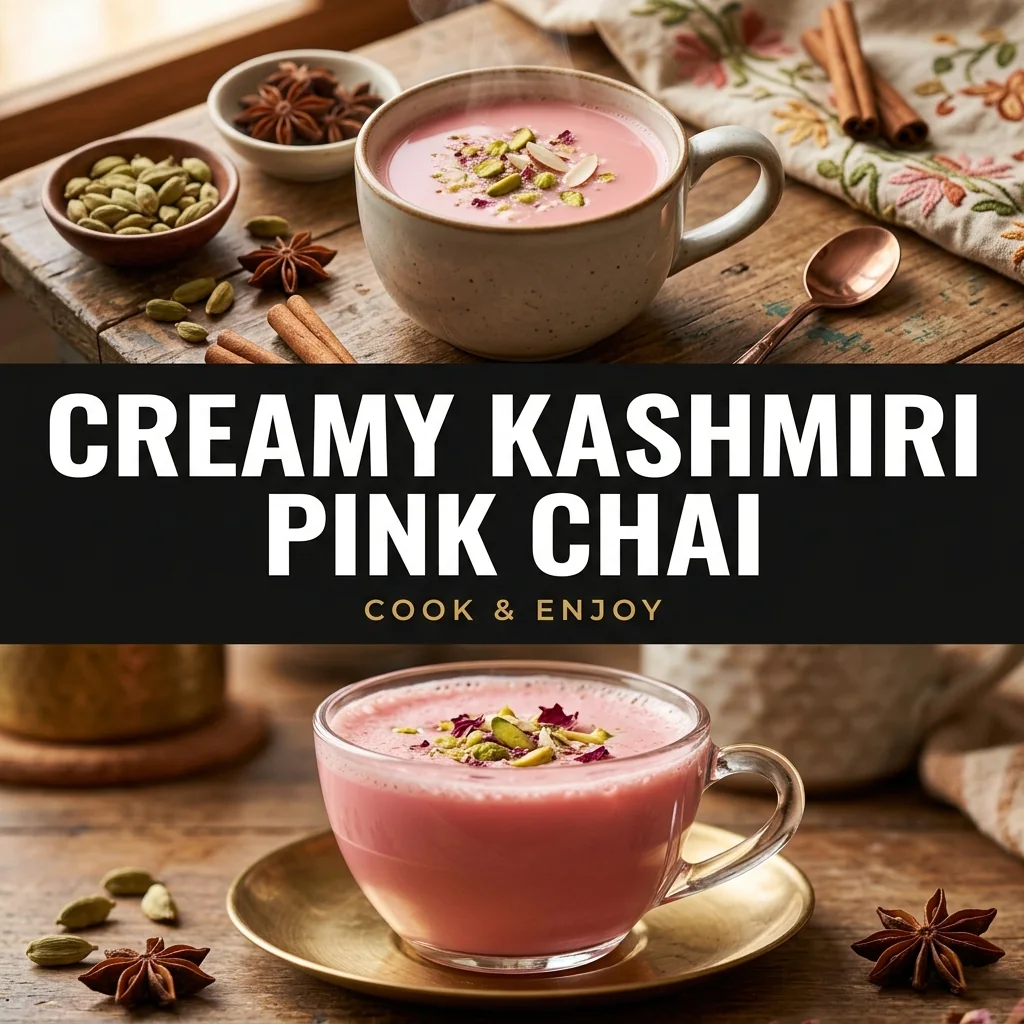
Kashmiri pink chai, traditionally known as noon chai, is a storied hot beverage renowned for its distinct pastel hue, velvety mouthfeel, and delicate nutty garnish. Unlike conventional oxidized black teas brewed across South Asia, this specialty uses unoxidized green tea leaves subjected to prolonged simmering and controlled alkalinity. The addition of baking soda unlocks latent pigments within the leaves, which transition from olive green to deep amber-red as cold water is introduced and ladled repeatedly. When blended with rich whole milk and a splash of heavy cream, the mahogany concentrate mellows into an inviting pink. Finished with crushed raw pistachios and slivered almonds, every sip delivers gentle cardamom warmth, silky dairy richness, and pleasant texture.
Tea Selection and Alkalinity
Authentic Kashmiri green tea leaves are distinctly different from delicate Japanese sencha or grassy Chinese varieties. These rolled leaves tolerate sustained boiling without turning irreversibly harsh or overly astringent. The precise amount of baking soda raises the pH of the brew, allowing the polyphenols to oxidize into deep ruby pigments during extraction. Adding too much baking soda imparts an unpleasant soapy aftertaste, while using too little leaves the brew dull and yellow. Measuring the half-teaspoon carefully ensures an ideal chemical environment that brings out the vibrant hue while preserving the natural herbal foundation of the tea.
The Aeration Technique
Aeration is the defining procedural step in building a proper noon chai base. Once the initial water volume cooks down and the ice water is introduced, oxygen must be mechanically driven into the liquid. Using a deep ladle, scoop the tea from the pan and stream it back into the pot from a height of several inches in a steady, unbroken rhythm. This ten-minute mechanical process forces ambient air into the alkaline liquid, stabilizing the color compounds and mellowing bitterness. The resulting concentrate should resemble strong, dark beet juice before any dairy is introduced.
Milk Incorporation and Seasoning
Full-fat dairy is essential to achieve both the signature opaque rose color and the characteristic body of noon chai. Skim milk or watery alternatives dilute the pigment unevenly, producing a translucent, unappealing tint rather than a creamy pastel. While historical recipes frequently feature sea salt rather than sugar, this preparation focuses on the fragrant warmth of whole green cardamom and star anise balanced by dairy sweetness. The final addition of crushed almonds and pistachios provides aromatic nut oils that float on the surface, offering textural contrast against the smooth beverage.
Before you start
The signature rosy shade of noon chai depends on the alkaline reaction between the polyphenols in the green tea leaves and the baking soda, followed by thorough aeration. Do not skip shock-chilling the hot reduction with ice water; the abrupt temperature drop and repetitive ladling encourage the color transition. If the tea looks murky grey or brownish rather than pink once the dairy is incorporated, the leaves may have lacked sufficient simmering time before the addition of the cold liquid, or the aeration phase was cut short.
THE RECIPE
Creamy Kashmiri Pink Chai
4 servings · 10 minutes preparation · 45 minutes cooking
Ingredients
Step-by-step instructions
- Combine the loose Kashmiri green tea leaves, cracked cardamom pods, star anise, and 1 1/2 cups of cold filtered water in a 2-quart stainless steel saucepan over medium heat.
- Bring the mixture to a vigorous simmer and stir in 1/2 teaspoon of baking soda, cooking for 10 minutes until the bubbling liquid darkens to a deep maroon tone.
- Pour in the remaining 1 1/2 cups of cold filtered water and the 1 cup of ice cubes, then repeatedly ladle the tea from a height of 8 to 10 inches back into the saucepan for 10 minutes to aerate the concentrate.
- Simmer the aerated liquid gently over medium-low heat for another 15 minutes until it reduces to roughly 1 cup of concentrated ruby-brown tea base.
- Pour 2 1/2 cups of whole milk and 1/2 cup of heavy cream directly into the reduced concentrate, stirring continuously as the liquid shifts into an opaque dusty pink hue, and bring to a gentle simmer for 10 minutes.
- Strain the hot tea through a fine-mesh sieve into 4 preheated serving cups, discarding the tea leaves and whole spices.
- Garnish each cup immediately with an equal portion of the finely chopped raw pistachios and blanched almonds before serving hot.
Kitchen notes
The signature rosy shade of noon chai depends on the alkaline reaction between the polyphenols in the green tea leaves and the baking soda, followed by thorough aeration. Do not skip shock-chilling the hot reduction with ice water; the abrupt temperature drop and repetitive ladling encourage the color transition. If the tea looks murky grey or brownish rather than pink once the dairy is incorporated, the leaves may have lacked sufficient simmering time before the addition of the cold liquid, or the aeration phase was cut short.
Storage & make-ahead
Store leftover strained chai or plain tea concentrate in an airtight glass bottle in the refrigerator for up to 3 days. Reheat gently in a saucepan over medium-low heat until steaming and heated through to at least 165 F / 74 C, stirring occasionally to prevent the dairy solids from scorching on the pan base. Do not freeze prepared milk chai, as the milk fats separate upon thawing.
An original recipe guide inspired by themes in our Pinterest research. Recipe has not been independently kitchen-tested. AI-generated image is illustrative; your finished dish may look different.
Frequently asked questions
Why did my tea turn light brown instead of pink?
The leaves may not have simmered long enough with the baking soda before adding the cold water, or the liquid was not aerated thoroughly. Ensure you ladle the dark concentrate vigorously for a full ten minutes to incorporate enough oxygen.
Can I make the concentrated tea base in advance?
Yes, brew and aerate the tea base through step 4, then strain out the leaves and spices. Refrigerate the concentrated dark liquid in a sealed glass jar for up to 4 days, then simmer with milk and cream when ready to serve.
Is noon chai traditionally salty or sweet?
Traditional Kashmiri noon chai is prepared with salt, from which it gets its name ('noon' means salt). Many modern palates prefer it unsalted or lightly sweetened; this recipe focuses on whole spices and rich milk without heavy seasoning.