WHY MAKE IT
A little comfort, a lot of flavor.
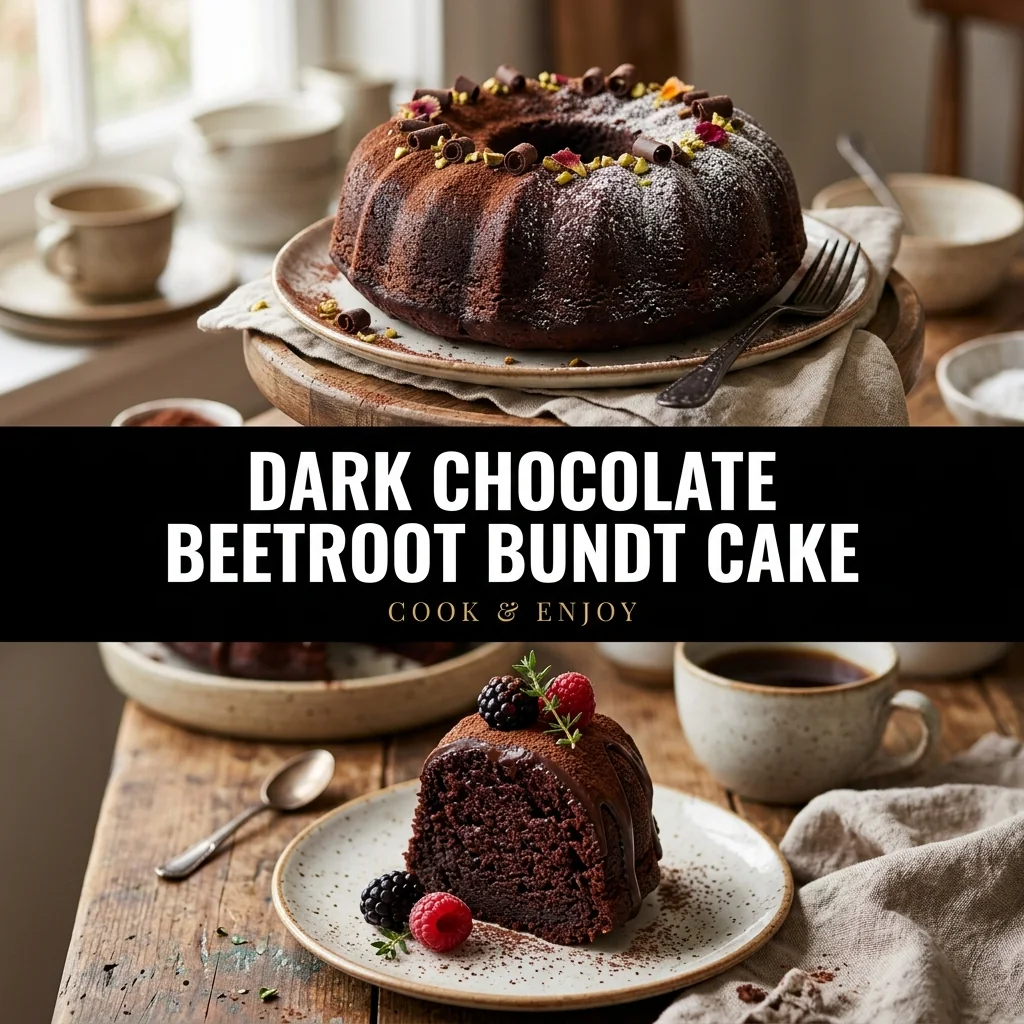
The pairing of dark chocolate and beetroot is one of baking's most rewarding culinary traditions. Far from imparting a strong vegetable flavor, pureed roasted beets provide essential moisture, natural sugars, and an earthy depth that elevates dark cocoa powder to extraordinary richness. The acidity and natural pigments within the root vegetable enhance the cake's tender crumb structure while locking in hydration for several days without relying on excessive butter. Finished with a satiny dark chocolate ganache glaze that cascades down the ridges of the Bundt, this cake boasts a striking appearance and a luxurious, velvety mouthfeel that satisfies the deepest chocolate cravings.
The Culinary Role of Beetroot
Beetroot acts much like pureed pumpkin or bananas in baking, adding fibrous bulk, natural pectin, and steady moisture without thinning the batter. Its mild earthiness contains pyrazines that mirror the flavor compounds naturally present in roasted cacao beans. When paired with high-quality Dutch-processed cocoa, the earthy notes dissolve into a rounded, fudge-like profile. Pureeing the roasted beets until perfectly smooth is crucial; any remaining fibrous lumps will disrupt the uniform crumb and create visible red specks rather than blending seamlessly into the dark cake batter.
Choosing Cocoa and Blooming
Dutch-processed cocoa powder is treated with an alkalizing agent that lowers its natural acidity, yielding a darker color and smoother, less bitter chocolate flavor. Incorporating warm liquid—in this case, warm decaffeinated coffee or hot water—helps bloom the cocoa powder. Blooming dissolves cocoa solids and releases trapped aromatic oils before the batter enters the hot oven. The coffee flavor will not be distinguishable in the finished cake; instead, it sharpens the cocoa characteristics and ensures the crumb remains deeply savory, rich, and intensely chocolate-forward.
Mastering Bundt Pan Release
Intricate Bundt pans can be notorious for sticking if not prepared with precision. Rather than dusting the greased pan with white flour, which leaves a pasty, dull film on dark chocolate cakes, use unsweetened cocoa powder. Brush every crevice thoroughly with softened butter using a pastry brush before dusting. Timing the inversion is equally critical: inverting immediately will cause the fragile, hot crumb to collapse, while waiting until the pan is cold allows sugar condensation to glue the cake to the pan. Twenty minutes of cooling strikes the ideal balance.
Before you start
To make smooth roasted beetroot puree, wrap trimmed fresh beets in foil and bake at 400°F (200°C) until tender, peel while warm using paper towels, and blend in a high-speed blender with one or two tablespoons of water until completely silky. Avoid canned pickled beets, as their vinegar brine will ruin the cake. Allow the cake to cool in the pan for only 20 minutes; waiting longer can cause condensation that sticks to the pan walls.
THE RECIPE
Dark Chocolate Beetroot Bundt Cake
12 servings · 25 minutes preparation · 55 minutes cooking · 60 minutes cooling, chilling or resting
Ingredients
Step-by-step instructions
- Preheat your oven to 350°F (175°C), generously coat a 10-cup metal Bundt pan with softened butter, and dust thoroughly with cocoa powder, tapping out any excess.
- In a medium bowl, sift together the all-purpose flour, natural unsweetened cocoa powder, baking soda, baking powder, and fine sea salt.
- In a large bowl, whisk together the granulated sugar, light brown sugar, eggs, and vegetable oil for 2 minutes until glossy and combined.
- Whisk the smooth roasted beetroot puree and alcohol-free vanilla extract into the wet ingredients until thoroughly blended.
- Add half of the sifted dry ingredients, stirring gently with a spatula, then pour in the warm decaffeinated coffee, and finish by folding in the remaining dry ingredients just until no dry flour pockets remain.
- Pour the smooth, dark batter into the prepared Bundt pan, spreading it evenly and tapping the pan firmly twice on the counter to release trapped air bubbles.
- Bake at 350°F (175°C) for 50 to 55 minutes until a thin wooden skewer inserted into the center of the ring comes out clean with just a few moist crumbs.
- Cool the cake in the pan set on a wire rack for exactly 20 minutes, then invert the cake onto the rack and let it cool completely for another 40 minutes.
- Heat heavy cream in a small pan until simmering, pour over chocolate chips, let stand 2 minutes, whisk until smooth, and drizzle the silky glaze over the cooled Bundt cake.
Kitchen notes
To make smooth roasted beetroot puree, wrap trimmed fresh beets in foil and bake at 400°F (200°C) until tender, peel while warm using paper towels, and blend in a high-speed blender with one or two tablespoons of water until completely silky. Avoid canned pickled beets, as their vinegar brine will ruin the cake. Allow the cake to cool in the pan for only 20 minutes; waiting longer can cause condensation that sticks to the pan walls.
Storage & make-ahead
Store the glazed Bundt cake under a cake dome or in an airtight container at room temperature for up to 3 days, or refrigerate for up to 6 days. Bring chilled slices back to room temperature before serving to allow the cocoa butter in the glaze to soften. Unfrosted cake can be frozen wrapped in plastic wrap and foil for up to 2 months.
An original recipe guide inspired by themes in our Pinterest research. Recipe has not been independently kitchen-tested. AI-generated image is illustrative; your finished dish may look different.
Frequently asked questions
Will this Bundt cake taste like vegetables?
No, the cake will not taste like earthy beets. The potent cocoa powder, sugars, and vanilla completely mask any overt vegetable flavor, leaving behind an exceptionally moist texture and an enhanced, deep dark-chocolate profile.
Can I use vacuum-packed cooked beets?
Yes, plain vacuum-packed steamed or roasted beets work well as long as they contain no added salt, vinegar, or seasonings. Simply puree them in a food processor or blender until completely smooth before measuring.
Why did my ganache glaze separate or look oily?
Ganache separates if the cream was boiled too vigorously or poured over the chocolate while piping hot. Ensure the cream just scalds around the edges, pour gently, and whisk from the center outward to build a smooth emulsion.