WHY MAKE IT
A little comfort, a lot of flavor.
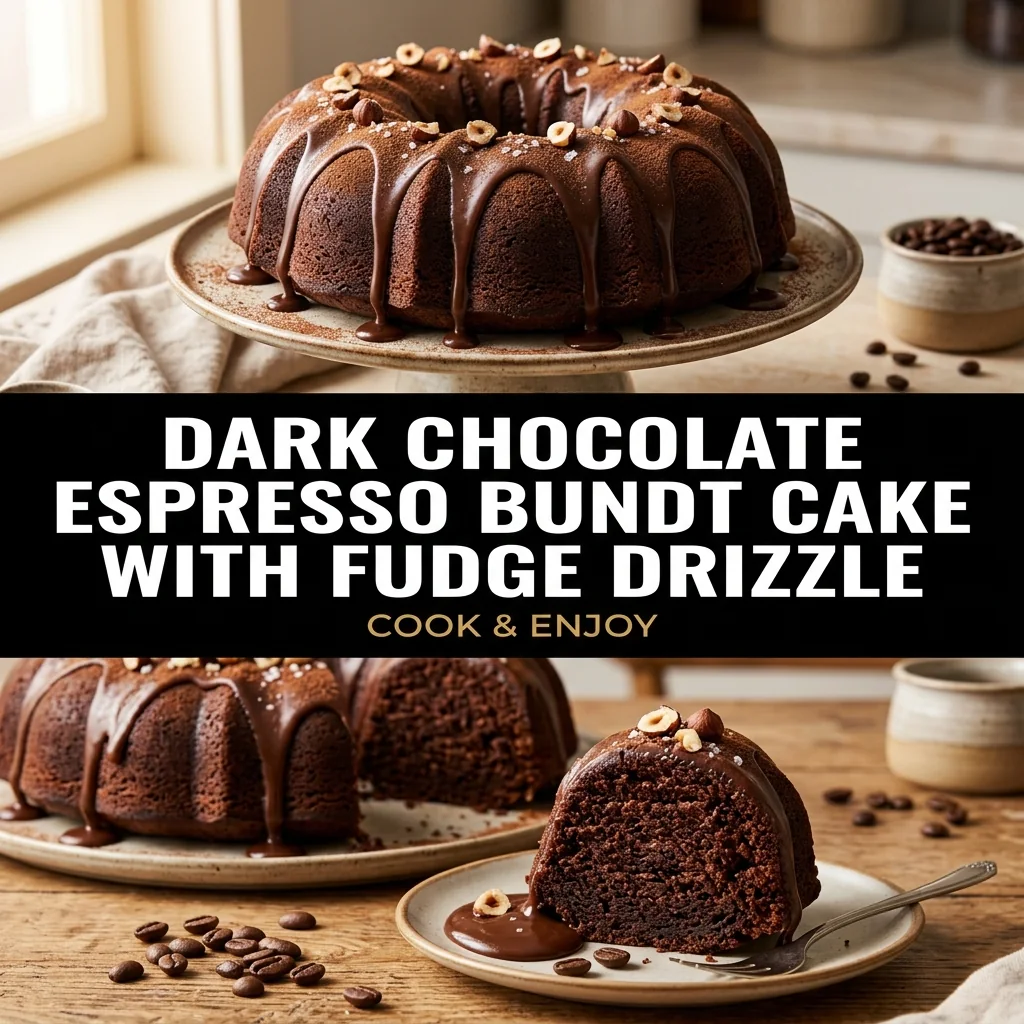
The union of robust espresso and dark Dutch-processed cocoa yields a cake with unmatched depth, bypassing one-dimensional sweetness in favor of sophisticated roasted notes. Coffee is renowned in the culinary world as chocolate's greatest ally; rather than tasting overtly like an espresso beverage, the brewed coffee amplifies cocoa's natural earthy fruitiness while subduing bitterness. Employing vegetable oil instead of butter keeps the crumb moist even when chilled, ensuring every slice remains tender for days. The final touch—a warm, buttery fudge drizzle that sets into a satiny ribbon over the sculpted ridges—elevates this home-baked centerpiece into an impressive showstopper suitable for family dinners and formal celebrations alike.
Blooming Cocoa with Hot Espresso
The chemical secret to this cake's intense chocolate flavor lies in the hot espresso addition. Dutch-processed cocoa powder has been alkalized to neutralize its natural acidity, producing a smoother, darker profile. When boiling-hot brewed espresso is poured directly into the cocoa-rich batter, the high temperature dissolves microscopic starch and fat packets within the cocoa. This process, known as blooming, releases trapped aromatic compounds that cold liquid cannot extract. The espresso's natural roasted bitterness sharpens the cocoa notes without leaving an overwhelming coffee aftertaste.
Preventing Bundt Pan Sticking
Intricate Bundt pans produce striking visual geometry but carry a notorious risk of sticking. Thorough preparation is essential. Use softened butter applied carefully with a pastry brush to coat every fluted groove and the center tube. Instead of dusting with white flour, which leaves a chalky, pale film on dark chocolate cakes, use unsweetened cocoa powder. Tap the pan firmly against your palm upside-down over a sink to shake out excess powder. Crucially, invert the cake exactly twenty minutes after baking so steam releases without condensation breaking the crust.
Crafting the Glossy Fudge Drizzle
A proper Bundt glaze must balance viscosity and sheen. Melting high-quality halal-certified chocolate chips into hot heavy cream creates a classic ganache emulsion, while a single tablespoon of unsalted butter lends an attractive mirror shine. Whisking continuously from the center outwards creates a cohesive suspension without incorporating air bubbles. Let the glaze cool for three to four minutes until it coats the back of a spoon thickly before drizzling. This prevents the warm sauce from pooling at the base of the serving plate.
Before you start
Do not be alarmed by the liquid consistency of the batter after pouring in the hot espresso. The hot liquid immediately blooms the cocoa powder, dissolving lumps and releasing intense chocolate aromas while yielding an exceptionally moist crumb. Grease every fluted crevice of your Bundt pan meticulously using cocoa powder instead of flour to avoid unsightly white residue on your dark chocolate crust.
THE RECIPE
Dark Chocolate Espresso Bundt Cake with Fudge Drizzle
12 servings · 25 minutes preparation · 50 minutes cooking · 75 minutes cooling, chilling or resting
Ingredients
Step-by-step instructions
- Preheat your oven to 350 F / 175 C and thoroughly grease a 10-to-12-cup metal Bundt pan with softened butter, then dust the interior with 1 tablespoon of cocoa powder, tapping out any excess.
- In a large bowl, sift together 240 grams of all-purpose flour, 75 grams of Dutch-processed cocoa powder, 350 grams of granulated sugar, 2 teaspoons of baking powder, 1.5 teaspoons of baking soda, and 1 teaspoon of fine sea salt.
- Add 2 large eggs, 240 milliliters of cultured buttermilk, 120 milliliters of vegetable oil, and 2 teaspoons of alcohol-free vanilla extract to the dry ingredients, beating on medium speed with an electric mixer for 2 minutes.
- Reduce the mixer speed to low and slowly stream in 240 milliliters of freshly brewed hot espresso until completely incorporated; the resulting batter will be thin and liquid.
- Pour the batter smoothly into the prepared Bundt pan and bake at 350 F / 175 C for 43 to 45 minutes until a thin wooden skewer inserted into the thickest section emerges clean.
- Allow the cake to cool inside the Bundt pan placed on a wire cooling rack for exactly 20 minutes.
- Invert the Bundt pan onto the wire cooling rack and tap gently to release the cake, then allow it to cool completely for 40 minutes.
- Prepare the fudge drizzle by heating 60 milliliters of heavy cream and 1 tablespoon of butter in a small saucepan over medium-low heat for 3 to 4 minutes until steaming, remove from heat, add 100 grams of chocolate chips, let sit for 1 minute, and whisk until glossy.
- Spoon the warm fudge glaze over the crest of the cooled Bundt cake, letting it cascade down the fluted ridges, and rest for 15 minutes to set before slicing.
Kitchen notes
Do not be alarmed by the liquid consistency of the batter after pouring in the hot espresso. The hot liquid immediately blooms the cocoa powder, dissolving lumps and releasing intense chocolate aromas while yielding an exceptionally moist crumb. Grease every fluted crevice of your Bundt pan meticulously using cocoa powder instead of flour to avoid unsightly white residue on your dark chocolate crust.
Storage & make-ahead
Store the glazed cake in a covered cake dome or airtight container at cool room temperature for up to 3 days, or refrigerate within 2 hours if stored in warm ambient environments. Consume within 5 days. For optimal texture and flavor, bring refrigerated slices back to room temperature for 20 minutes prior to serving. Slices can be frozen without glaze for up to 1 month wrapped tightly in parchment and foil.
An original recipe guide inspired by themes in our Pinterest research. Recipe has not been independently kitchen-tested. AI-generated image is illustrative; your finished dish may look different.
Frequently asked questions
Can I use decaffeinated espresso or coffee?
Yes, freshly brewed decaffeinated espresso or dark roast decaf coffee works identically in this recipe. The chemical blooming effect on the cocoa powder depends entirely on the liquid's high temperature and roasted flavor compounds, not on caffeine content.
Why did my Bundt cake tear when inverting?
Bundt cakes typically tear if they are inverted too quickly while still fragile and steaming, or left in the pan too long where cooling sugars stick to the metal. Resting precisely twenty minutes on a rack ensures the crumb sets while remaining release-ready.
Can I substitute natural cocoa powder for Dutch-processed?
Dutch-processed cocoa is strongly recommended for its neutral acidity and dark color. If using natural cocoa, replace the 1.5 teaspoons of baking soda with 1 teaspoon of baking soda and increase the baking powder to 2.5 teaspoons to balance batter acidity.