WHY MAKE IT
A little comfort, a lot of flavor.
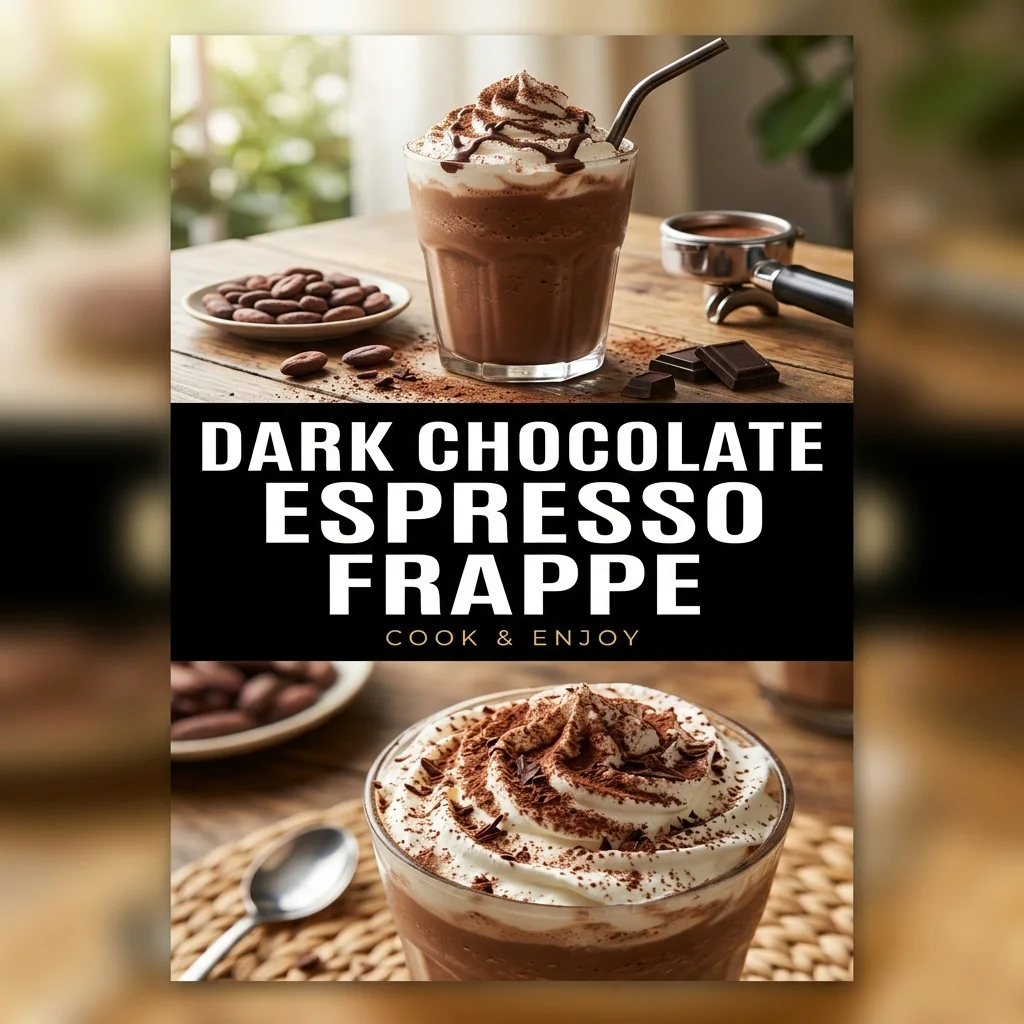
The Dark Chocolate Espresso Frappe bridges the gap between morning specialty coffee and an afternoon chocolate confection. Freshly brewed espresso brings complex roasted notes and aromatic crema, which cut through the creaminess of cold whole milk. Unsweetened Dutch-process cocoa lends a rounded, deep chocolate foundation that balances coffee bitterness without introducing chalky textures. Finished with delicate shavings of high-percentage dark chocolate, each sip provides contrasting textural specks alongside a frosty, velvety base. This recipe provides an invigorating chill on warm days while preserving the sophisticated profiles of dark roast coffee and bittersweet cacao. Preparing it at home allows full control over sweetness and dairy freshness without artificial syrups or commercial stabilizers.
Espresso and Cocoa Synergy
Selecting the right chocolate components ensures the coffee remains the focal point rather than getting buried under cloying sweetness. Dutch-process cocoa powder has been alkalized, softening sharp acidic edges and imparting a darker hue that complements the roasted notes of fresh espresso. Combined with high-cacao shaved chocolate, it provides two distinct expressions of chocolate: one dissolved smoothly into the frosty liquid and another suspended in tiny solid flakes that melt pleasingly on the tongue. Maple syrup offers gentle sweetness without muddying the aromatic oils of the espresso beans.
Mastering Ice Emulsion
Achieving the velvety body of a cafe frappe at home requires attention to thermal control and blender power. Standard ice cubes should be dense and dry rather than wet and half-melted, which prevents excessive dilution during the blending phase. Pulsing first breaks down large chunks, preventing the motor from stalling and keeping the friction heat minimal. High-speed blending for no longer than 45 seconds aerates the milk proteins, creating a stable, frothy suspension that suspends the fine ice granules evenly from top to bottom.
Customizing Dairy and Sweetness
Whole cow milk provides the necessary butterfat to coat the palate and soften the tannins of both cacao and coffee beans. For those preferring plant alternatives, barista-style oat milk makes an exceptional swap because it contains added lipids that mimic dairy frothiness under high-speed blade agitation. Avoid skim milk or watery nut milks, which cause the frappe to separate quickly into liquid and floating ice foam. Adjusting the sweetness upward requires liquid sweeteners like simple syrup or agave rather than granulated sugar, which will not dissolve.
Before you start
For the thickest frappe consistency, avoid pouring hot coffee directly onto ice, as the thermal shock rapidly melts the ice crystals and waters down the beverage. Chilling the pulled espresso in the refrigerator for 10 minutes stabilizes the temperature. Dutch-process cocoa blends much more smoothly into cold milk than natural cocoa powder because its reduced acidity prevents clumping. If you prefer a sweeter profile, adjust the maple syrup by an additional teaspoon before blending.
THE RECIPE
Dark Chocolate Espresso Frappe
2 servings · 10 minutes preparation · 0 minutes cooking · 10 minutes cooling, chilling or resting
Ingredients
Step-by-step instructions
- Pull 2 shots (60 ml) of espresso into a small heatproof bowl and refrigerate for 10 minutes until the liquid cools below 65°F (18°C).
- Pour the cooled espresso, 1 cup (240 ml) cold whole milk, 2 tablespoons (15 g) Dutch-process cocoa powder, 2 tablespoons (30 ml) maple syrup, and 1/2 teaspoon alcohol-free vanilla extract into a high-speed blender pitcher.
- Add 2 cups (280 g) ice cubes to the blender pitcher, secure the lid, and pulse 5 times to fracture the ice before blending on high speed for 35 to 45 seconds until frosty and uniform.
- Add 1 1/2 tablespoons (15 g) of the shaved bittersweet dark chocolate to the pitcher and pulse twice for 2 seconds each to speckle the shake without pulverizing the chocolate completely.
- Divide the frappe evenly between two chilled 12-ounce (350 ml) glasses, garnish with the remaining 1/2 tablespoon (5 g) shaved chocolate, and serve immediately.
Kitchen notes
For the thickest frappe consistency, avoid pouring hot coffee directly onto ice, as the thermal shock rapidly melts the ice crystals and waters down the beverage. Chilling the pulled espresso in the refrigerator for 10 minutes stabilizes the temperature. Dutch-process cocoa blends much more smoothly into cold milk than natural cocoa powder because its reduced acidity prevents clumping. If you prefer a sweeter profile, adjust the maple syrup by an additional teaspoon before blending.
Storage & make-ahead
Blended frappes do not hold their texture long-term. Serve immediately after preparation. Leftovers can be kept in a covered jar in the refrigerator for up to 2 hours, though separation will occur; shake vigorously over fresh ice before drinking. Always refrigerate milk-based drinks within 2 hours of preparation.
An original recipe guide inspired by themes in our Pinterest research. Recipe has not been independently kitchen-tested. AI-generated image is illustrative; your finished dish may look different.
Frequently asked questions
Can I use cold brew concentrate instead of fresh espresso?
Yes, substitute 1/4 cup (60 ml) of undiluted cold brew concentrate for the espresso shots. Cold brew provides a very smooth, low-acid coffee profile that blends cleanly with cocoa, eliminating the need to wait for hot espresso to cool down.
Why did my frappe separate into liquid and crushed ice?
Separation happens if the blender speed was too low, the blending time was too brief, or warm espresso melted the ice prematurely. Ensure the espresso is cold before blending, and run the blender on high to fully emulsify the milk fat with the micro-shaved ice.
Can I omit the shaved chocolate garnish?
You can omit the shaved chocolate or substitute a light dusting of unsweetened cocoa powder over the top. The shaved chocolate folded into the drink, however, contributes a desirable stracciatella-like bite that enhances the overall mouthfeel.