WHY MAKE IT
A little comfort, a lot of flavor.
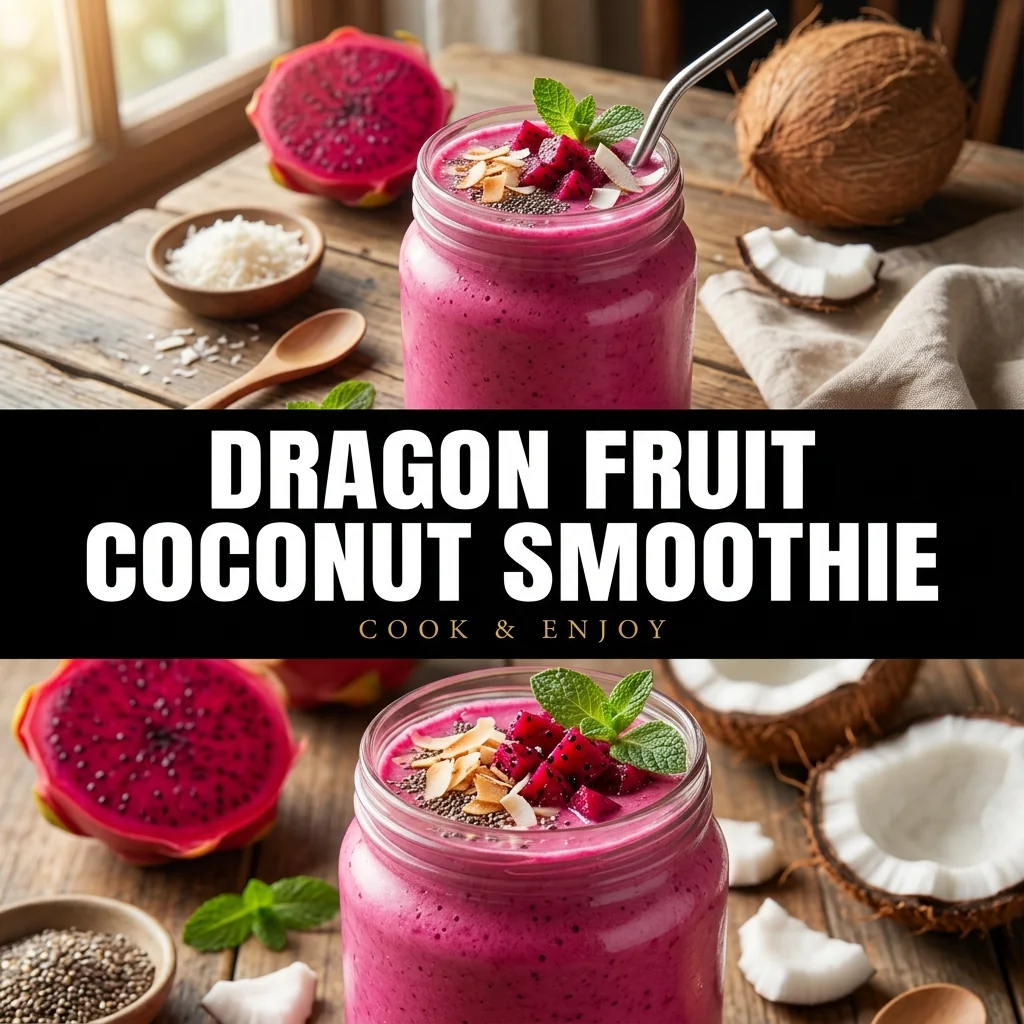
The Dragon Fruit Coconut Smoothie delivers an arresting visual presence alongside a gently sweet, refreshing profile. Red-fleshed pitaya provides an unmistakable magenta hue that instantly elevates any morning spread or afternoon refreshment. Because natural red dragon fruit carries an understated, earthy sweetness with slight melon undertones, pairing it with frozen ripe bananas provides necessary body and foundational fruitiness. Canned coconut cream introduces rich culinary fats that soften the fruit fibers into a velvety texture, while a splash of fresh lime juice balances the drink with bright acidity. This editorial formula balances vibrant aesthetics and creamy mouthfeel using pure, unadulterated plant ingredients, producing a beverage that tastes as clean and revitalizing as it looks in the glass.
Selecting Dragon Fruit Varieties
The success of this recipe relies heavily on sourcing red-fleshed pitaya rather than the common white-fleshed variety. While both share a similar outer appearance with vibrant pink skin and green scales, their internal pigment and flavor intensity differ significantly. Frozen red dragon fruit pulp packs are typically frozen at peak ripeness, preserving the natural betacyanin pigments responsible for the intense fuchsia tone. If using fresh fruit, peel the leathery skin entirely and slice the deep red flesh into cubes before freezing solid for at least four hours. The frozen base eliminates the need for ice, preventing dilution.
Balancing Coconut Richness
Achieving the ideal consistency requires balancing heavy coconut cream with lighter coconut water. Full-fat canned coconut cream provides body and structural thickness, yielding a texture comparable to soft-serve ice cream when blended with frozen bananas. However, using solely coconut cream can make the drink feel heavy. Introducing pure, unsweetened coconut water provides hydration and essential electrolytes while thinning the base just enough to allow the blender blades to circulate smoothly. Shake the canned coconut cream thoroughly before measuring to integrate the solidified fat layer with the liquid beneath into a uniform, rich culinary base.
Texture and Acid Control
A common mistake when blending mild tropical fruits like pitaya is omitting an acid component. Because pitaya has naturally low acidity, a smoothie made without citrus can taste flat or overly heavy from the banana and coconut fats. Adding fifteen milliliters of freshly squeezed lime juice sharpens the flavors, enhancing the subtle sweetness of the dragon fruit and brightening the coconut aroma. When processing, begin on low speed to fracture the frozen chunks before transitioning to high velocity, which micro-aerates the emulsion and creates an ultra-smooth, spoonable finish without heat buildup.
Before you start
To ensure maximum thickness without watering down the bright color, rely entirely on frozen fruit rather than conventional ice cubes. Red-fleshed dragon fruit is essential here, as white pitaya yields a pale, muted shade with a noticeably milder flavor. If your blender motor struggles with the dense mixture, add additional chilled coconut water one tablespoon at a time through the lid plug. Always chill your canned coconut cream thoroughly before blending so the natural fats remain emulsified and render a velvety, milkshake-like consistency.
THE RECIPE
Dragon Fruit Coconut Smoothie
2 servings · 10 minutes preparation · 0 minutes cooking
Ingredients
Step-by-step instructions
- Pour 120 milliliters of chilled coconut water and 180 milliliters of chilled coconut cream directly into the jar of a high-speed blender.
- Add 15 milliliters of fresh lime juice and 15 milliliters of pure maple syrup to the liquids.
- Place 200 grams of frozen red dragon fruit chunks and 230 grams of frozen sliced bananas on top of the liquid ingredients.
- Secure the blender lid firmly and start blending on low speed, then gradually ramp the motor up to its highest setting for 45 to 60 seconds.
- Use the blender tamper through the lid opening if necessary to press the thick frozen fruit downward until the mixture turns glossy, completely smooth, and vividly magenta. Use only the manufacturer-supplied tamper through its designed lid opening; never put an ordinary utensil into running blades.
- Divide the finished smoothie equally between two 350-milliliter chilled glassware tumblers and serve immediately.
Kitchen notes
To ensure maximum thickness without watering down the bright color, rely entirely on frozen fruit rather than conventional ice cubes. Red-fleshed dragon fruit is essential here, as white pitaya yields a pale, muted shade with a noticeably milder flavor. If your blender motor struggles with the dense mixture, add additional chilled coconut water one tablespoon at a time through the lid plug. Always chill your canned coconut cream thoroughly before blending so the natural fats remain emulsified and render a velvety, milkshake-like consistency.
Storage & make-ahead
This smoothie is best consumed immediately after preparation for optimal aeration and texture. If not serving at once, store covered in an airtight jar in the refrigerator for up to 4 hours, shaking vigorously before drinking as natural separation may occur. Refrigerate all perishables promptly within 2 hours. Do not refreeze thawed smoothie mixture.
An original recipe guide inspired by themes in our Pinterest research. Recipe has not been independently kitchen-tested. AI-generated image is illustrative; your finished dish may look different.
Frequently asked questions
Can I use white dragon fruit instead of red pitaya?
White dragon fruit works from a structural perspective, but it will yield a pale gray-lavender shade rather than the signature magenta. White pitaya is also milder, meaning you may need an extra squeeze of lime juice and a dash more sweetener to achieve a vibrant flavor balance.
Can I substitute the coconut cream with regular dairy milk?
Yes, you can substitute whole milk or heavy whipping cream for the coconut components. Use 240 milliliters of dairy milk and 60 milliliters of heavy cream to replicate the original recipe's richness and liquid volume while keeping the fruit ratios unchanged.
Is sweetened canned coconut cream suitable for this recipe?
Avoid cream of coconut meant for confectionery syrups, as it contains excessive refined sugar that overpowers the delicate fruit. Stick to unsweetened canned coconut cream or full-fat canned coconut milk, adjusting sweetness manually with pure maple syrup if your bananas are not fully ripe.