WHY MAKE IT
A little comfort, a lot of flavor.
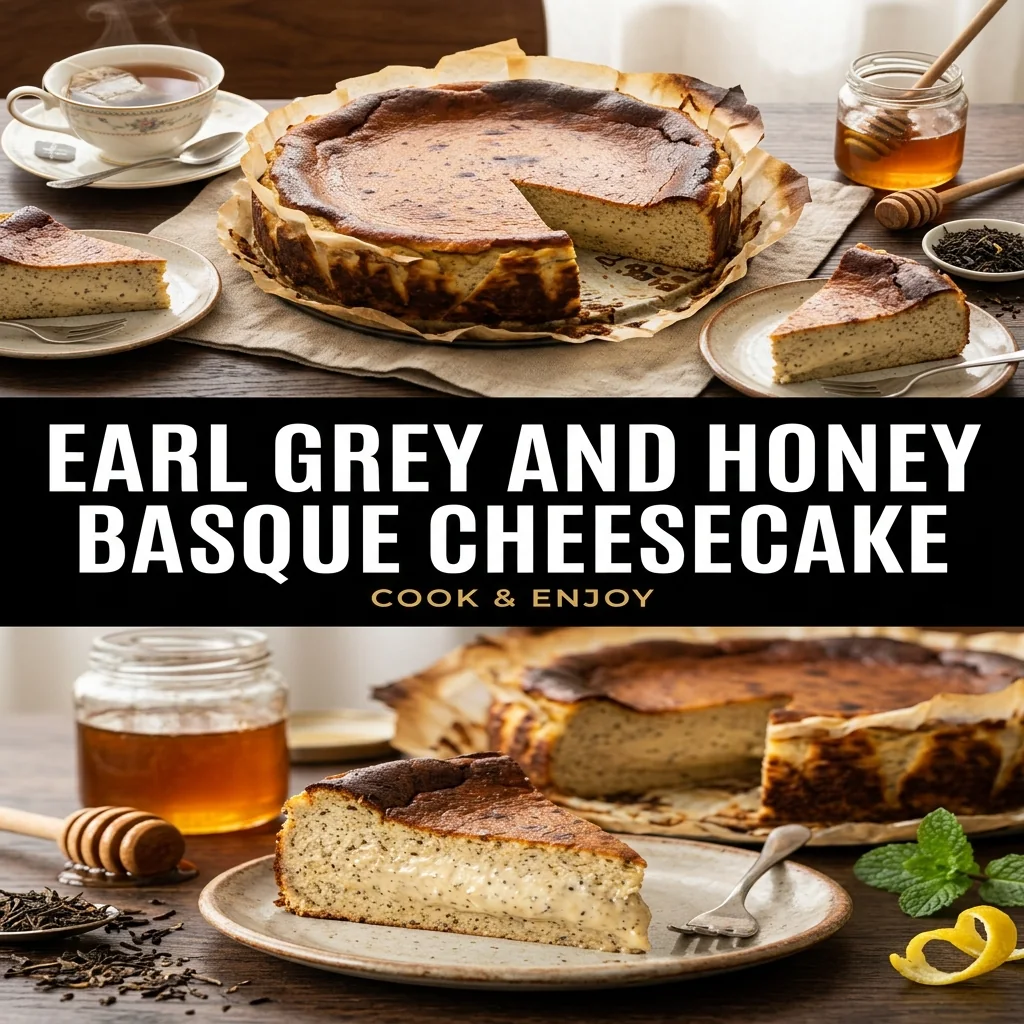
Earl Grey and Honey Basque Cheesecake merges the dramatic, blistered exterior of traditional San Sebastian style baking with the elegant citrus bouquet of cold-pressed bergamot oil. Rather than using artificial flavorings, this recipe steeps premium whole-leaf black tea directly into warm whipping cream to extract round floral notes and subtle tannins. Floral wildflower honey enriches the sweetness, cutting through the dense richness of cultured cream cheese while imparting a glossy finish and amber undertone to the caramelized top. The contrast between the deeply roasted crown and the luscious, creamy center makes this showstopping dessert a memorable conclusion to any sophisticated dinner gathering.
Steeping Earl Grey for Balanced Flavor
Selecting the right tea directly dictates the aroma of your baked custard. Choose an aromatic loose-leaf Earl Grey blended with pure oil of bergamot and a robust Ceylon or Assam base. Finely ground tea dust from conventional tea bags extracts harsh tannins too quickly, yielding a bitter aftertaste. When steeping the tea in hot cream, keep the saucepan covered to trap the volatile essential citrus oils within the dairy fat. Pressing the tea leaves gently against the mesh sieve recovers the aromatic cream without pushing broken plant fragments into the batter.
The Chemistry of the High-Heat Bake
Basque cheesecakes deliberately break standard baking conventions by eliminating water baths and baking at a robust 400 F / 205 C. The high ambient temperature triggers rapid Maillard browning and sugar caramelization on the exposed surface, creating a smoky, complex crust that mimics burnt sugar. Inside, the custard cooks gently from the outside inward, reaching a safe internal custard temperature of at least 160 F / 71 C while preserving a decadent, melting texture. Overbaking will turn the eggs rubbery and completely eliminate the signature soft center.
Parchment Technique and Slicing
Using two sheets of crisscrossed culinary parchment allows the batter to climb the edges during its oven rise without leaking through springform seams. Pleat the paper naturally against the pan walls rather than cutting it flush; those irregular folds impart the iconic rustic fluted border distinctive to Basque patisserie. Once fully chilled for six hours, use the protruding parchment wings to lift the cheesecake onto a cutting board. Slice using a long, sharp chef knife dipped in hot water and wiped clean between every individual portion.
Before you start
To achieve the classic Basque custard center, avoid overbaking. The cheesecake should display a puffed, deeply caramelized dark brown top while the middle 3 inches still wobbles noticeably like soft gelatin when shaken gently. Sifting your flour directly into the warm infused cream creates a slurry that prevents flour pockets from clumping in the batter. Always bring your cream cheese and eggs to room temperature so the batter emulsifies evenly without requiring high mixer speeds that incorporate excess unwanted air.
THE RECIPE
Earl Grey and Honey Basque Cheesecake
10 servings · 25 minutes preparation · 60 minutes cooking · 480 minutes cooling, chilling or resting
Ingredients
Step-by-step instructions
- Pour 350 ml heavy cream into a small saucepan over medium heat, heating until steaming at roughly 180 F / 82 C, then stir in 20 g loose Earl Grey tea leaves, remove from heat, cover, and steep for 10 minutes.
- Strain the warm cream through a fine-mesh sieve into a clean bowl, pressing gently on the swollen leaves to yield 300 ml infused cream, then discard the spent leaves and let the liquid cool to lukewarm.
- Position an oven rack in the center position and preheat your conventional oven to 400 F / 205 C.
- Grease a 9-inch (23 cm) round springform pan with butter, line it with two overlapping sheets of parchment paper extending 2 inches above the rim, and press the paper firmly into the corners, leaving rustic pleats.
- Beat 900 g softened cream cheese, 200 g sugar, and 80 g honey in a large mixing bowl using a stand mixer fitted with the paddle attachment on medium-low speed for 3 minutes until silky smooth and lump-free.
- Add 5 eggs one at a time on low speed, mixing for 20 seconds after each addition before drizzling in 10 ml alcohol-free vanilla extract and 3 g fine sea salt.
- Whisk 30 g sifted flour into the reserved steeped cream until completely smooth, then slowly pour this mixture into the batter on low speed just until homogenous, scraping the bowl thoroughly.
- Pour the smooth batter into the prepared parchment-lined pan, rap the pan firmly against the counter once to release large air bubbles, and bake at 400 F / 205 C for 50 minutes until deeply browned on top and jiggly in the center. Verify the center reaches 160 F (71 C); continue baking gently if necessary.
- Transfer the cheesecake to a wire rack to cool at room temperature for 120 minutes, then transfer to the refrigerator to chill for 360 minutes (6 hours) until fully set before slicing.
Kitchen notes
To achieve the classic Basque custard center, avoid overbaking. The cheesecake should display a puffed, deeply caramelized dark brown top while the middle 3 inches still wobbles noticeably like soft gelatin when shaken gently. Sifting your flour directly into the warm infused cream creates a slurry that prevents flour pockets from clumping in the batter. Always bring your cream cheese and eggs to room temperature so the batter emulsifies evenly without requiring high mixer speeds that incorporate excess unwanted air.
Storage & make-ahead
Refrigerate perishables promptly within 2 hours of reaching room temperature. Keep the cheesecake covered tightly with parchment and foil in the refrigerator for up to 4 days. Serve chilled or let slices rest at room temperature for 20 minutes before serving. Do not reheat.
An original recipe guide inspired by themes in our Pinterest research. Recipe has not been independently kitchen-tested. AI-generated image is illustrative; your finished dish may look different.
Frequently asked questions
Can I use tea bags instead of loose Earl Grey?
Yes, you can substitute four standard unflavored Earl Grey tea bags for the loose tea leaves. Ensure you do not puncture the paper sachets during steeping. Steep for the same 10 minutes, gently pressing them with the back of a spoon to extract the infused cream before discarding.
Why did my Basque cheesecake sink deeply in the center?
Basque cheesecakes naturally puff up like a soufflé during baking and sink substantially as they cool. This collapse is completely intentional and traditional, creating the dense, molten texture in the core. Avoid opening the oven door repeatedly during baking to prevent premature, uneven deflation.
How do I ensure the center reaches a safe temperature?
Insert an instant-read digital probe thermometer into the center of the cheesecake at the 50-minute mark; it should register at least 160 F / 71 C. The residual thermal mass ensures the eggs set safely while retaining their signature creamy, melt-in-the-mouth consistency.


