WHY MAKE IT
A little comfort, a lot of flavor.
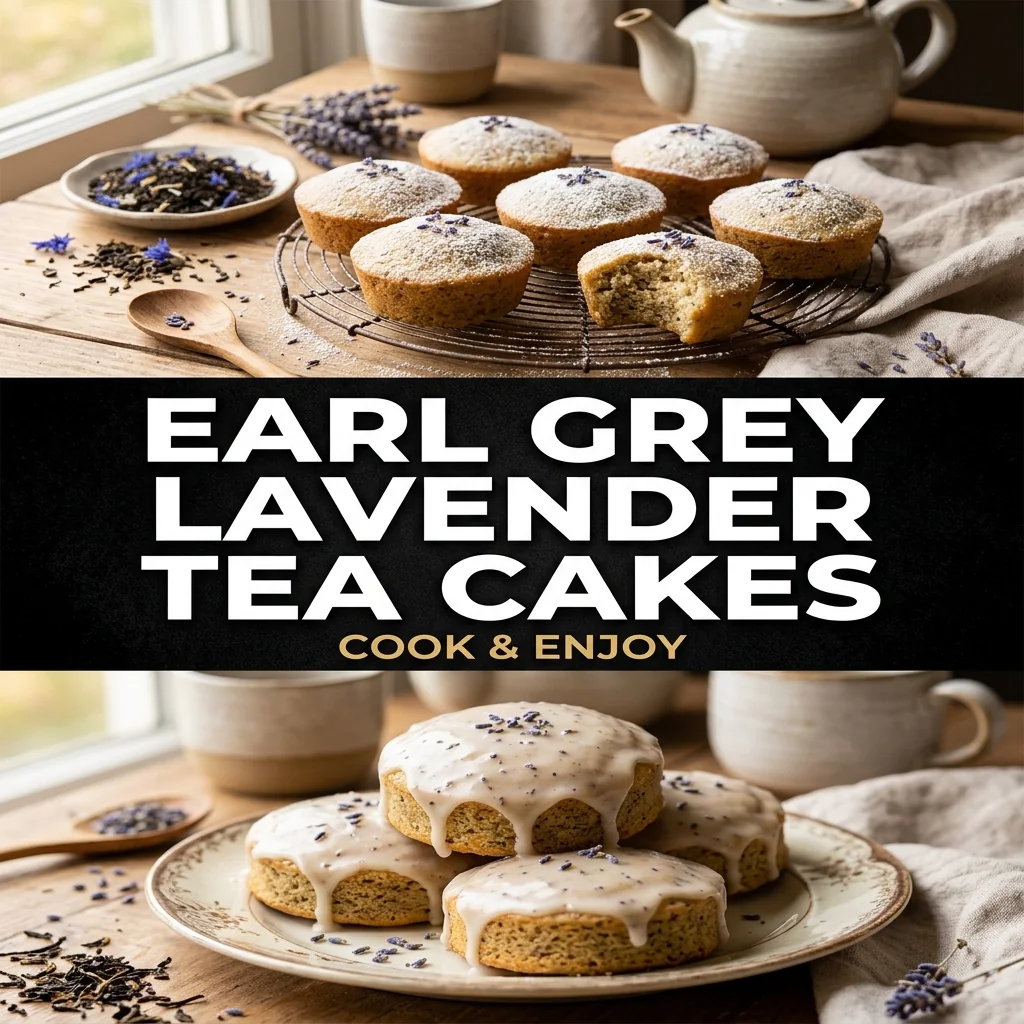
Earl Grey Lavender Tea Cakes showcase an elegant aromatic pairing, uniting the bright citrus profile of bergamot orange with the delicate floral notes of French lavender. The crumb is exceptionally fine, derived from a classic creaming method that traps micro-air pockets within softened butter and sugar. Rather than relying solely on superficial extracts, genuine loose-leaf Earl Grey is introduced in two stages: steeped gently into warm milk to draw out rounded tannins, and ground finely into the dry flour to provide subtle visual speckling and deep flavor throughout. Finished while still slightly warm with a translucent lavender and honey glaze, these petite cakes offer a sophisticated accompaniment to freshly brewed herbal infusions or traditional afternoon tea services.
Harnessing Tea and Floral Infusions
Steeping Earl Grey directly into whole milk allows the milk fats to absorb both water-soluble tea tannins and oil-based bergamot flavors. It is critical to use culinary-grade lavender rather than crafting or ornamental varieties, which may contain chemical treatments and unpalatable camphor levels. Grinding a portion of the dry tea leaves down to the texture of coarse flour ensures they disperse evenly into the batter, preventing unpleasant crunchy bits while distributing an amber, speckled appearance throughout the golden crumb.
Creaming Mechanics for Tender Crumb
The light, tender texture of these tea cakes depends on thoroughly creaming the softened butter and granulated sugar. Beating for a full four minutes incorporates microscopic air bubbles that expand when exposed to the heat of the oven, assisted by the baking powder. Eggs must be at room temperature to avoid curdling the fat matrix. Adding the dry ingredients and infused milk in alternating additions ensures the gluten network remains relaxed, preventing the cakes from baking into dense or rubbery loaves.
Glazing and Surface Finish
Applying the glaze while the tea cakes retain gentle residual warmth allows the honey syrup to penetrate the surface crust, sealing in moisture and creating a delicate shine. If the cakes are too hot, the sugar glaze will dissolve and run off completely onto the parchment below. If they are entirely cold, the glaze will sit thickly on the surface without bonding. Brushing two light coats gives the most attractive finish without overwhelming the subtle citrus notes of the tea.
Before you start
Culinary lavender contains strong essential oils that can become medicinal or soapy if used excessively. Stick strictly to the measured culinary-grade lavender and crush it finely so it distributes evenly. When steeping the tea in warm milk, do not allow the mixture to boil vigorously, as excessive heat can turn bergamot oils bitter. If the steeped milk cools below room temperature, that is fine, but do not add hot milk to the creamed butter mixture or the emulsion will break.
THE RECIPE
Earl Grey Lavender Tea Cakes
12 servings · 20 minutes preparation · 18 minutes cooking · 40 minutes cooling, chilling or resting
Ingredients
Step-by-step instructions
- Combine the whole milk, 1 tablespoon of the Earl Grey tea leaves, and 1/4 teaspoon of crushed lavender buds in a small saucepan over medium-low heat until steaming, then remove from heat and steep for 15 minutes before straining through a fine-mesh sieve; discard the solids and cool the infused milk.
- Preheat your oven to 350°F (175°C) and grease and flour a 12-cup mini loaf or standard muffin pan.
- Grind the remaining 1 tablespoon of Earl Grey tea leaves into a fine powder using a spice grinder or mortar, then whisk together with the flour, baking powder, and fine sea salt in a medium bowl.
- In a stand mixer fitted with the paddle attachment, beat the softened unsalted butter and granulated sugar on medium-high speed for 3 to 4 minutes until pale and aerated.
- Add the room-temperature eggs one at a time, beating well after each addition, then stir in the alcohol-free vanilla extract.
- Alternate adding the flour mixture and the cooled infused milk in three batches, mixing on low speed just until combined without overworking the batter.
- Divide the batter evenly among the 12 prepared cups and bake at 350°F (175°C) for 16 to 18 minutes until golden around the edges and a wooden toothpick comes out clean.
- While baking, whisk the honey, warm water, powdered sugar, and remaining 1/4 teaspoon crushed lavender in a small bowl until completely smooth.
- Cool the cakes in the pan for 10 minutes, turn them out onto a wire rack over a baking sheet, let cool for an additional 15 minutes, then brush generously with the honey lavender syrup and cool completely for 15 minutes before serving.
Kitchen notes
Culinary lavender contains strong essential oils that can become medicinal or soapy if used excessively. Stick strictly to the measured culinary-grade lavender and crush it finely so it distributes evenly. When steeping the tea in warm milk, do not allow the mixture to boil vigorously, as excessive heat can turn bergamot oils bitter. If the steeped milk cools below room temperature, that is fine, but do not add hot milk to the creamed butter mixture or the emulsion will break.
Storage & make-ahead
Store glazed tea cakes in an airtight container at room temperature for up to 3 days. Because of the honey-based glaze, avoid stacking the cakes directly on top of one another without sheets of parchment paper in between. Do not refrigerate, as cold air accelerates staling in low-fat butter cakes. You may freeze unglazed baked cakes wrapped in foil for up to 1 month; thaw completely before applying warm syrup.
An original recipe guide inspired by themes in our Pinterest research. Recipe has not been independently kitchen-tested. AI-generated image is illustrative; your finished dish may look different.
Frequently asked questions
Can I use tea bags instead of loose-leaf Earl Grey?
Yes, standard Earl Grey tea bags work well. Cut the bags open to measure the dry contents. Ensure the brand uses pure bergamot oil rather than artificial flavorings for the cleanest aromatic profile.
Why does my cake taste slightly bitter?
Bitterness usually results from steeping tea leaves in boiling milk for too long or pressing the leaves forcefully during straining, which extracts astringent tannins. Keep the steep gentle and brief.
Can I substitute regular honey with another syrup?
Mild agave nectar or pure maple syrup can be used in the glaze. However, clover honey provides a classic floral sweetness that complements dried lavender buds exceptionally well.