WHY MAKE IT
A little comfort, a lot of flavor.
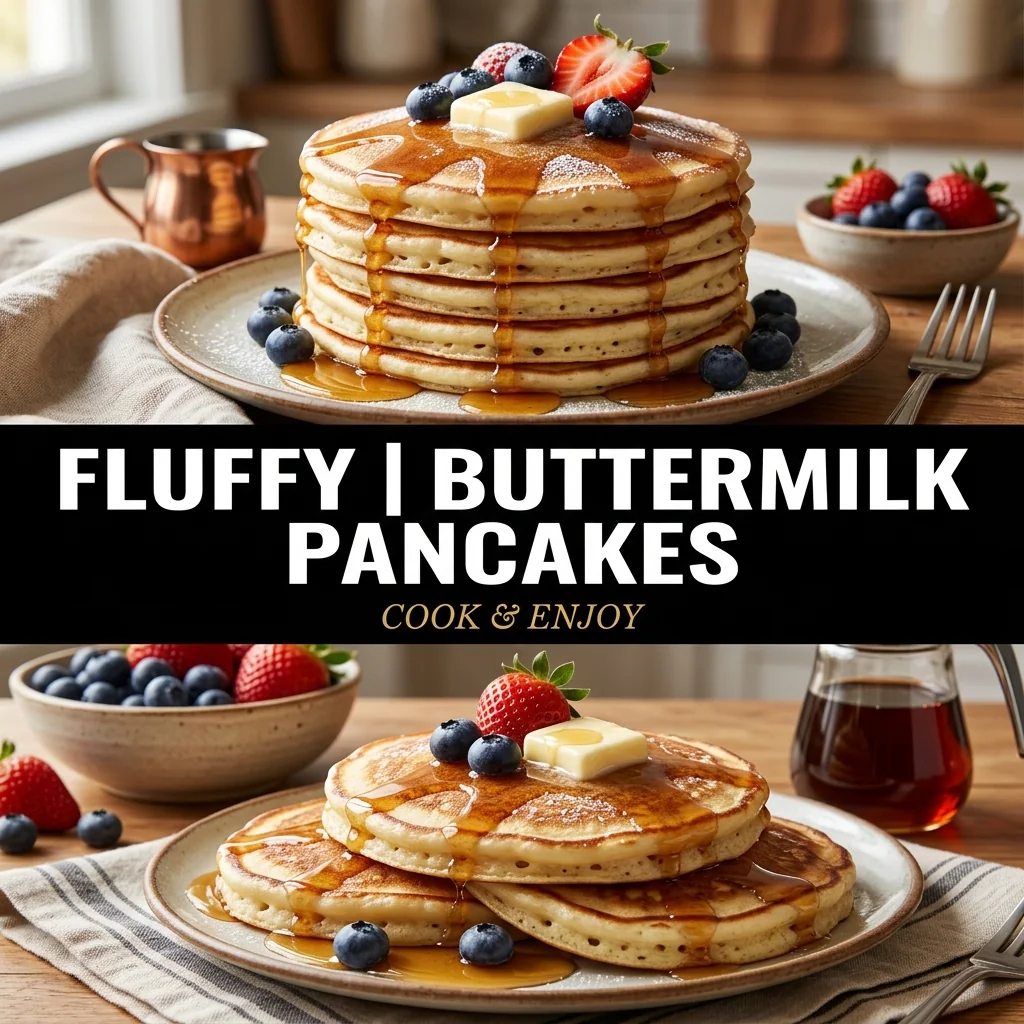
A classic buttermilk pancake should be thick, tall, and exceptionally tender, featuring a delicate crumb that readily absorbs maple syrup without turning heavy. The chemistry behind this recipe depends on the interaction between cultured buttermilk and a balanced combination of baking powder and baking soda. The acidity of the cultured dairy neutralizes the soda to produce immediate carbon dioxide gas, while the secondary rise from double-acting baking powder activates under griddle heat. When the batter is gently handled and rested, these microscopic gas pockets stay intact, yielding high-rising cakes with a tender bite. Cooked over moderate griddle heat, each pancake develops an evenly browned exterior with a soft, airy interior.
The Chemistry of Leavening
Achieving thick pancakes requires both immediate and heat-activated leavening agents. Baking soda reacts instantly upon contact with the lactic acid in cultured buttermilk, creating an initial burst of carbon dioxide bubbles throughout the batter. Double-acting baking powder complements this reaction by releasing additional gas when exposed to moisture and then expanding further under the heat of the griddle. This dual action inflates the batter during its ten-minute rest and holds the crumb structure upright as the egg proteins coagulate during cooking, preventing the pancakes from deflating once flipped.
Griddle Temperature and Cooking Cues
Maintaining a surface temperature around 350°F (175°C) is vital for proper pancake texture. If the pan is too hot, the sugars caramelize and scorch before the thick center bakes through; if too cool, the batter spreads excessively and absorbs cooking fat without rising. Look for surface bubbles that rise from the bottom, burst, and remain open like small craters. When the perimeter loses its wet sheen and appears matte, slide a thin spatula underneath and flip in a single swift motion without pressing down on the cake.
Handling Gluten Development
Overmixing batter is the primary reason homemade pancakes turn chewy or dense. Vigorous stirring develops the gluten matrix in all-purpose flour, creating elastic strands that trap moisture and yield a rubbery bite. Folding with a broad spatula just until dry flour pockets disappear keeps gluten minimal. The remaining small flour lumps soften naturally during the ten-minute resting period as the starches absorb ambient moisture. Using room-temperature eggs and buttermilk prevents the melted butter from hardening into solid granules when combined with the liquids.
Before you start
Resist the urge to whisk the pancake batter until smooth. Lumps are essential for a light, pillowy texture. Stir only until the dry flour streaks vanish into the liquid. Resting the batter for 10 minutes allows the starches to hydrate and gives the chemical leaveners time to generate small carbon dioxide pockets that inflate during cooking on the hot griddle.
THE RECIPE
Fluffy Buttermilk Pancakes
4 servings · 15 minutes preparation · 16 minutes cooking · 10 minutes cooling, chilling or resting
Ingredients
Step-by-step instructions
- In a large mixing bowl, whisk together the all-purpose flour, granulated sugar, baking powder, baking soda, and fine sea salt until thoroughly combined and free of compact clumps.
- In a separate medium bowl, whisk together the cultured buttermilk, room-temperature eggs, melted butter, and vanilla extract until completely blended and uniform in appearance.
- Pour the wet ingredients into the dry bowl. Using a silicone spatula, fold the mixture together just until the flour is moistened, leaving visible lumps; do not overmix, which develops gluten and creates tough pancakes.
- Allow the batter to rest undisturbed at room temperature for 10 minutes. During this period, the baking soda reacts with the acidic buttermilk to create tiny gas bubbles that generate loft.
- Heat a large 12-inch nonstick skillet or cast-iron griddle over medium heat until a drop of water skitters across the surface, about 350°F (175°C). Lightly grease the surface with a small brush of butter or oil.
- Pour 1/3-cup portions of batter onto the hot griddle, leaving two inches between each cake. Cook for 2 1/2 to 3 1/2 minutes, until bubbles form on top, burst, and stay open, and edges look set.
- Slide a wide spatula underneath each pancake and flip cleanly in one swift motion. Cook the second side for another 1 1/2 to 2 minutes until puffed, springy, and deep golden brown.
- Transfer the cooked pancakes to a warm plate and repeat with the remaining batter, greasing the pan lightly between batches. Serve warm with butter and pure maple syrup.
Kitchen notes
Resist the urge to whisk the pancake batter until smooth. Lumps are essential for a light, pillowy texture. Stir only until the dry flour streaks vanish into the liquid. Resting the batter for 10 minutes allows the starches to hydrate and gives the chemical leaveners time to generate small carbon dioxide pockets that inflate during cooking on the hot griddle.
Storage & make-ahead
Cool leftover pancakes completely on a wire rack. Store in an airtight container in the refrigerator for up to 3 days, or layer between parchment paper inside a freezer-safe bag and freeze for up to 2 months. Reheat from frozen in a toaster or 350°F (175°C) oven until warmed through and crisp. Refrigerate perishable leftovers within 2 hours (within 1 hour above 90°F/32°C), using shallow containers. If reheating, heat throughout to 165°F (74°C).
An original recipe guide inspired by themes in our Pinterest research. Recipe has not been independently kitchen-tested. AI-generated image is illustrative; your finished dish may look different.
Frequently asked questions
Can I substitute milk and vinegar if I have no buttermilk?
Yes. Add two tablespoons of white vinegar or lemon juice to a two-cup liquid measuring cup, fill with whole milk to reach two cups, and let stand for 5 minutes. Cultured buttermilk yields a slightly thicker batter and superior lift, but the substitute works well.
Why did my pancakes turn out rubbery and flat?
Rubbery pancakes result from overmixing the batter, which develops excess gluten. Flat pancakes typically indicate expired leavening agents or batter that sat out too long after mixing, causing the carbon dioxide bubbles to dissipate before hitting the hot griddle.
Can I keep cooked pancakes warm while finishing the rest?
Place a rimmed baking sheet fitted with a wire rack into an oven set to 200°F (95°C). Transfer cooked pancakes in a single layer onto the rack as they finish, which keeps them warm and prevents steam from making the bottom soggy.