WHY MAKE IT
A little comfort, a lot of flavor.
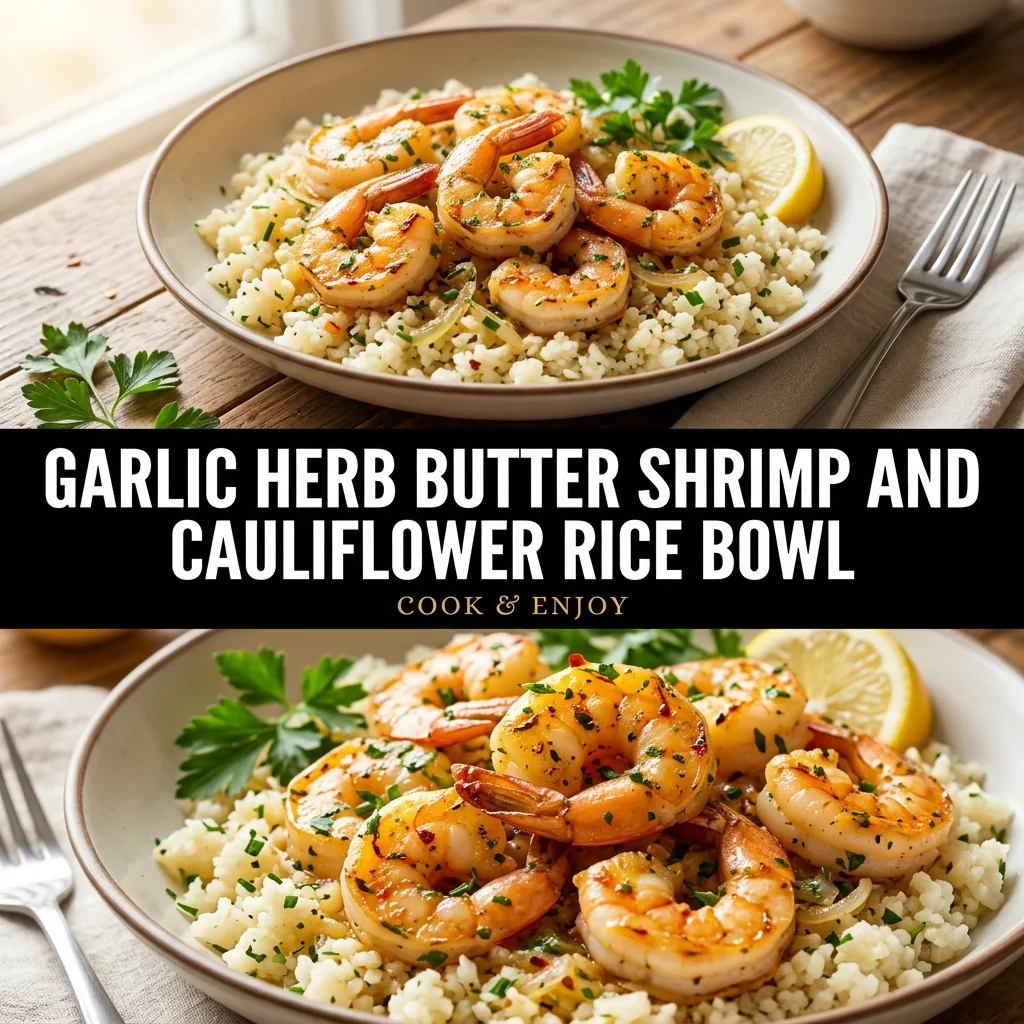
Light, vibrant, and bursting with Mediterranean aroma, this seafood bowl brings together succulent shrimp and aromatic cauliflower rice. Large, succulent shrimp are seared quickly in rich butter, olive oil, and minced garlic, absorbing bright citrus notes from freshly squeezed lemon juice. Rather than heavy grains, finely grated cauliflower rice provides a delicate, low-density base that cooks in mere minutes right in the same pan. Sautéed with fresh parsley, lemon zest, and crunchy toasted almonds, the cauliflower rice absorbs every drop of savory garlic butter, making this an elegant halal meal that feels celebratory yet effortless to prepare.
Perfecting the Cauliflower Rice Texture
The most common mistake when preparing cauliflower rice is overcooking it until it releases excess water and turns mushy. Grating fresh cauliflower florets in a food processor produces uniform, rice-like grains. Sautéing quickly over medium heat in butter for only four to five minutes preserves a distinct, al dente chew that simulates grain texture. Removing the skillet from the burner before folding in lemon juice and fresh herbs prevents steam buildup, keeping the cauliflower light and fluffy.
Searing Succulent Seafood
Cooking shrimp requires watchful heat management. Using a combination of butter and olive oil provides the rich dairy flavor of butter while raising the smoke point slightly with oil. Always cook shrimp in a single uncrowded layer so the pan surface stays hot. Shrimp indicate doneness when they curl into a loose 'C' shape, transition from grey to opaque white-pink, and hit an internal temperature of 145 F (63 C). Rest them off the heat while cooking the cauliflower.
Building Layers of Herb and Citrus
Fresh lemon serves a dual purpose in this recipe. Grating the yellow zest captures essential citrus oils without sourness, infusing the cauliflower rice with vibrant fragrance. The fresh juice added at the finish balances the richness of garlic butter, lifting the natural sweetness of the shrimp. Fresh flat-leaf parsley introduces an herbaceous freshness, while toasted sliced almonds add an essential textural snap, rounding out an exquisite culinary experience.
Before you start
Shrimp cook very fast, so having all ingredients prepped and near the stove is critical. Overcooked shrimp turn rubbery in seconds; remove them the moment they turn opaque throughout and curl into loose 'C' shapes rather than tight circles. Patting the raw shrimp completely dry before searing is the secret to getting a golden sear rather than accidentally boiling the seafood in its own moisture.
THE RECIPE
Garlic Herb Butter Shrimp and Cauliflower Rice Bowl
4 servings · 15 minutes preparation · 15 minutes cooking · 5 minutes cooling, chilling or resting
Ingredients
Step-by-step instructions
- Thoroughly pat the peeled and deveined shrimp dry with clean paper towels and season with 0.25 teaspoon of kosher salt and the crushed red pepper flakes.
- Heat a large skillet over medium-high heat with 1 tablespoon of unsalted butter and 1 tablespoon of olive oil. Once hot, add the shrimp in a single layer and sear for 1.5 to 2 minutes per side until pink, opaque, and cooked to an internal temperature of 145 F (63 C).
- Add half of the minced garlic during the final 30 seconds of cooking, stirring constantly to avoid burning the garlic. Transfer the cooked shrimp and pan juices to a warm plate and rest for 5 minutes.
- Return the same skillet to medium heat and melt the remaining 2 tablespoons of unsalted butter. Add the remaining minced garlic and cook for 30 seconds until fragrant.
- Add the riced cauliflower and remaining 0.5 teaspoon of kosher salt to the skillet. Sauté for 4 to 5 minutes, stirring frequently, until the cauliflower rice is tender-crisp but not mushy.
- Remove the skillet from the heat, then immediately fold in the grated lemon zest, fresh lemon juice, and chopped flat-leaf parsley.
- Divide the warm herb cauliflower rice evenly among four shallow bowls. Arrange the seared garlic butter shrimp on top, spoon any resting pan juices over the shrimp, and garnish with toasted sliced almonds.
Kitchen notes
Shrimp cook very fast, so having all ingredients prepped and near the stove is critical. Overcooked shrimp turn rubbery in seconds; remove them the moment they turn opaque throughout and curl into loose 'C' shapes rather than tight circles. Patting the raw shrimp completely dry before searing is the secret to getting a golden sear rather than accidentally boiling the seafood in its own moisture.
Storage & make-ahead
Store leftovers in a sealed, airtight glass container in the refrigerator within 2 hours of cooking. Cooked seafood should be consumed within 2 days for optimal freshness and safety. Reheat gently in a lightly oiled nonstick skillet over medium-low heat until the shrimp are warmed to 145 F (63 C) and the cauliflower is heated through, avoiding high microwave heat which toughens delicate seafood.
An original recipe guide inspired by themes in our Pinterest research. Recipe has not been independently kitchen-tested. AI-generated image is illustrative; your finished dish may look different.
Frequently asked questions
Can I use frozen cauliflower rice instead of fresh?
Yes, frozen riced cauliflower is a convenient option. Do not thaw beforehand; add directly to the hot buttered pan and sauté for 6 to 7 minutes to allow ice crystals to evaporate quickly so the texture remains tender rather than waterlogged.
What size shrimp work best for this recipe?
Large shrimp (count of 21/25 or 26/30 per pound) offer the best balance of fast cooking and succulent, juicy texture. Smaller shrimp cook too quickly to develop a proper sear before turning tough.
Can I substitute ghee for the unsalted butter?
Yes, pure halal ghee is an outstanding substitute. It offers a rich, nutty flavor and a higher smoke point, allowing you to sear the shrimp cleanly without any risk of browning milk solids too quickly.