WHY MAKE IT
A little comfort, a lot of flavor.
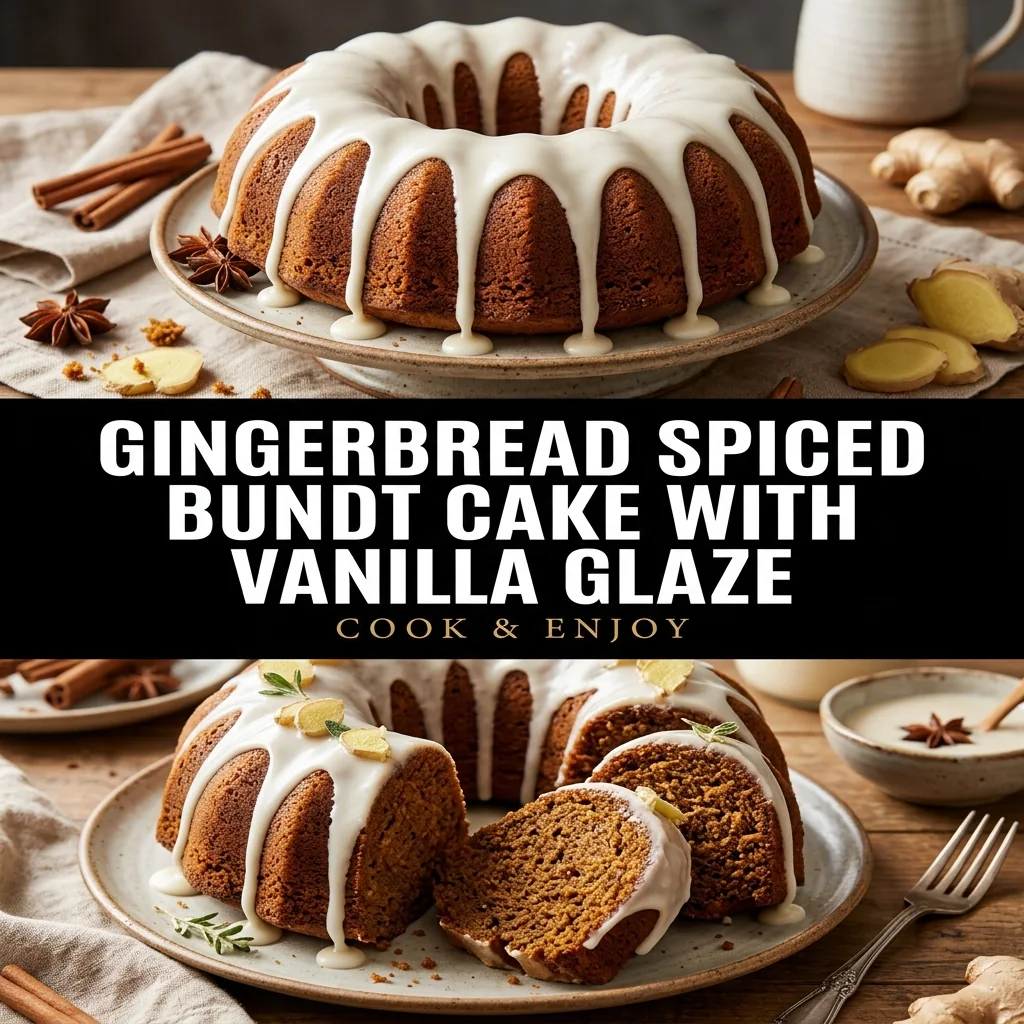
Gingerbread Spiced Bundt Cake with Vanilla Glaze combines traditional winter baking spices with the bold depth of dark molasses. The architecture of a Bundt pan creates maximum surface caramelization while producing a visually striking centerpiece with minimal decorating effort. Ground ginger, cinnamon, nutmeg, and cloves produce a layered, warming profile that balances the robust, slightly bitter undertones of unsulphured dark molasses. Hot water is incorporated directly into the batter to dissolve the thick molasses and immediately hydrate the flour starches, promoting an extraordinarily moist and dense crumb. Finished with an opaque drizzle of pure vanilla glaze, this cake offers an elegant presentation suitable for chilly evenings, family gatherings, and tea service.
Understanding Molasses Types
Using the correct molasses is crucial for proper flavor and balance. Unsulphured dark molasses is recommended here; it provides concentrated sweetness, natural acidity, and deep color without the harshness of blackstrap molasses. Blackstrap contains significantly less sugar, higher mineral bitterness, and can overpower the ginger spices. The natural acidity in dark molasses reacts with the single teaspoon of baking soda in the recipe, creating carbon dioxide bubbles that lift the relatively heavy, wet batter into a soft, velvety crumb structure.
The Function of Hot Water
Incorporating hot liquid into spice cake batters is a classic baking technique that serves two important purposes. First, hot water instantly reduces the high viscosity of molasses, allowing it to blend seamlessly into the creamed butter and eggs without seizing or overworking the gluten. Second, the heat begins to gelatinize starches in the flour early, locking in moisture during the long 55-minute bake cycle. This prevents the interior of the Bundt from drying out while the exterior crust develops deep flavor.
Bundt Pan Care and Glaze Application
Bundt pans feature intricate fluting that can trap cake crumb if neglected. Thoroughly brushing softened butter into every curve followed by a light dusting of flour guarantees a clean release. Wait exactly 15 minutes after removing the pan from the oven before inverting onto a wire rack. Inverting too early risks collapse, while waiting too long traps steam and glues the crust to the metal. Allow the cake to cool fully before drizzling the vanilla glaze so it sets cleanly instead of melting away.
Before you start
Preparation of the Bundt pan is critical to ensure clean release. Use a pastry brush to apply a thin, uniform coating of softened butter into every fluted crevice, then coat with flour and vigorously invert the pan over the sink to remove excess. Never leave the cake in the pan longer than 15 minutes after baking; steam trapped between the pan wall and the cooling crust can condense, causing the spiced crumb to stick and tear upon inversion.
THE RECIPE
Gingerbread Spiced Bundt Cake with Vanilla Glaze
12 servings · 25 minutes preparation · 55 minutes cooking · 75 minutes cooling, chilling or resting
Ingredients
Step-by-step instructions
- Preheat the oven to 350°F (175°C), then generously grease a 10-to-12-cup metal Bundt pan with softened butter and dust thoroughly with flour, tapping out all excess.
- In a large bowl, whisk together 3 cups all-purpose flour, 1 tablespoon ground ginger, 2 teaspoons cinnamon, 1/2 teaspoon nutmeg, 1/4 teaspoon cloves, 1 teaspoon baking soda, and 1/2 teaspoon salt.
- In a separate bowl, whisk 1 cup dark unsulphured molasses into 1 cup hot water until completely dissolved, then set aside to cool slightly.
- In the bowl of a stand mixer fitted with the paddle attachment, beat 1 cup softened butter and 3/4 cup dark brown sugar on medium speed for 4 minutes until light and fluffy.
- Add the 3 eggs one at a time, beating well after each addition and scraping down the sides of the bowl with a silicone spatula.
- With the mixer on low speed, add the flour mixture in three parts alternately with the molasses water in two parts, beginning and ending with the dry ingredients, mixing just until combined.
- Pour the batter into the prepared Bundt pan, level the surface, and bake at 350°F (175°C) for 50 to 55 minutes until a skewer inserted into the deepest part comes out clean.
- Cool the cake in the pan on a wire rack for exactly 15 minutes, then invert the pan onto the rack, lift off the pan, and allow the cake to cool completely for 60 minutes.
- In a small bowl, whisk 1 1/2 cups powdered sugar, 2 tablespoons whole milk, and 1 teaspoon alcohol-free vanilla extract until smooth, then drizzle evenly over the cooled cake before slicing.
Kitchen notes
Preparation of the Bundt pan is critical to ensure clean release. Use a pastry brush to apply a thin, uniform coating of softened butter into every fluted crevice, then coat with flour and vigorously invert the pan over the sink to remove excess. Never leave the cake in the pan longer than 15 minutes after baking; steam trapped between the pan wall and the cooling crust can condense, causing the spiced crumb to stick and tear upon inversion.
Storage & make-ahead
Keep the glazed Bundt cake in an airtight cake keeper or under a cake dome at cool room temperature for up to 4 days. If the room is warm, refrigerate at or below 40°F (4°C) for up to 6 days. Bring chilled slices to room temperature before serving to restore a soft, supple texture to the butter-based crumb.
An original recipe guide inspired by themes in our Pinterest research. Recipe has not been independently kitchen-tested. AI-generated image is illustrative; your finished dish may look different.
Frequently asked questions
Why did my Bundt cake stick to the pan?
Sticking usually occurs if the pan was greased unevenly or if the cake rested too long inside the tin. Cooling for exactly 15 minutes allows the cake structure to set while retaining enough residual heat to release naturally from the metal contours without tearing.
Can I use fresh ginger instead of ground ginger?
Ground ginger is preferred for this bake because it distributes uniformly through the flour and delivers clean, concentrated warmth. Fresh ginger contains enzymes and excess moisture that can alter the delicate crumb balance and result in gummy patches around the ginger fragments.
What should I do if my glaze is too runny?
If the glaze appears too thin to coat the ridges, whisk in additional sifted powdered sugar one tablespoon at a time until it reaches a ribbon-like consistency. Make sure the cake is completely cool before glazing, as residual heat will liquefy the sugar.