WHY MAKE IT
A little comfort, a lot of flavor.
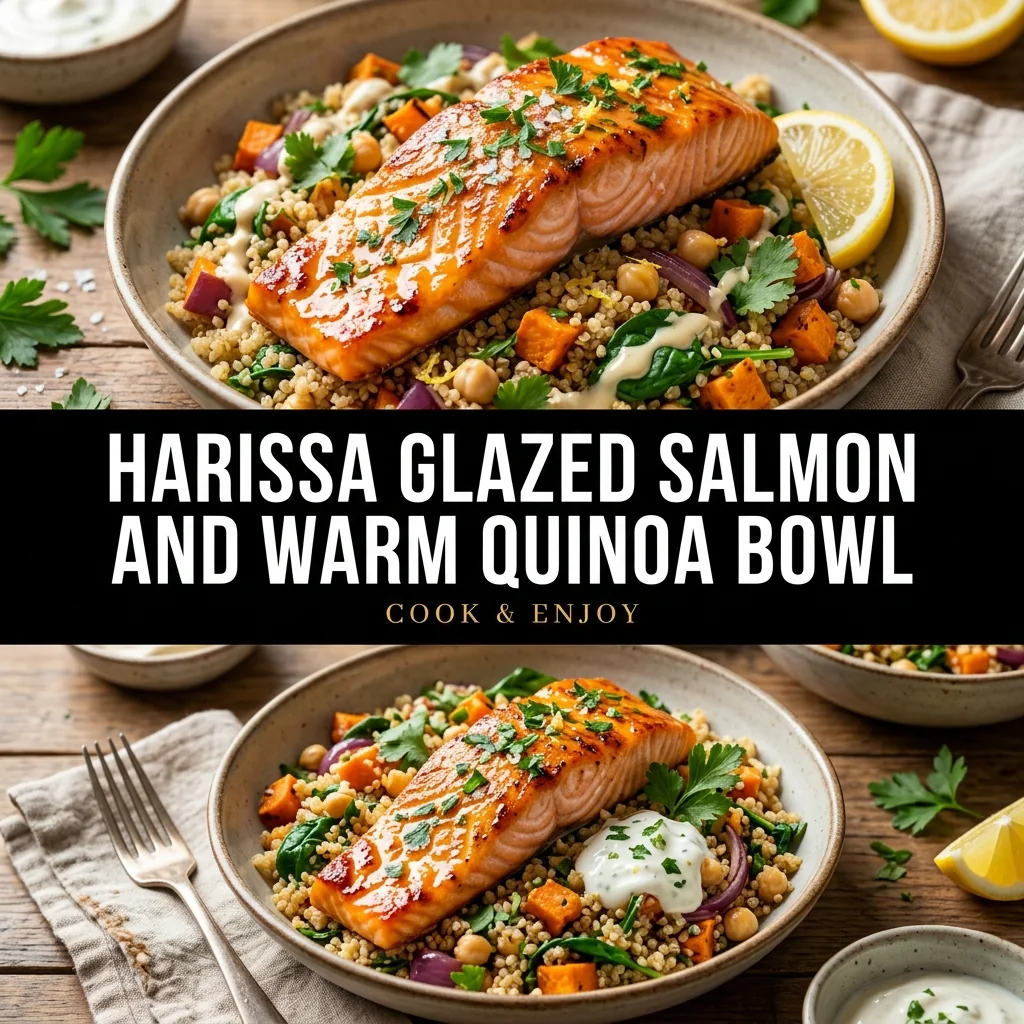
Harissa Glazed Salmon and Warm Quinoa Bowl balances vibrant Mediterranean heat with comforting grain nourishment. North African harissa delivers a multifaceted warmth driven by sun-ripened red chilies, roasted garlic, and toasted ground caraway and coriander. Balanced with natural honey, the spice glaze caramelizes lightly over tender salmon fillets as they roast to succulent flakiness in the oven. Underneath, a bed of protein-rich white quinoa simmered in rich halal vegetable broth provides an earthy, satisfying cushion for paper-thin ribbons of roasted zucchini. To temper the piquant fish and add rich contrast, a cool spoonful of citrus-infused labneh melts slowly across the warm grains, delivering a bright, wholesome dinner completely suited for discerning halal kitchens.
Cooking Fluffy Quinoa
Quinoa naturally carries a bitter outer coating known as saponin, which repels pests during growth. Rinsing the tiny seeds vigorously in a fine-mesh strainer under cold running water is essential to rinse away this bitter film. Simmering the quinoa in savory halal vegetable broth instead of plain tap water infuses the grain with foundational flavor. Keeping the saucepan lid tightly sealed during the low-heat simmer and permitting a five-minute undisturbed rest off the flame ensures the grains bloom fully into light, tender spirals without retaining excess liquid or turning into mush.
Glazing and Roasting Salmon
Skinless salmon fillets provide a buttery canvas that absorbs the robust nuances of harissa paste. Blending the chili paste with raw honey and pure olive oil creates a tacky glaze that clings firmly to the fish throughout baking. High oven heat at 400 F / 200 C quickly caramelizes the glaze sugars while rendering the salmon flaky and moist. Utilizing a calibrated meat probe ensures the interior hits precisely 145 F / 63 C, safeguarding fish quality and microbiological safety without drying out the delicate flakes.
Layering Textures and Acidity
A successful grain bowl relies on contrasting temperatures, textures, and acidic balances. Shaving zucchini into delicate ribbons exposes significant surface area, allowing the edges to brown and blister swiftly alongside the fish on a single sheet pan. Tangy labneh, a strained middle-eastern yogurt cheese, brings thick, cooling richness that counters the fiery harissa. Whisking fresh lemon juice and fragrant zest into the labneh elevates its brightness, tying the roasted zucchini, herbaceous fresh mint, and nutty toasted sesame seeds into a unified presentation.
Before you start
Always inspect your harissa label to ensure it is halal-certified and contains simple, clean ingredients like red peppers, garlic, coriander, cumin, and olive oil without unexpected thickeners. When roasting the salmon, insert an instant-read digital thermometer directly into the thickest center portion of the fillet. The fish must reach an internal temperature of 145 F / 63 C to ensure food safety while preserving its natural flakiness, moisture, and delicate richness beneath the spicy honey crust.
THE RECIPE
Harissa Glazed Salmon and Warm Quinoa Bowl
4 servings · 20 minutes preparation · 25 minutes cooking · 10 minutes cooling, chilling or resting
Ingredients
Step-by-step instructions
- Rinse white quinoa under cold running water for 1 minute to remove natural bitter saponins, then drain thoroughly.
- Combine rinsed quinoa, 2 cups halal-certified vegetable broth, and 1/4 teaspoon sea salt in a medium 2-quart saucepan over medium-high heat. Bring to a boil, cover with a tight-fitting lid, lower heat to low, and cook for 15 minutes until liquid is fully absorbed.
- Remove saucepan from heat and allow quinoa to rest covered for 5 minutes, then fluff gently with a fork and keep warm.
- Preheat oven to 400 F / 200 C and line a large rimmed baking sheet with nonstick parchment paper.
- In a small bowl, whisk together the mild harissa paste, pure honey, grated garlic, and 1 tablespoon extra-virgin olive oil until smooth.
- Pat salmon fillets dry with paper towels, arrange on one side of the baking sheet, and brush the tops generously with the harissa glaze.
- Toss shaved zucchini ribbons with remaining 1 tablespoon olive oil and remaining 1/4 teaspoon sea salt in a bowl, then arrange ribbons loosely across the other side of the baking sheet.
- Roast salmon and zucchini in the preheated oven for 10 to 12 minutes until zucchini ribbons are tender and blistered at the edges, and salmon flakes easily with a fork, registering at least 145 F / 63 C on an instant-read thermometer. Remove and let salmon rest for 5 minutes.
- Whisk plain labneh, fresh lemon juice, and grated lemon zest together in a small bowl until creamy. Divide warm quinoa among four wide shallow bowls, top each with roasted zucchini ribbons, a harissa salmon fillet, a generous dollop of lemon labneh, fresh mint, and toasted sesame seeds.
Kitchen notes
Always inspect your harissa label to ensure it is halal-certified and contains simple, clean ingredients like red peppers, garlic, coriander, cumin, and olive oil without unexpected thickeners. When roasting the salmon, insert an instant-read digital thermometer directly into the thickest center portion of the fillet. The fish must reach an internal temperature of 145 F / 63 C to ensure food safety while preserving its natural flakiness, moisture, and delicate richness beneath the spicy honey crust.
Storage & make-ahead
Package leftover salmon, roasted zucchini, and quinoa in separate airtight glass storage containers within 2 hours of cooking. Refrigerate for up to 2 days. For optimal texture, reheat the quinoa and zucchini gently in a skillet or covered dish until reaching 165 F / 74 C, warming the salmon gently over low heat until heated through to avoid drying out the delicate fish proteins. Keep the lemon labneh chilled separately until ready to plate.
An original recipe guide inspired by themes in our Pinterest research. Recipe has not been independently kitchen-tested. AI-generated image is illustrative; your finished dish may look different.
Frequently asked questions
Can I substitute Greek yogurt for labneh?
Yes, whole milk plain Greek yogurt serves as an effective substitute for labneh. If your Greek yogurt is watery, strain it through a cheesecloth-lined sieve for 20 minutes to achieve the dense, spoonable consistency required to balance the warm quinoa and spiced fish.
How do I prevent the harissa glaze from burning?
The honey in the glaze promotes browning, so place your baking sheet on the center oven rack rather than near the upper broiling element. Baking at 400 F / 200 C for 10 to 12 minutes cooks the fish completely without charring the sweet chili coating.
Can I make the components ahead for meal preparation?
Yes, the quinoa and lemon labneh can be made up to two days ahead and kept refrigerated. For best results, roast the seasoned zucchini ribbons and harissa-glazed salmon fresh just before serving so the fish maintains its tender flakiness and pleasant moisture.