WHY MAKE IT
A little comfort, a lot of flavor.
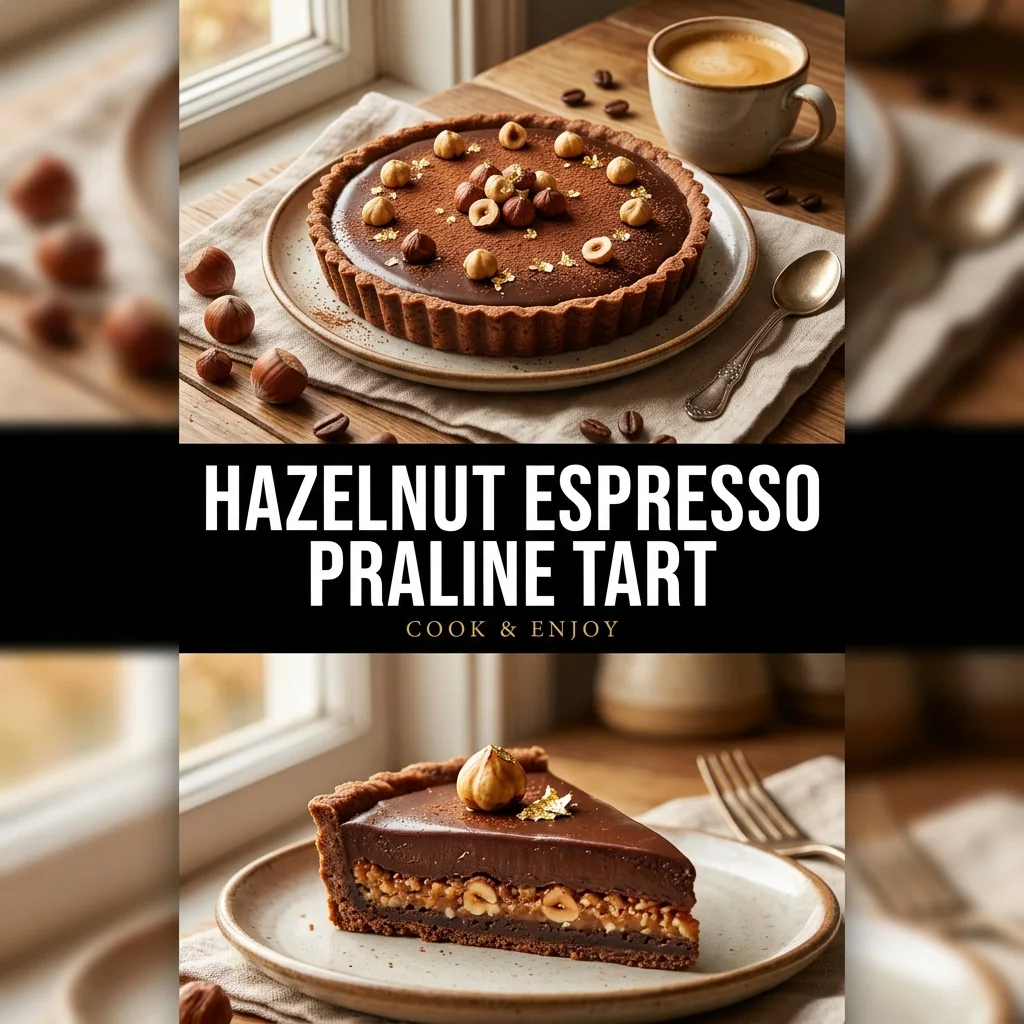
The hazelnut espresso praline tart unites roasted nuts, robust dark coffee, and bitter cocoa in a refined composition. Crisp cocoa pastry provides an earthy, crumbly vessel designed to support a silky espresso pastry cream. Infusing whole milk and cream with high-grade instant espresso creates a clean, rounded coffee profile without introducing unwanted moisture that might destabilize the filling. Crowned with shattered hazelnut praline, the tart delivers a textural progression from shatteringly crisp caramel and toasted nuts to velvety cream and delicate pastry. Designed for sophisticated palates, it represents the intersection of classic French patisserie technique and comforting, deeply aromatic ingredients.
Crafting the Dark Cocoa Crust
Pâte sablée enriched with Dutch-process cocoa powder offers an assertive cocoa note and an exceptionally short, melt-in-the-mouth texture. Cocoa absorbs significantly more moisture than wheat flour, so the dough requires careful hydration using an egg yolk and ice water emulsion. Chilling the dough before rolling relaxes gluten, preventing shrinkage during baking. Blind baking with weights ensures the tart sides do not slump, yielding neat fluted edges capable of securely containing the rich espresso custard.
Achieving Silky Espresso Cream
The filling is a modified crème pâtissière flavored with concentrated espresso. Whisking cornstarch with egg yolks and sugar prior to tempering protects the proteins from scrambling when scalded with hot milk. The custard must be brought to a visible boil for 60 seconds to neutralize amylase enzymes present in egg yolks, which would otherwise break down starch bonds and cause the cream to liquefy over time. Finishing with butter imparts a glossy sheen.
Praline Chemistry and Assembly
Praline relies on pure dry caramelization. Melting sugar evenly until it reaches 340°F (170°C) produces complex caramel notes that complement toasted hazelnuts. Pouring hot syrup over the pre-toasted nuts seals them in amber glass. Because caramel is hygroscopic—drawing moisture readily from the air and custard—praline shards should only be arranged atop the tart shortly before presentation to maintain maximum crunch against the smooth espresso filling beneath.
Before you start
When making the hazelnut praline, resist the urge to stir the sugar with a spoon while it melts, as introducing cool utensils induces premature recrystallization. Swirl the pan gently by its handle instead. When cooking the espresso custard, whisk vigorously and continuously along the bottom corners of the saucepan. Starch-thickened pastry creams can scorch rapidly once they hit boiling point. Reaching a gentle boil for one full minute activates the cornstarch while keeping the texture silky.
THE RECIPE
Hazelnut Espresso Praline Tart
8 servings · 35 minutes preparation · 35 minutes cooking · 270 minutes cooling, chilling or resting
Ingredients
Step-by-step instructions
- In a food processor, pulse 160 g of flour, 25 g of cocoa powder, 40 g of powdered sugar, and 1/4 tsp of salt; pulse in 90 g of cold butter until pea-sized crumbs form, add the egg yolk and ice water mixture, pulse until dough clumps, press into a disc, and chill wrapped for 30 minutes.
- Roll the dough out between parchment paper sheets to 1/8-inch thickness, fit into a 9-inch (23 cm) fluted tart pan with a removable bottom, trim the excess edges, prick the base with a fork, line with parchment and pie weights, and bake at 350°F (175°C) for 15 minutes; remove weights and bake 5 minutes more until crisp, then cool completely on a rack.
- To make the praline, line a baking sheet with parchment paper; scatter 75 g of toasted chopped hazelnuts across the sheet in a tight single layer.
- Heat 100 g of granulated sugar in a heavy saucepan over medium heat without stirring, swirling the pan occasionally for 7 to 8 minutes until melted into a deep amber caramel; immediately pour the hot caramel over the hazelnuts, let cool completely for 30 minutes, then break into shards.
- In a medium saucepan, heat 300 ml of whole milk, 100 ml of heavy cream, and 10 g of instant espresso powder over medium heat until steaming, stirring to dissolve the coffee granules.
- In a separate bowl, whisk 3 egg yolks, 65 g of granulated sugar, 25 g of cornstarch, and the remaining 1/4 tsp of salt until pale; temper by slowly pouring half the hot coffee milk into the eggs while whisking constantly, then return the entire mixture to the saucepan.
- Cook the espresso custard over medium heat, whisking constantly for 4 to 5 minutes until bubbling and thick; remove from heat, whisk in 30 g of butter and 1 tsp of alcohol-free vanilla extract until smooth, and ensure it registers at least 160°F (71°C).
- Pour the warm espresso cream directly into the baked, cooled chocolate tart shell, smooth the top flat with an offset spatula, press plastic wrap directly onto the surface to prevent skin formation, and refrigerate for at least 4 hours (240 minutes) until fully set.
- Carefully peel away the plastic wrap, arrange the crunchy hazelnut praline shards attractively over the chilled espresso cream filling, slice with a sharp warm knife, and serve immediately.
Kitchen notes
When making the hazelnut praline, resist the urge to stir the sugar with a spoon while it melts, as introducing cool utensils induces premature recrystallization. Swirl the pan gently by its handle instead. When cooking the espresso custard, whisk vigorously and continuously along the bottom corners of the saucepan. Starch-thickened pastry creams can scorch rapidly once they hit boiling point. Reaching a gentle boil for one full minute activates the cornstarch while keeping the texture silky.
Storage & make-ahead
Store the assembled tart without praline shards in the refrigerator, covered loosely, for up to 3 days. To maintain peak crispness, add the praline shards just prior to serving, as sugar caramel absorbs ambient moisture from the custard and softens over time. Refrigerate any leftovers promptly within 2 hours. Do not freeze, as the custard will weep and separate upon thawing.
An original recipe guide inspired by themes in our Pinterest research. Recipe has not been independently kitchen-tested. AI-generated image is illustrative; your finished dish may look different.
Frequently asked questions
Can I use brewed liquid espresso instead of espresso powder?
Instant espresso powder is recommended because it dissolves directly into the dairy without adding extra liquid volume. If using brewed liquid espresso, replace 60 ml of milk with 60 ml of double-strength brewed espresso to keep total liquid measurements balanced.
How do I keep my praline shards from turning sticky?
Store praline shards in an airtight glass container lined with parchment paper at dry room temperature until ready to serve. Never refrigerate praline on its own, as refrigerator humidity quickly turns hard caramel soft and tacky.
Why did my espresso cream turn lumpy?
Lumps form when cornstarch heats unevenly or when the hot milk is added too fast during tempering. Whisk vigorously throughout cooking. If small lumps appear, press the finished warm cream through a fine-mesh sieve before pouring it into the tart shell.