WHY MAKE IT
A little comfort, a lot of flavor.
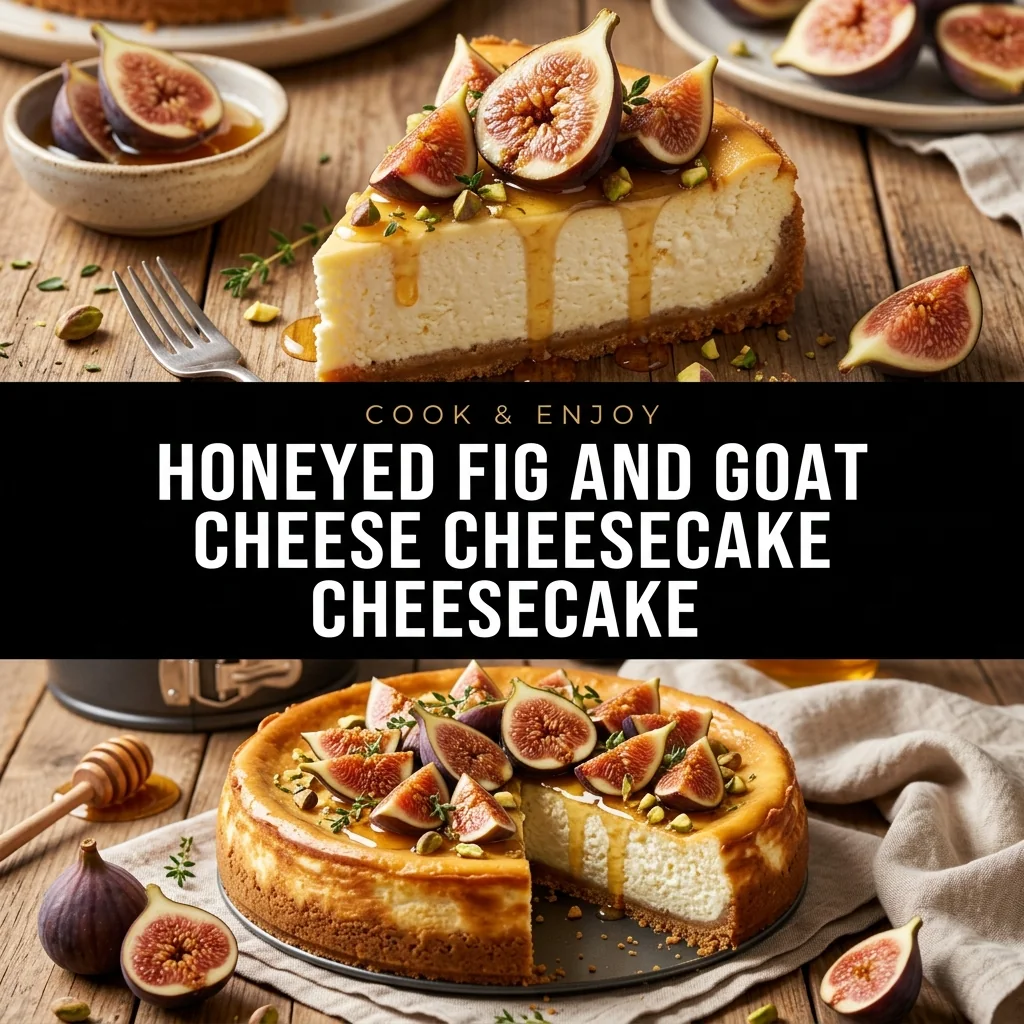
This baked goat cheese cheesecake balances the tang of fresh goat milk curd with the rich, dependable structure of halal-certified cream cheese. Goat cheese lends an earthy, slightly citrusy depth that keeps the dessert from feeling heavy or overly sweet. Paired with a foundational buttery graham crust, the silky baked custard base provides a clean, neutral canvas for tender, ripe black mission figs. A gentle drizzle of pure clover honey complements the figs without overwhelming their delicate floral qualities. Prepared with safe water-bath baking and a gentle cooling sequence, this recipe delivers a velvety, crack-free finish suitable for formal dinners, seasonal gatherings, or afternoon tea service.
Selecting Goat Cheese and Honey
Choose a fresh, unaged goat cheese log made with halal-suitable microbial rennet rather than animal rennet. The cheese should be milky, mildly tart, and free of heavy barnyard aromas. Pairing this with a mild clover honey ensures the cheese's nuanced acidity shines through without bitter competition. Darker honeys, such as buckwheat or wild thyme, can be assertive, whereas clover honey offers a balanced, rounded sweetness that highlights the delicate, jammy sweetness of peak-season ripe figs.
Water Bath Precision and Cooling
Baking delicate dairy custards requires gentle, indirect heat to avoid curdling the proteins. Wrapping the 9-inch springform pan securely in heavy-duty foil prevents seepage from the water bath. The hot water moderates the oven temperature, ensuring the cheesecake rises uniformly from edge to center. Allowing the baked cheesecake to rest inside the turned-off oven with the door cracked for an hour avoids abrupt thermal shock, which is the primary cause of sinking and surface cracking.
Garnishing and Clean Slicing
Wait until the cheesecake is completely chilled before layering the sliced fresh figs across the top. Washing and thoroughly drying the figs beforehand prevents surface wetness that could degrade the top custard layer. For sharp, professional slices, dip a long chef's knife into a tall glass of hot water, wipe the blade completely dry with a clean kitchen towel, and slice downward in a single stroke, wiping the blade clean between every cut.
Before you start
For an exceptionally smooth texture, ensure both the goat cheese and cream cheese are fully softened to room temperature before mixing. Cold goat cheese can form small, stubborn curds that do not incorporate evenly into the batter. Always mix on the lowest speed after adding the eggs. Whipping excessive air into the custard creates air pockets that expand during baking and cause unsightly surface cracks as the cheesecake cools.
THE RECIPE
Honeyed Fig and Goat Cheese Cheesecake
12 servings · 25 minutes preparation · 65 minutes cooking · 420 minutes cooling, chilling or resting
Ingredients
Step-by-step instructions
- Preheat the oven to 325°F (163°C). Lightly grease a 9-inch springform pan, line the bottom with parchment paper, and tightly wrap the outer base with two layers of heavy-duty aluminum foil to guard against water ingress.
- Combine the graham cracker crumbs, melted butter, and 2 tablespoons of sugar in a mixing bowl until evenly moistened, then press firmly across the bottom of the prepared springform pan. Bake at 325°F (163°C) for 10 minutes, then transfer to a wire rack to cool completely.
- Place the softened cream cheese and goat cheese in a large mixing bowl. Beat on medium-low speed with an electric mixer for 3 minutes until completely smooth, scraping down the sides to eliminate any small lumps.
- Add the 3/4 cup of sugar, alcohol-free vanilla extract, and fine sea salt to the cheese mixture, beating on low speed for 1 minute until fully integrated.
- Incorporate the sour cream on low speed. Add the room-temperature eggs one at a time, beating gently on the lowest setting just until each yolk blends into the batter without introducing excess air.
- Pour the smooth batter over the cooled crust. Place the springform pan into a large roasting pan and pour boiling water into the outer roasting pan until it reaches halfway up the sides of the springform pan.
- Bake at 325°F (163°C) for 55 minutes until the edges are set and dry to the touch while the center remains slightly wobbly, registering an internal custard temperature of 160°F (71°C) on an instant-read thermometer.
- Turn off the oven and prop the oven door open 2 inches with a wooden spoon, letting the cheesecake cool inside the humid oven for 60 minutes. Remove the pan from the water bath, strip off the foil, and let it sit at room temperature for another 30 minutes.
- Transfer the cheesecake to the refrigerator uncovered for 330 minutes (bringing total cooling and chilling rest to 420 minutes). In a small saucepan, warm the clover honey and 1 tablespoon water over low heat for 2 minutes; arrange fresh fig rounds across the chilled surface and brush with the honey glaze before slicing.
Kitchen notes
For an exceptionally smooth texture, ensure both the goat cheese and cream cheese are fully softened to room temperature before mixing. Cold goat cheese can form small, stubborn curds that do not incorporate evenly into the batter. Always mix on the lowest speed after adding the eggs. Whipping excessive air into the custard creates air pockets that expand during baking and cause unsightly surface cracks as the cheesecake cools.
Storage & make-ahead
Store leftover cheesecake in an airtight container or cover the springform tightly with plastic wrap in the refrigerator at or below 40°F (4°C) for up to 4 days. Because fresh figs release moisture over time, slice and glaze them onto individual portions if preparing ahead. Perishables must be refrigerated promptly within 2 hours of serving.
An original recipe guide inspired by themes in our Pinterest research. Recipe has not been independently kitchen-tested. AI-generated image is illustrative; your finished dish may look different.
Frequently asked questions
Can I substitute dried figs for fresh figs?
Yes, but dried figs must be rehydrated first. Simmer quartered dried figs in simmering water with a touch of honey for 10 minutes until plump, then cool and drain thoroughly before arranging them over the top.
Why did my cheesecake crack on top?
Cracking typically results from overbaking, beating too much air into the eggs, or sudden temperature drops. Use low mixer speeds, verify internal doneness reaches 160°F (71°C), and follow the gradual cooling protocol in the oven.
Can this cheesecake be frozen?
You can freeze the plain baked cheesecake without fruit for up to 1 month. Wrap the chilled cake securely in plastic wrap and aluminum foil. Thaw overnight in the refrigerator before topping with fresh figs and honey.


