WHY MAKE IT
A little comfort, a lot of flavor.
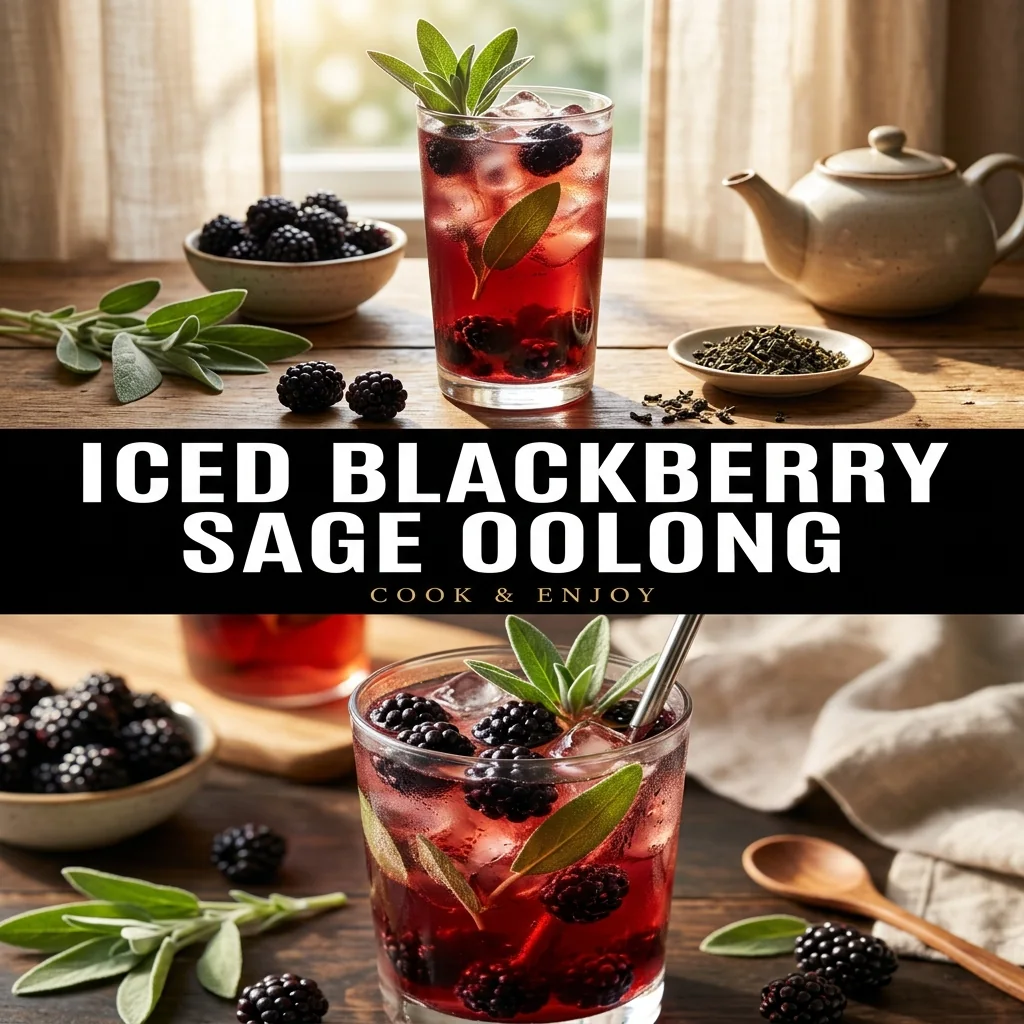
Iced Blackberry Sage Oolong offers an invigorating harmony between sweet seasonal fruit, pungent garden herbs, and the complex, toasty notes of medium-oxidized tea. Amber oolong occupies a flavor spectrum between fresh green tea and rich black tea, delivering smooth roasted undertones and natural fruitiness that provide a structured backbone for cold drinks. Muddled ripe blackberries release deep crimson juices and natural tartness, while fresh sage leaves contribute a pine-like, savory aroma that cuts through berry sweetness. Sweetened gently with neutral agave nectar and shaken over ice, this chilled beverage delivers layered refreshment that feels sophisticated, balanced, and thoroughly revitalizing on a warm afternoon.
Choosing and Brewing Amber Oolong
Amber oolong undergoes moderate oxidation, creating a rich golden-brown liquor that balances floral lift with roasted complexity. Heating your brewing water to approximately 195 F / 90 C allows the tightly rolled leaves to unfurl naturally, releasing sweet stone-fruit and woodsy qualities without extracting bitter compounds. Steeping for five minutes produces a concentrated tea base strong enough to withstand the melting dilution of ice cubes. Cooling the strained tea gradually before shaking guarantees that the final drink remains crisp, clean, and refreshing without becoming watery or lukewarm when poured over fresh cubes.
Muddling Technique for Fruit and Herb
Muddling requires controlled physical pressure to extract vibrant juices without turning herbal leaves into unpalatable debris. Place ripe blackberries, fresh garden sage leaves, and agave nectar into the base of your vessel. Use a firm twisting motion with a flat-bottomed wooden muddler to burst the berry skins and liquefy their pulp. The coarse texture of the berries cushions the sage leaves, allowing their aromatic oils to blend into the sweet syrup. Crushing too violently bruises the sage tissue excessively, causing bitter grassy flavors to bleed into an otherwise clean, fruity beverage.
Chilling and Double-Straining
Vigorous shaking with ice aerates the mixture, rapidly drops the beverage temperature, and emulsifies berry juices with the brewed oolong. Because crushed blackberries contain numerous fine seeds and pulpy fibers, double-straining is essential. Pouring the shaken tea through a standard shaker strainer combined with a fine-mesh conical tea strainer catches micro-seeds and sage fragments. The result is a sparkling, ruby-tinted beverage that feels light on the tongue while retaining complete clarity, showcasing the layered interplay of orchard fruit, herbal fragrance, and toasty roasted tea leaves.
Before you start
Amber or medium-oxidized oolong provides toasty, stone-fruit notes that interlock seamlessly with dark berries. Avoid boiling water above 195 F / 90 C when brewing oolong; excessive thermal shock scalds the partially oxidized leaves, causing bitter polyphenols to mask delicate floral top notes. When muddling sage, press firmly enough to release herbal oils without tearing the leaves into tiny shreds, which would release harsh chlorophyll and make straining more difficult.
THE RECIPE
Iced Blackberry Sage Oolong
3 servings · 10 minutes preparation · 5 minutes cooking · 25 minutes cooling, chilling or resting
Ingredients
Step-by-step instructions
- Bring 3 cups filtered water to a gentle simmer in a 1 1/2-quart saucepan over medium heat for 5 minutes until reaching 195 F / 90 C.
- Remove the pan from heat, add 1 1/2 tablespoons loose leaf amber oolong tea, cover with a lid, and allow to steep for 5 minutes.
- Strain the brewed oolong tea through a fine-mesh sieve into a heatproof glass pitcher, discard the tea leaves, and place the pitcher in the refrigerator to cool for 20 minutes (total rest 25 minutes).
- In a sturdy cocktail shaker or mixing glass, combine 1 cup fresh blackberries, 8 fresh sage leaves, and 2 1/2 tablespoons pure agave nectar.
- Muddle the berries and sage firmly using a wooden muddler for 45 seconds to rupture fruit skins, release dark juices, and express the aromatic sage oils.
- Add 2 cups ice cubes and the chilled oolong tea to the shaker, seal tightly, and shake vigorously for 15 seconds until the exterior of the shaker becomes frosty.
- Double-strain the tea mixture through a fine bar strainer into three tall glasses filled with fresh ice cubes, pressing berry remnants lightly to capture all juice.
Kitchen notes
Amber or medium-oxidized oolong provides toasty, stone-fruit notes that interlock seamlessly with dark berries. Avoid boiling water above 195 F / 90 C when brewing oolong; excessive thermal shock scalds the partially oxidized leaves, causing bitter polyphenols to mask delicate floral top notes. When muddling sage, press firmly enough to release herbal oils without tearing the leaves into tiny shreds, which would release harsh chlorophyll and make straining more difficult.
Storage & make-ahead
Store leftover unstrained or strained oolong tea in an airtight glass pitcher in the refrigerator within 2 hours. Keeps fresh and flavorful for up to 3 days. If berries have already been muddled into the tea, strain the liquid before refrigerating to prevent the seeds from developing a bitter, woody taste over time.
An original recipe guide inspired by themes in our Pinterest research. Recipe has not been independently kitchen-tested. AI-generated image is illustrative; your finished dish may look different.
Frequently asked questions
Can I substitute dried sage for fresh sage leaves?
Dried sage is not recommended here. Dried sage has an intense, powdery texture and medicinal flavor that overpowers fruit, whereas fresh garden sage delivers delicate herbal brightness.
What can I substitute for agave nectar?
Pure simple syrup or mild clover honey can be used in equal measure. Agave is preferred because it dissolves immediately into cold liquids without crystallizing or imparting strong caramel flavor.
Can I use frozen blackberries instead of fresh?
Yes, thaw frozen blackberries completely at room temperature and drain excess standing liquid before muddling with sage and agave, as frozen berries crush easily and yield abundant juice.