WHY MAKE IT
A little comfort, a lot of flavor.
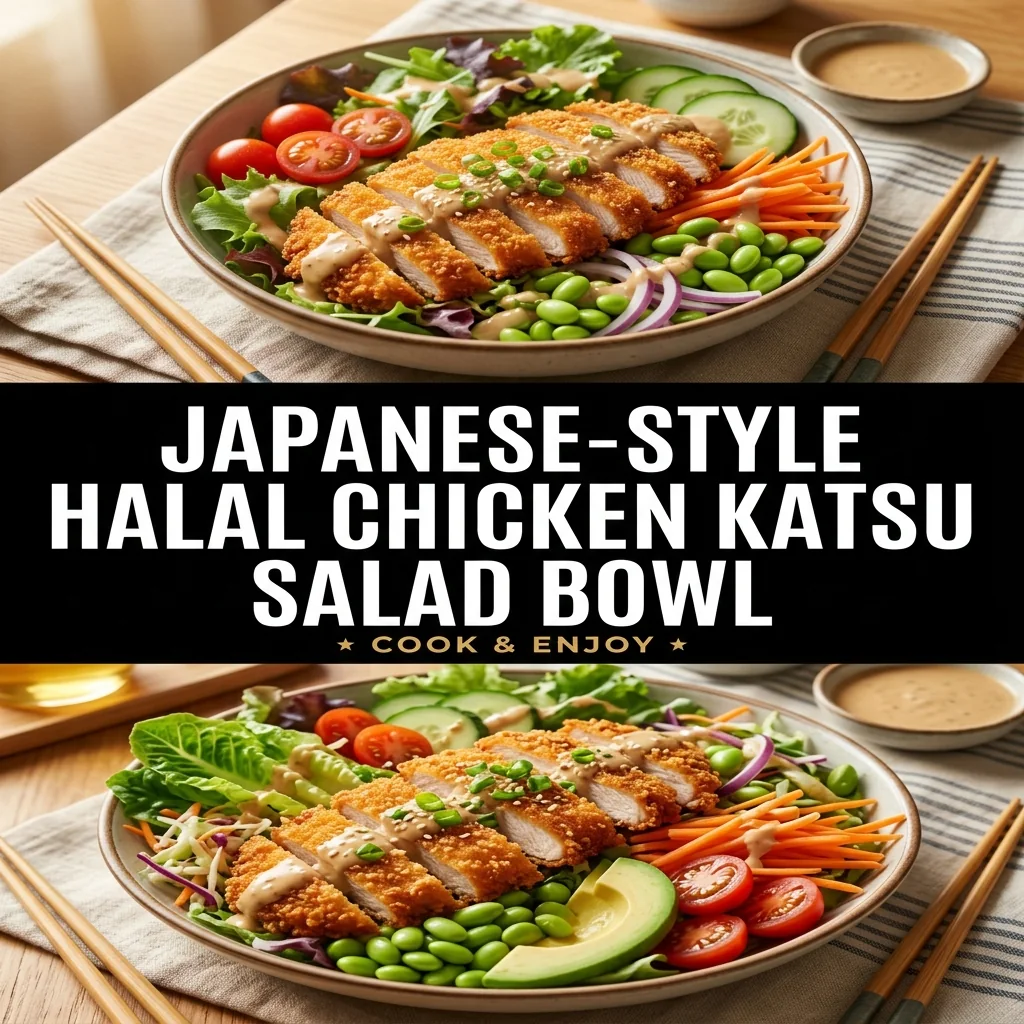
In traditional Japanese dining, deep-fried katsu cutlets are almost invariably paired with mountains of finely shredded raw cabbage rather than heavy starches alone. This lighter, salad-centric presentation honors that harmony by centering the meal around crisp brassica slaw dressed lightly with sweet, savory tonkatsu sauce. Halal boneless chicken breast cutlets are pounded evenly, coated in airy Japanese panko flakes, and pan-fried until crackling and golden brown. The natural sweetness of raw cabbage absorbs the rich cutlet drippings and tangy fruit-and-vegetable tonkatsu glaze, creating an exceptionally clean and balanced meal. Fresh lemon wedges squeezed over the hot breaded poultry cut through the richness, while toasted sesame seeds supply an aromatic, nutty finish to every bowl.
Mastering the Panko Breading Technique
True Japanese panko differs fundamentally from standard breadcrumbs because it is baked using electric current, creating airy, sliver-shaped flakes without dark crusts. When applying panko to chicken cutlets, press firmly with the palms of your hands so the flakes adhere securely to the egg layer. Shaking off excess flour prior to the egg bath ensures the coating does not slough off in sheets during frying. Keep your oil strictly around 350 F (175 C) so the breading crisps without scorching before the poultry reaches 165 F (74 C).
Cabbage Preparation for Supreme Crispness
The shredded cabbage base is far more than a garnish; it acts as the primary textural anchor for the salad bowl. Slicing the cabbage as finely as humanly possible creates delicate, featherweight strands that yield pleasantly when bitten. Soaking sliced cabbage in ice-cold water tightens its cellular walls, enhancing crispness while mellowing sharp sulfur compounds. Spinning the shreds completely dry is critical; excess water clinging to cabbage will dilute your savory tonkatsu sauce and prematurely soften the crisp katsu crust.
Selecting Halal Tonkatsu Sauce
Standard Japanese tonkatsu sauce is a thick, molasses-like condiment concocted from concentrated apples, tomatoes, dates, vinegar, and spices. However, some commercial varieties contain hidden alcohol derived from brewing processes or cooking wines. Always verify that your bottled tonkatsu sauce carries certified halal credentials or utilize a verified alcohol-free formulation made with distilled vinegar, halal Worcestershire sauce, tomato paste, and raw honey. Its tart acidity and rich umami tie the fresh slaw and savory chicken together seamlessly.
Before you start
To achieve the classic restaurant katsu experience, cut cabbage paper-thin using a sharp chef's knife or a Japanese mandoline, then soak it in an ice water bath for 5 minutes before spinning it dry in a salad spinner. Crisp, chilled cabbage provides the vital temperature and texture contrast against the piping hot, crunchy chicken cutlets. Resting cutlets on a wire rack prevents moisture accumulation on the bottom crust.
THE RECIPE
Japanese-Style Halal Chicken Katsu Salad Bowl
4 servings · 25 minutes preparation · 18 minutes cooking · 5 minutes cooling, chilling or resting
Ingredients
Step-by-step instructions
- Pat 4 halal chicken cutlets dry with clean paper towels, then season both sides evenly with 1/2 teaspoon salt and 1/4 teaspoon black pepper.
- Set up a three-station breading assembly line in shallow dishes: place 1/2 cup flour in the first, 2 beaten eggs in the second, and 1 1/2 cups panko breadcrumbs in the third.
- Dredge each seasoned chicken cutlet in flour to coat lightly, dip into beaten egg allowing excess to drip off, and press firmly into panko crumbs until completely covered.
- Heat 1/2 cup neutral cooking oil in a large 12-inch heavy-bottomed skillet over medium heat until it registers 350 F (175 C) on an instant-read thermometer.
- Lay two cutlets carefully into the hot oil away from you, frying for 4 to 5 minutes on the first side until deeply golden brown.
- Flip the cutlets with tongs and fry the second side for 3 to 4 minutes until golden and the internal temperature reaches a safe 165 F (74 C).
- Transfer cooked cutlets to a wire cooling rack set over a rimmed baking sheet and let rest for 5 minutes; repeat the frying process with the remaining two cutlets.
- Combine 6 cups shredded green cabbage, 1 cup shredded red cabbage, and 1 matchstick carrot in a large bowl, then divide the crisp slaw evenly among 4 wide serving bowls.
- Slice the rested chicken cutlets crosswise into 3/4-inch strips, arrange atop the shredded cabbage beds, drizzle generously with 1/3 cup halal tonkatsu sauce, and garnish with 2 tablespoons sesame seeds, sliced scallions, and lemon wedges.
Kitchen notes
To achieve the classic restaurant katsu experience, cut cabbage paper-thin using a sharp chef's knife or a Japanese mandoline, then soak it in an ice water bath for 5 minutes before spinning it dry in a salad spinner. Crisp, chilled cabbage provides the vital temperature and texture contrast against the piping hot, crunchy chicken cutlets. Resting cutlets on a wire rack prevents moisture accumulation on the bottom crust.
Storage & make-ahead
Store leftover sliced chicken cutlets and shredded cabbage separately in airtight containers in the refrigerator for up to 3 days. Perishables must be chilled within 2 hours. Reheat chicken on a wire rack in a 375 F (190 C) oven or air fryer until crisp and heated to an internal temperature of 165 F (74 C).
An original recipe guide inspired by themes in our Pinterest research. Recipe has not been independently kitchen-tested. AI-generated image is illustrative; your finished dish may look different.
Frequently asked questions
How do I ensure the chicken stays crispy once placed in the bowl?
Slice the chicken immediately after resting, and arrange it over the dry cabbage right before bringing the bowl to the table. Drizzle the tonkatsu sauce lightly in ribbons across the top rather than tossing the chicken into the dressing.
Can I bake the chicken katsu instead of pan-frying?
Yes, pre-toast the panko in a dry skillet with 1 tablespoon of oil until golden, bread the chicken, and bake on a wire rack at 400 F (200 C) for 15 to 18 minutes until internal temperature reaches 165 F (74 C).
What cuts of chicken work best for this recipe?
Thinly butterflied halal chicken breast cutlets cook quickly and evenly without drying out. Alternatively, boneless skinless halal chicken thighs can be used, though they may require an additional 2 to 3 minutes of frying time.