WHY MAKE IT
A little comfort, a lot of flavor.
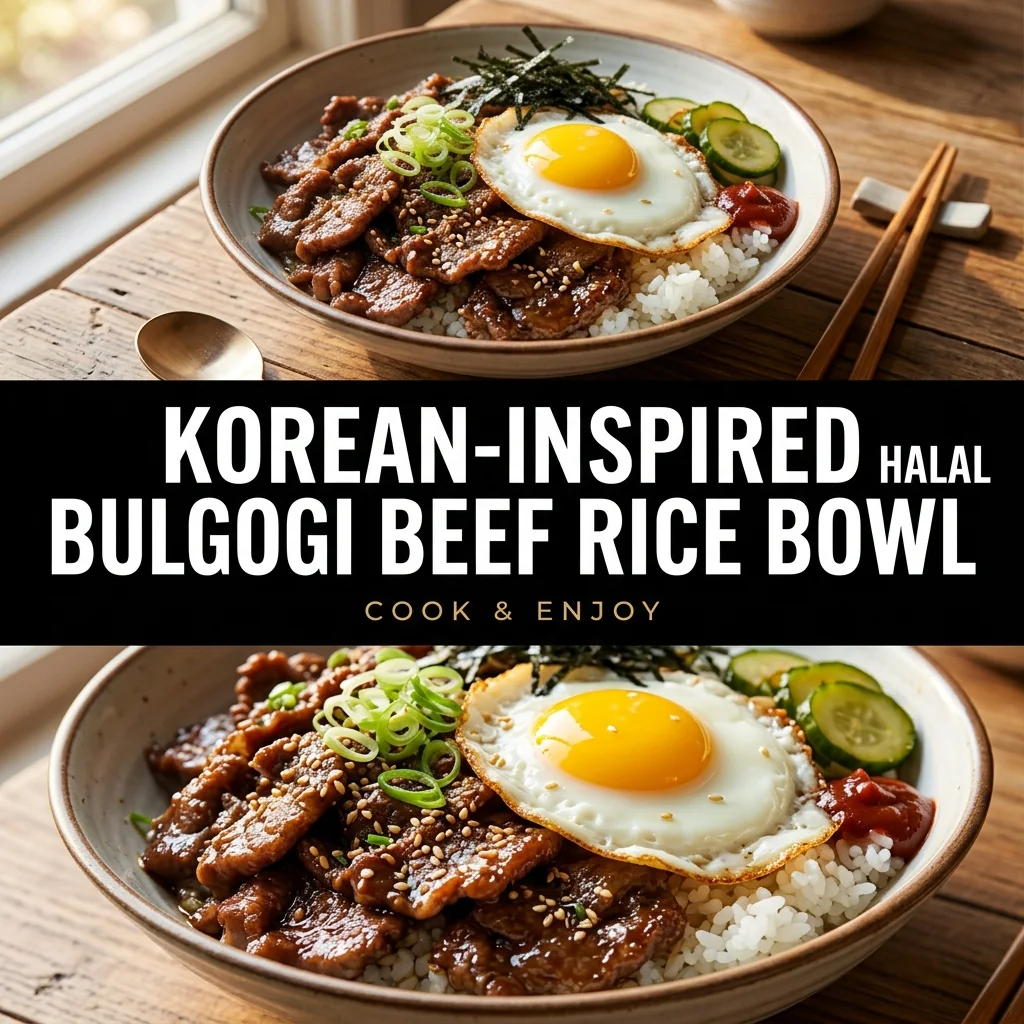
This Korean-inspired halal bulgogi beef rice bowl balances savory richness, bright acidity, and comforting textures. Tender shavings of halal ribeye absorb a marinade sweetened naturally with freshly grated Asian pear, which breaks down the meat fibers gently while delivering clean, balanced sweetness without alcohol-based mirin or unverified cooking additives. Paired with warm short-grain rice, gentle nutty sesame-dressed spinach, and zesty halal-certified cabbage kimchi, every element contributes contrasting temperatures and textures. Crafting this bowl at home provides complete ingredient oversight, ensuring authentic depth of flavor using strictly halal-certified pantry staples.
Selecting and Slicing Halal Ribeye
Achieving the tender, melt-in-the-mouth texture characteristic of traditional bulgogi begins with meat selection. Halal-certified ribeye offers generous intramuscular marbling that prevents thin slices from drying out under intense heat. To slice the beef safely at home, freeze the boneless ribeye for 25 to 35 minutes until firm to the touch but not solid rock. Use a very sharp slicing knife to cut against the grain into sheets roughly one-eighth of an inch thick. Slicing against the grain cuts the long muscle fibers, ensuring every bite remains tender once seared in the skillet.
The Alcohol-Free Tenderizing Marinade
Many commercial bulgogi marinades contain cooking wines or unverified flavorings, but an authentic and bright profile is easily achieved using natural whole ingredients. Grated Asian pear contains calpain, a natural enzyme that tenderizes beef fibers without turning them mushy. Combined with halal-certified tamari or naturally brewed soy sauce, aromatic garlic, fresh ginger, and unrefined dark brown sugar, the mixture forms a sticky glaze that caramelizes rapidly against cast iron. Marinating for 45 minutes is optimal; longer contact is unnecessary and can break down paper-thin slices too extensively.
Pan Searing and Bowl Assembly
High heat is essential when cooking thinly sliced beef. A heavy cast-iron or carbon steel pan holds sufficient thermal mass to sear the meat instantly rather than boiling it in its own juices. Work in manageable batches so the surface temperature remains high, producing localized charring that mimics outdoor charcoal grilling. Assemble the finished bowls systematically: place a compact bed of warm short-grain rice at the base, fan the seared beef over one side, and nestle the blanched sesame spinach and cold crisp halal kimchi adjacent for maximum textural contrast.
Before you start
For effortless razor-thin beef slices, place the halal ribeye steak in the freezer for roughly thirty minutes before slicing with a sharp chef's knife. The firm texture prevents tearing and yields tender, uniform ribbons. When searing, avoid crowding the skillet or pouring all the liquid marinade into the pan, as trapped steam prevents caramelization. Cooking in two quick, high-heat batches ensures deep browning, savory crisp edges, and properly retained juices throughout the meat.
THE RECIPE
Korean-Inspired Halal Bulgogi Beef Rice Bowl
4 servings · 25 minutes preparation · 15 minutes cooking · 45 minutes cooling, chilling or resting
Ingredients
Step-by-step instructions
- Place the shaved halal ribeye into a large glass mixing bowl.
- Whisk together the grated Asian pear, tamari, dark brown sugar, 1 tablespoon of toasted sesame oil, minced garlic, grated ginger, and ground black pepper in a medium bowl until the sugar dissolves completely.
- Pour the marinade over the sliced beef, tossing thoroughly to ensure every strip is coated, then cover and chill in the refrigerator for 45 minutes to tenderize.
- Toss the blanched and drained baby spinach with the remaining 0.5 tablespoon of toasted sesame oil and toasted sesame seeds in a small bowl, then set aside at room temperature.
- Heat a large 12-inch cast-iron skillet over high heat until lightly smoking, then add the neutral vegetable oil and swirl to coat the cooking surface.
- Remove half of the marinated beef from the bowl, letting excess marinade drip back into the bowl, and spread the meat in a single layer across the hot skillet.
- Sear the beef undisturbed for 90 seconds until browned and slightly charred at the edges, flip and cook for an additional 60 seconds until fully cooked, then transfer to a clean plate and repeat with the remaining beef.
- Divide the warm short-grain white rice evenly among four wide serving bowls.
- Arrange equal portions of the seared bulgogi beef, seasoned sesame spinach, and drained halal kimchi over the rice, finishing each bowl with sliced scallions.
Kitchen notes
For effortless razor-thin beef slices, place the halal ribeye steak in the freezer for roughly thirty minutes before slicing with a sharp chef's knife. The firm texture prevents tearing and yields tender, uniform ribbons. When searing, avoid crowding the skillet or pouring all the liquid marinade into the pan, as trapped steam prevents caramelization. Cooking in two quick, high-heat batches ensures deep browning, savory crisp edges, and properly retained juices throughout the meat.
Storage & make-ahead
Store leftover bulgogi beef, rice, and spinach in separate airtight containers in the refrigerator within 2 hours. Beef and rice keep safely for up to 3 days. Reheat the beef and rice in a skillet over medium-high heat with a splash of water until steaming and hot throughout, reaching at least 165 F (74 C). Keep kimchi chilled separately.
An original recipe guide inspired by themes in our Pinterest research. Recipe has not been independently kitchen-tested. AI-generated image is illustrative; your finished dish may look different.
Frequently asked questions
Can I substitute another cut of halal beef for the ribeye?
Halal sirloin, flank steak, or top round can be used if shaved very thinly across the grain. Because these cuts have less intramuscular fat than ribeye, watch the pan closely to prevent overcooking and avoid letting the meat dry out.
Is store-bought kimchi always halal?
Not all commercially prepared kimchi is halal-certified, as some recipes contain alcohol residues or non-halal processing aids. Always check labels carefully to confirm halal certification or verify that the kimchi uses only simple fermented vegetables, salt, chili, and certified seasonings.
Can I use Bosc or Bartlett pears instead of Asian pear?
Yes, ripe Bosc or Bartlett pears make suitable substitutes if Asian pears are unavailable. Grate them finely on a box grater to ensure smooth incorporation into the marinade so the natural sugars distribute evenly over the sliced halal beef.