WHY MAKE IT
A little comfort, a lot of flavor.
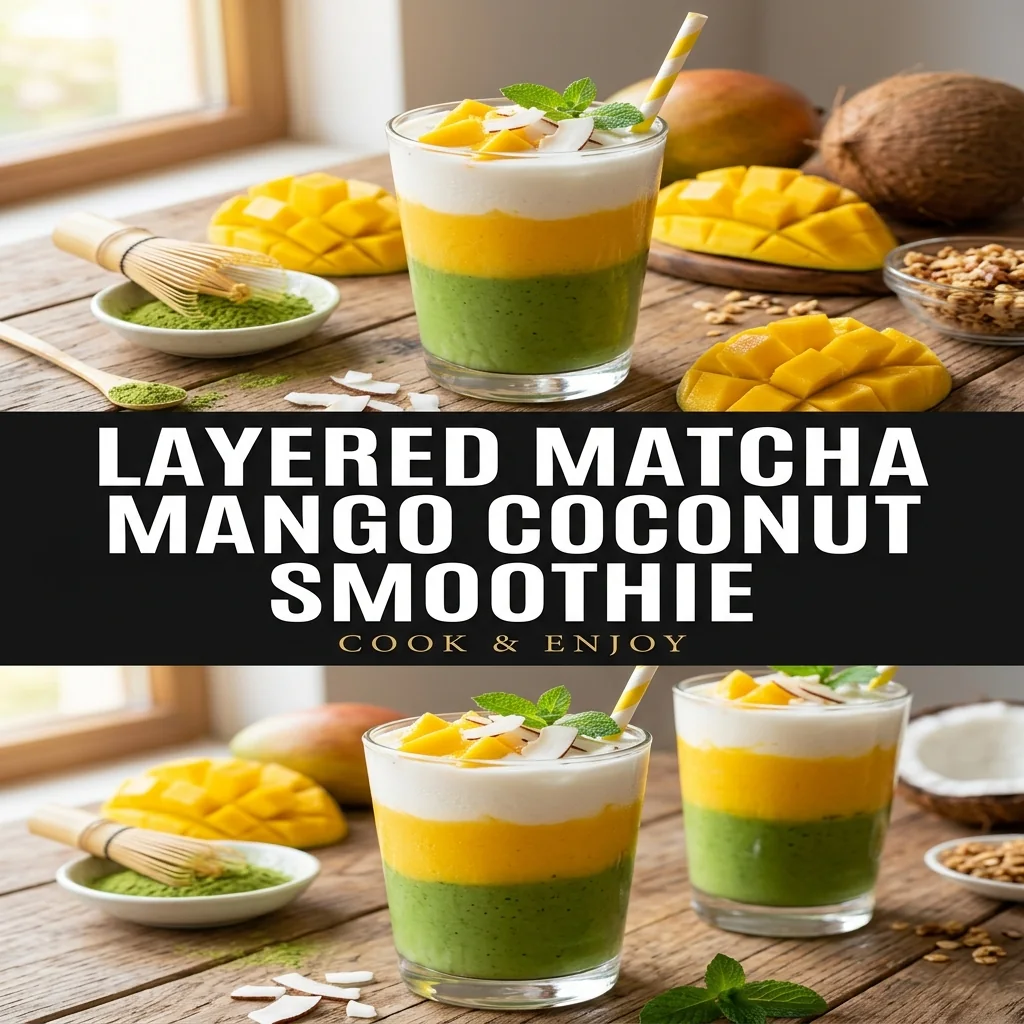
The layered matcha mango coconut smoothie presents a striking visual and palate contrast, marrying the lush tropical sweetness of ripe fruit with the grounding, verdant bitterness of Japanese green tea. The dense yellow lower tier relies on chilled mango flesh and thick coconut cream, providing a velvet texture naturally anchored against the glass. In contrast, the upper tier highlights ceremonial matcha aerated with chilled soy milk into a buoyant foam. Each sip offers a balanced interplay of fruit acidity, rich plant fats, and astringent tea notes. Because this preparation requires no cooking and depends entirely on natural ingredient colors, using high-grade, vibrant green tea powder and naturally sweet frozen fruit yields an exceptionally clean flavor profile and a distinct presentation suited for morning or afternoon refreshment.
Ingredient Selection and Balancing
Selecting ceremonial-grade matcha ensures a vibrant emerald color and a soft, umami-rich finish without excessive bitterness. Culinary matcha tends to yield a duller khaki hue and sharper astringency, requiring additional sweetener to balance. Frozen Alphonso or Ataulfo mango varieties provide dependable sweetness, rich golden pigmentation, and a smooth, non-fibrous consistency. Canned unsweetened coconut cream brings necessary plant lipids that thicken the base and balance the tartness of fresh lime juice. Using unsweetened plain soy milk introduces sufficient protein to form a stable, airy froth when whipped on high speed with crushed ice.
Technique for Clean Separation
The success of a layered beverage depends entirely on relative specific gravity. The mango tier achieves density through frozen solids and fat from coconut cream, forming a supportive base. To prevent bleeding when adding the matcha, the green liquid must be chilled and aerated to decrease its density. Resting an inverted soup spoon against the inside glass wall just above the mango puree diffuses the force of the pour. Pouring the liquid steadily down the spoon handle spreads the impact across the surface, keeping the two colorful stages neatly divided.
Serving Suggestions and Troubleshooting
Serve immediately in tall, clear glassware with wide glass or metal straws. If the mango base turns out too thin due to overly thawed fruit, blend in a quarter cup of additional frozen mango or an ice cube before pouring. Conversely, if the base is too stiff to settle evenly, tap the base of the glass against a folded kitchen towel on the counter to level it before adding the tea. Drinkers can choose to enjoy the layers sequentially or swirl them together with a straw for a harmonious blend.
Before you start
For distinct visual separation between the dense yellow base and vibrant green top layer, maintain a significant viscosity difference. The mango mixture must remain spoonable and heavy; if fresh fruit is substituted for frozen, incorporate extra ice during blending to establish density. When pouring the top layer, position the curved back of a spoon mere millimeters above the mango puree. Pouring slowly against the curved metal breaks the downward stream velocity, allowing the lighter soy mixture to rest smoothly on top without sinking.
THE RECIPE
Layered Matcha Mango Coconut Smoothie
2 servings · 15 minutes preparation · 0 minutes cooking
Ingredients
Step-by-step instructions
- Combine the frozen mango chunks, canned coconut cream, fresh lime juice, and 1 tablespoon of agave nectar in a high-speed blender container.
- Puree on high speed for 60 to 90 seconds until completely uniform and thick, stopping once to scrape down the sides with a flexible silicone spatula.
- Divide the dense yellow mango mixture evenly between two tall 14-ounce glasses, tapping each base firmly against the counter to level the surface.
- Rinse and thoroughly dry the blender container, then add the ceremonial matcha powder, chilled soy milk, remaining 1 tablespoon of agave nectar, and crushed ice.
- Blend the matcha mixture on high speed for 45 seconds until light, completely lump-free, and topped with a fine pale green microfoam.
- Hold an inverted dessert spoon gently over the mango layer and slowly pour half of the matcha mixture into each glass against the back of the spoon to preserve the clean visual boundary.
Kitchen notes
For distinct visual separation between the dense yellow base and vibrant green top layer, maintain a significant viscosity difference. The mango mixture must remain spoonable and heavy; if fresh fruit is substituted for frozen, incorporate extra ice during blending to establish density. When pouring the top layer, position the curved back of a spoon mere millimeters above the mango puree. Pouring slowly against the curved metal breaks the downward stream velocity, allowing the lighter soy mixture to rest smoothly on top without sinking.
Storage & make-ahead
Consume immediately upon assembly for optimal texture and clear separation. If preparing components ahead, blend each mixture and store in separate airtight glass jars in the refrigerator for up to 12 hours. Stir each layer briefly before assembling. Discard any mixture left at room temperature past 2 hours. Do not freeze assembled glasses.
An original recipe guide inspired by themes in our Pinterest research. Recipe has not been independently kitchen-tested. AI-generated image is illustrative; your finished dish may look different.
Frequently asked questions
Can I use light coconut milk instead of coconut cream?
Light coconut milk contains significantly more water, making the bottom layer too thin to support the matcha pour. If using light milk, reduce the volume to one-quarter cup and add extra frozen fruit to maintain adequate thickness.
Why did my matcha layer sink into the mango base?
Sinking occurs if the mango base was too warm and thin, or if the matcha tea was poured too quickly from a height. Chill your blender cup, keep the fruit fully frozen, and pour gently over the back of a spoon.
Can I sweeten the smoothie with maple syrup instead?
Yes, pure amber maple syrup or simple sugar syrup works well. Agave nectar is favored because its neutral sweetness and pale color do not tint the bright green matcha or cloud the golden mango.