WHY MAKE IT
A little comfort, a lot of flavor.
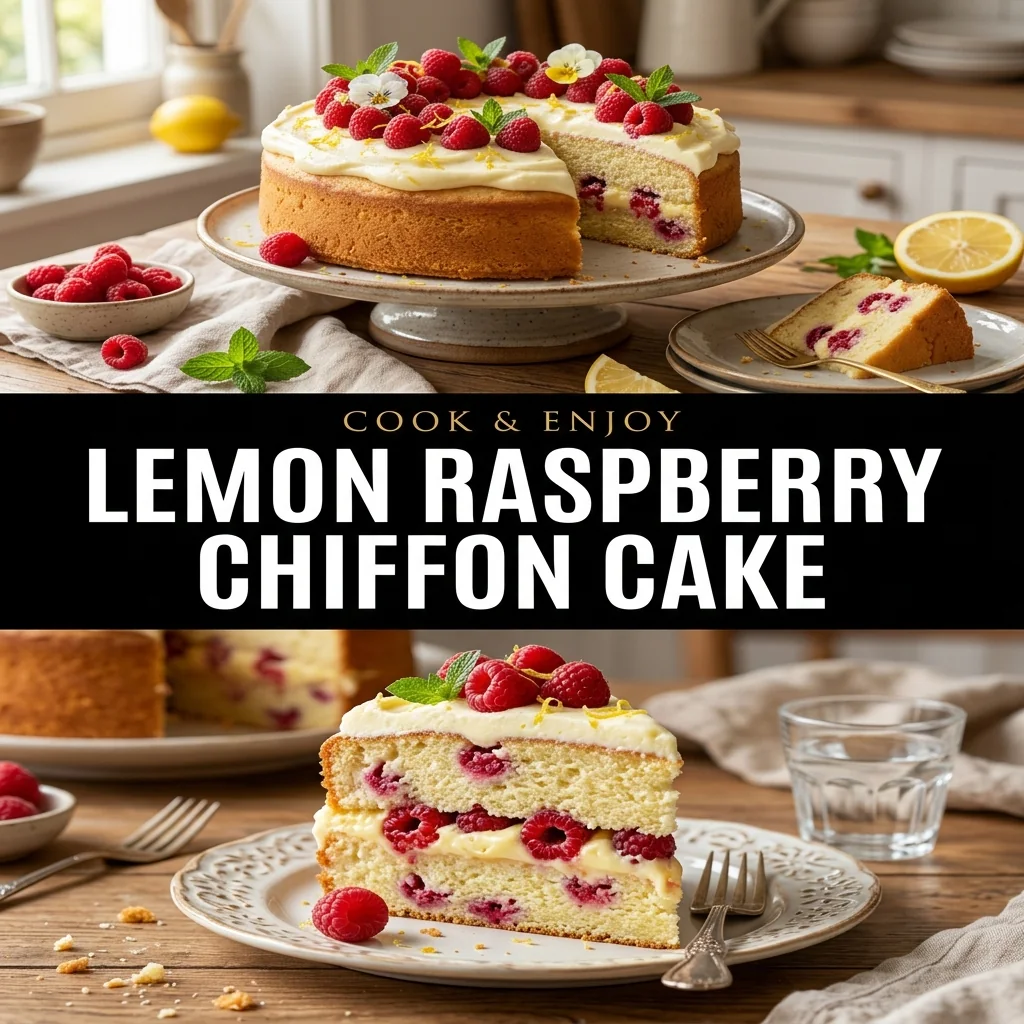
Chiffon cake represents an elegant intersection of baking traditions, pairing the cloud-like volume of classic sponge cakes with the tender, lasting moisture characteristic of oil-based layers. While butter solidifies at room temperature, neutral vegetable oil remains liquid, ensuring that every bite melts effortlessly on the tongue. In this recipe, bright lemon zest and fresh citrus juice infuse the airy crumb with clean aroma, balanced by an invigorating ruby glaze prepared from freshly crushed raspberries and sifted confectioners' sugar. The structural foundation relies on an impeccably whipped meringue folded into an emulsified citrus egg yolk base. Baked in a classic central tube pan to ensure even heat penetration across its wide perimeter, this show-stopping dessert is light enough for an afternoon tea yet sophisticated enough for festive family gatherings.
Whipping the Meringue to Stable Peaks
The structural integrity of chiffon relies entirely on the foam created by egg whites. Ensure your mixing bowl and whisk are immaculately clean and completely free of residual fat or yolk traces, which hinder foam formation. Cream of tartar stabilizes the egg white proteins, allowing them to stretch and trap air cells without rupturing. Whip whites until firm, glossy peaks form that hold their shape with only a slight curve at the very tip. Over-whipping results in dry, clumpy foam that resists smooth folding, leaving pockets of deflated batter.
The Science of Inverted Cooling
Unlike butter-heavy pound cakes that set into rigid forms upon baking, chiffon cakes feature an open, gossamer structure held primarily by delicate starch gels and setting egg proteins. As steam escapes during cooling, gravitational forces can cause the crumb to compress beneath its own weight. Suspending the tube pan upside down forces gravity to work in favor of the crumb, pulling it downward and maintaining maximum volume while the cake structure solidifies. Do not attempt to unmold until the pan feels entirely cool to touch.
Preparing the Fresh Raspberry Drizzle
A fresh berry glaze provides a bright, tart counterpoint to the sweet citrus crumb. Press fresh raspberries firmly through a fine-mesh nylon sieve using the back of a ladle to extract pure seedless fruit purée. Whisk the resulting juice into sifted powdered sugar until a ribbon-like consistency forms. If the glaze appears too thick to drape naturally over the cake shoulders, incorporate fresh lemon juice by the half-teaspoon until fluid. Glaze only after the sponge has cooled completely to prevent melting.
Before you start
Never grease the chiffon tube pan. The delicate batter depends entirely on clinging to the raw metal sides and central funnel to climb vertically during baking. Greasing creates a slippery barrier that causes the rising foam to slide downward, resulting in a dense, fallen sponge. Cooling the cake upside down is equally critical; inverted suspension stretches the protein network while the delicate crumb sets, preserving maximum loft and preventing collapse.
THE RECIPE
Lemon Raspberry Chiffon Cake
10 servings · 25 minutes preparation · 45 minutes cooking · 90 minutes cooling, chilling or resting
Ingredients
Step-by-step instructions
- Preheat the oven to 325°F (163°C), leaving a 10-inch ungreased, unlined two-piece tube pan ready on the counter.
- Sift the cake flour, 1 cup of granulated sugar, baking powder, and salt together into a large mixing bowl, whisking to combine.
- Make a well in the center of the dry ingredients and add sunflower oil, egg yolks, cold water, lemon zest, lemon juice, and alcohol-free vanilla extract.
- Beat the yolk mixture with a hand whisk until completely smooth and emulsified, then set aside.
- In a clean, grease-free stand mixer bowl fitted with the whisk attachment, beat the egg whites and cream of tartar on medium-low until frothy.
- Gradually add the remaining 1/4 cup granulated sugar while increasing the mixer speed to high, whipping until firm, glossy peaks form that stand upright when the beater is lifted.
- Gently fold one-third of the whipped egg whites into the lemon yolk batter using a large silicone spatula to lighten the base, then fold in the remaining whites in two batches just until no white streaks remain.
- Pour the batter into the ungreased 10-inch tube pan and bake at 325°F (163°C) for 45 minutes until the top springs back firmly and a skewer inserted near the center comes out clean.
- Immediately invert the tube pan over a glass bottle neck or elevated cooling rack, allowing the cake to hang upside down for 90 minutes until completely cool.
- Run a thin offset spatula around the edges and tube to unmold, crush the fresh raspberries through a fine sieve to yield 1/4 cup pure purée, whisk this purée with sifted powdered sugar, and drizzle over the cooled cake.
Kitchen notes
Never grease the chiffon tube pan. The delicate batter depends entirely on clinging to the raw metal sides and central funnel to climb vertically during baking. Greasing creates a slippery barrier that causes the rising foam to slide downward, resulting in a dense, fallen sponge. Cooling the cake upside down is equally critical; inverted suspension stretches the protein network while the delicate crumb sets, preserving maximum loft and preventing collapse.
Storage & make-ahead
Cover the unmolded cake under a cake dome or store in an airtight container at room temperature for up to 2 days. For longer storage, refrigerate promptly within 2 hours in a sealed container for up to 5 days. Glazed slices should be brought to room temperature 20 minutes before serving for optimal softness. Slices can be frozen without glaze for up to 1 month wrapped in parchment and foil.
An original recipe guide inspired by themes in our Pinterest research. Recipe has not been independently kitchen-tested. AI-generated image is illustrative; your finished dish may look different.
Frequently asked questions
Why did my chiffon cake fall out of the pan while cooling upside down?
This occurs if the pan was greased, if nonstick bakeware was used, or if the cake was slightly underbaked. Chiffon batter requires raw, ungreased aluminum to adhere to the pan walls. Furthermore, underbaked crumb lacks sufficient protein structure to support its own suspended weight.
Can I substitute bottled lemon juice for freshly squeezed?
Freshly squeezed lemon juice is strongly recommended. Bottled juices contain chemical preservatives and essential oils that can impart a dull, metallic aftertaste. Fresh zest and juice deliver natural aromatic terpenes essential for perfuming the delicate sponge.
Why are there large air pockets inside my finished cake?
Large gaps typically indicate uneven folding of the meringue into the yolk base, or failure to tap the pan before baking. Ensure the egg white foam is integrated smoothly without visible streaks, and rap the filled pan once gently against the counter to dislodge trapped air pockets.