WHY MAKE IT
A little comfort, a lot of flavor.
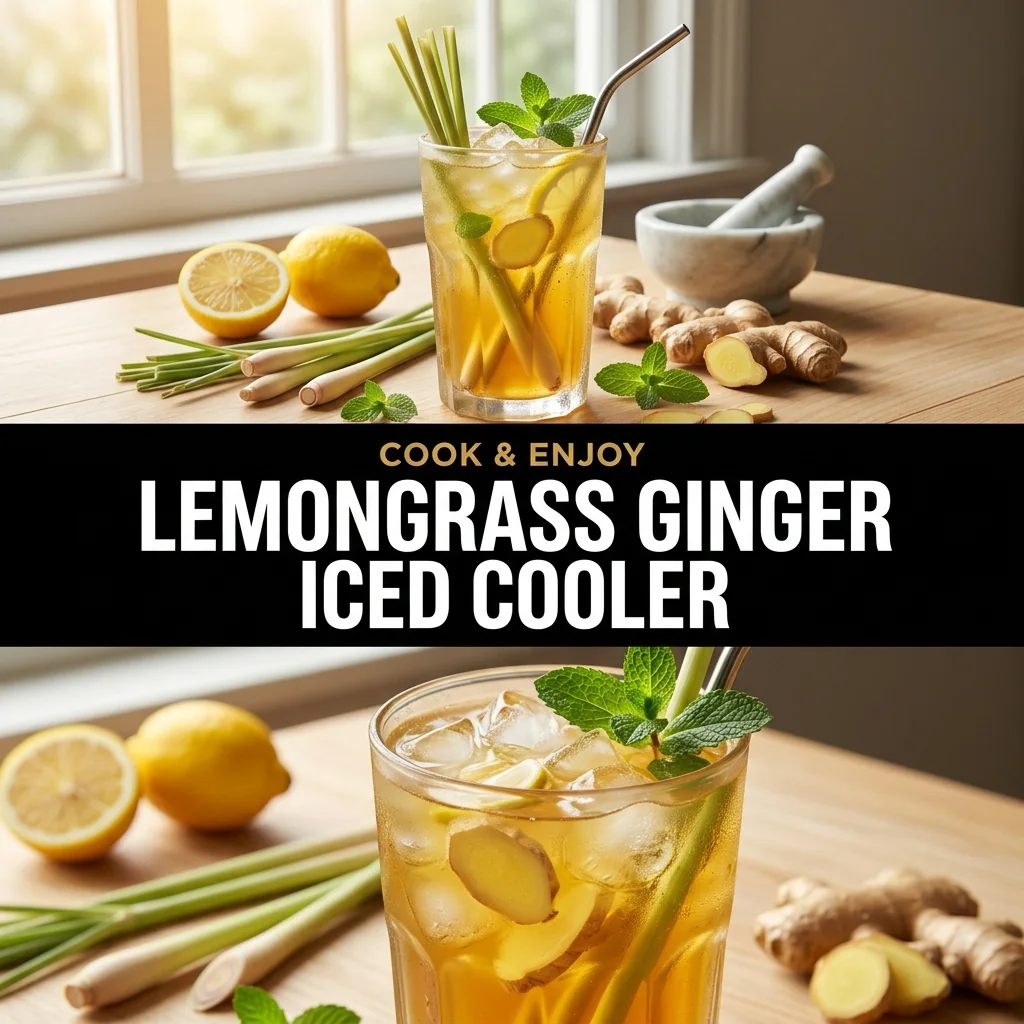
Fresh lemongrass and spicy ginger root create a timeless herbal synergy that is deeply thirst-quenching when served ice-cold. Native to tropical climates, lemongrass contains rich concentrations of citral, an aromatic compound offering pure citrus perfume without the biting acid of lemon juice. Boiling the fibrous stalks alongside thick discs of fresh ginger creates a true decoction, extracting earthy warmth, subtle pepper notes, and floral citrus top tones. A modest amount of sugar smooths the sharp ginger heat, while a final splash of fresh lime juice introduced after cooling provides sharp, refreshing brightness. Served over cracked or cubed ice, this cooler makes a revitalizing centerpiece for warm days.
The Technique of Decoction
Unlike delicate green tea leaves or soft blossoms that require short, gentle steeping, tough rhizomes and fibrous stalks demand a sustained decoction to unlock their complex flavor compounds. Boiling water penetrates the dense cellulosic structures of both ginger root and lemongrass stalks, drawing out volatile oils and pungent gingerols into the liquid. Simmering for fifteen minutes under a covered lid prevents valuable steam and volatile aromatics from evaporating into the air, concentrating the herbal punch directly into the amber-tinted infusion.
Selecting Fresh Lemongrass Stalks
When purchasing lemongrass, choose stalks that feel heavy, firm, and plump at the base with pale green to cream-colored bulbs. Avoid stalks that feel dry, papery, or hollow, as their aromatic oils have degraded. Strip away the loose, dry outer leaves until you reach the moist, pliable inner core. The lower four to six inches contain the highest concentration of fragrant citral oils, whereas the leafy green tops contribute primarily grassy, astringent notes and are best trimmed away or discarded.
Chilling and Acid Integration
Adding fresh citrus juice to hot herbal tea can cook the lime juice, altering its vibrant flavor and creating a dull, cooked taste. For optimal freshness, allow the sweetened lemongrass-ginger decoction to steep and cool down to room temperature before introducing the freshly squeezed lime juice. This preserves the lively aroma and bright acidity of the lime. Pouring the completely cooled liquid over dense ice cubes minimizes rapid melting, ensuring the beverage remains crisp and concentrated down to the final sip.
Before you start
Bruising lemongrass thoroughly is the secret to extracting its essential oils without requiring prolonged boiling, which can introduce woody bitterness. Strike the pale lower stalk repeatedly until the fibers split apart lengthwise. If you prefer a less sweet beverage, reduce the sugar to 3 tablespoons, or sweeten individual glasses to taste. For an even colder drink without dilution, chill the strained decoction in the refrigerator for two hours before pouring it over ice.
THE RECIPE
Lemongrass Ginger Iced Cooler
4 servings · 10 minutes preparation · 15 minutes cooking · 45 minutes cooling, chilling or resting
Ingredients
Step-by-step instructions
- Trim the root base and top leafy green foliage from the lemongrass stalks, leaving approximately 6 inches of the pale lower section.
- Bruise the trimmed lemongrass stalks thoroughly with the back of a heavy chef's knife or a meat mallet to fracture the fibrous layers and release aromatic essential oils.
- Cut the bruised lemongrass stalks into 2-inch segments for easy handling in the pan.
- In a 2-quart stainless steel saucepan, combine 4 cups of filtered water, the prepared lemongrass pieces, and 40 g of ginger coins.
- Place the pan over high heat and bring the liquid to a rolling boil (212 F / 100 C).
- Reduce heat to medium-low, cover with a tight-fitting lid, and simmer gently at 190 F to 200 F (88 C to 93 C) for 15 minutes to extract the herbal decoction.
- Remove the saucepan from the heat, stir in 1/3 cup of granulated sugar until dissolved, and let the infusion steep covered at room temperature for 45 minutes.
- Pour the infusion through a fine-mesh strainer into a glass pitcher, pressing lightly on the solids with a spatula to express captured liquid, then discard the spent aromatics.
- Stir in 2 tablespoons of freshly squeezed lime juice into the cooled herbal tea.
- Fill four tall glasses generously with ice cubes, pour the lemongrass ginger cooler over the ice, and garnish each glass with a lime wheel to serve.
Kitchen notes
Bruising lemongrass thoroughly is the secret to extracting its essential oils without requiring prolonged boiling, which can introduce woody bitterness. Strike the pale lower stalk repeatedly until the fibers split apart lengthwise. If you prefer a less sweet beverage, reduce the sugar to 3 tablespoons, or sweeten individual glasses to taste. For an even colder drink without dilution, chill the strained decoction in the refrigerator for two hours before pouring it over ice.
Storage & make-ahead
Cool the strained liquid to room temperature within 2 hours of simmering. Transfer to a clean glass pitcher or sealed bottles and refrigerate at or below 40 F (4 C) for up to 4 days. Flavor improves slightly after overnight chilling as the ginger and lemongrass integrate. Serve cold straight from the refrigerator over fresh ice. Do not store with spent solids left in the tea, as prolonged steeping causes bitterness.
An original recipe guide inspired by themes in our Pinterest research. Recipe has not been independently kitchen-tested. AI-generated image is illustrative; your finished dish may look different.
Frequently asked questions
Can I use dried lemongrass instead of fresh stalks?
Fresh lemongrass provides significantly brighter aroma and cleaner flavor. However, if fresh is unavailable, you can substitute 2 tablespoons of dried culinary lemongrass. Simmer it in a fine mesh tea ball or strain thoroughly through paper filters to catch small dried flecks.
How can I make this drink completely sugar-free?
You can omit the granulated sugar entirely for an unsweetened herbal tonic, or stir in a natural sweetener such as pure liquid stevia or monk fruit sweetener after taking the decoction off the stovetop heat.
Is it necessary to peel the ginger before boiling?
No, peeling is unnecessary because the ginger slices are strained out after decoction. Simply scrub the ginger root thoroughly under cold running water with a vegetable brush to remove any dirt particles before slicing it into thin coins.