WHY MAKE IT
A little comfort, a lot of flavor.
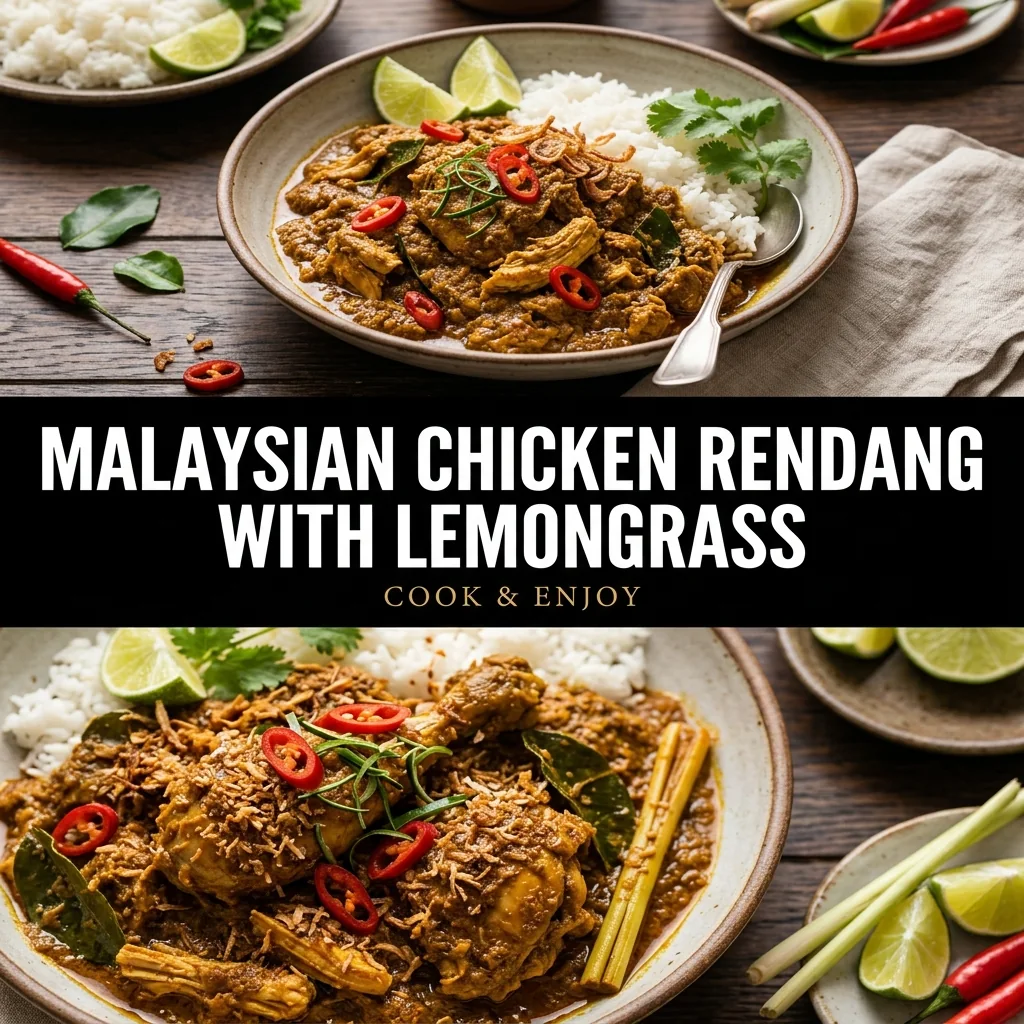
Malaysian Chicken Rendang with Lemongrass is an iconic Southeast Asian dish renowned for its complex layers of aromatics and distinctive dry curry finish. Unlike saucy curries, traditional rendang undergoes a meticulous reduction process wherein the chicken simmers slowly in rich coconut cream, galangal, lemongrass, and chilies. As the water content completely evaporates, the chicken begins frying gently in its own rendered coconut oil. The addition of kerisik—freshly toasted and pounded grated coconut—imparts a nutty, toasted depth and thick consistency that clings tenaciously to every tender chicken morsel. Balanced by sour tamarind and fragrant kaffir lime leaves, this classic preparation transforms halal chicken thighs into an extraordinarily deep, spiced centerpiece.
The Transformation from Gulai to Rendang
Traditional rendang progresses through three distinct culinary stages: gulai, kalio, and finally rendang. Initially, the chicken cooks in a loose, yellow broth called gulai. As moisture simmers away, the liquid turns into kalio, a thick and fragrant gravy. With continued gentle heat and persistent stirring, the coconut milk breaks down entirely, releasing clear coconut oil that fries the meat and spice paste. This process darkens the sauce into a mahogany coat, preserving the meat and yielding complex flavors that define authentic Malaysian homestyle cooking.
The Essential Role of Kerisik
Kerisik is the non-negotiable ingredient that separates genuine rendang from standard curries. It consists of desiccated or freshly grated mature coconut toasted slowly until it achieves the color of roasted coffee beans. Pounding this hot toasted coconut in a mortar breaks the cellular walls, releasing rich coconut fats and creating a dark, fragrant paste. When integrated toward the final reduction stage, kerisik thickens the remaining juices, absorbs excess oil, and provides the iconic toasted aroma and pebbled texture characteristic of classic Malaysian heritage preparations.
Balancing Aromatics and Halal Quality
The complexity of rendang relies on using fresh rhizomes rather than powdered substitutes. Fresh galangal provides an earthy, pine-like heat that contrasts sharply with the pungent warmth of fresh ginger and the floral citrus notes of bruised lemongrass stalks. Select quality halal-certified bone-in chicken thighs, as their structural resilience and natural fats survive the hour-long reduction without drying out or shredding into the sauce. Ensure tamarind slices and coconut products carry trusted halal certifications, guaranteeing purity across all processed seasoning components.
Before you start
Cooking kerisik requires patience and constant attention. Do not walk away from the dry skillet while toasting the grated coconut, as the natural oils can burn in seconds once golden. Grinding the toasted coconut while it remains warm releases its rich oils, yielding a smooth paste that acts as both a thickener and flavor backbone for authentic Malaysian rendang.
THE RECIPE
Malaysian Chicken Rendang with Lemongrass
4 servings · 30 minutes preparation · 65 minutes cooking · 5 minutes cooling, chilling or resting
Ingredients
Step-by-step instructions
- Prepare the kerisik: Toast 1 cup of desiccated coconut in a dry skillet over medium-low heat for 8 to 10 minutes, stirring constantly until deep golden brown; transfer to a mortar or small food processor and grind until fragrant and oily, then set aside.
- Prepare the rempah (spice paste): Blend 6 chopped shallots, 4 garlic cloves, 3 cm sliced galangal, 2 cm ginger, and 8 rehydrated dried chilies with 3 tablespoons of water in a blender until smooth.
- Heat a wide, heavy-bottomed wok or Dutch oven over medium heat, add the blended spice paste along with 3 bruised lemongrass stalks, and sauté dry for 4 to 5 minutes until water evaporates and the paste smells fragrant.
- Pour in 2 cups of pure coconut cream and 1 cup of water, stirring well to incorporate the aromatic paste.
- Add the 1 kg of prepared halal chicken thigh pieces, torn kaffir lime leaves, turmeric leaf, and 2 dried tamarind slices into the simmering liquid.
- Bring the curry to a boil, then immediately lower the heat to medium-low; simmer uncovered for 35 minutes, stirring occasionally to prevent the coconut cream from sticking to the base.
- Stir in the ground kerisik, 1.5 teaspoons of kosher salt, and 1 tablespoon of coconut sugar.
- Continue simmering uncovered over low heat, stirring frequently, for another 20 minutes until the gravy reduces, darkens to a deep reddish-brown, and the chicken registers at least 165°F (74°C) with oil separating cleanly around the thick curry coating.
- Remove the pan from the heat, rest for 5 minutes, discard the spent lemongrass stalks and tamarind slices, and serve warm.
Kitchen notes
Cooking kerisik requires patience and constant attention. Do not walk away from the dry skillet while toasting the grated coconut, as the natural oils can burn in seconds once golden. Grinding the toasted coconut while it remains warm releases its rich oils, yielding a smooth paste that acts as both a thickener and flavor backbone for authentic Malaysian rendang.
Storage & make-ahead
Rendang improves noticeably in flavor the following day. Store the cooled curry in an airtight glass container in the refrigerator within 2 hours of cooking for up to 4 days. Reheat slowly in a heavy saucepan over low heat with 2 tablespoons of water, stirring until piping hot and registering at least 165°F (74°C).
An original recipe guide inspired by themes in our Pinterest research. Recipe has not been independently kitchen-tested. AI-generated image is illustrative; your finished dish may look different.
Frequently asked questions
Can I make this rendang with boneless chicken breast?
Boneless chicken breast is not recommended for traditional rendang because it lacks the fat and connective tissue necessary to endure the slow reduction process, turning dry and chalky. If you must use breast meat, simmer the sauce down first until nearly dry, then add the chicken for the last 15 minutes until it reaches 165°F (74°C).
What can I substitute if I cannot find dried tamarind slices (asam keping)?
If dried tamarind slices are unavailable, mix 1 teaspoon of halal-certified tamarind paste with 1 tablespoon of warm water and stir it into the pot along with the salt and coconut sugar during the final 20 minutes of simmering to achieve the required tart balance.
Why is my rendang still very wet after the specified time?
Vessel width and heat control dictate evaporation speed. If your curry remains watery, increase the heat slightly to medium-low and use a wider pan or wok to maximize surface area. Stir continuously across the pan bottom to ensure the thickening coconut cream does not scorch as moisture cooks away.