WHY MAKE IT
A little comfort, a lot of flavor.
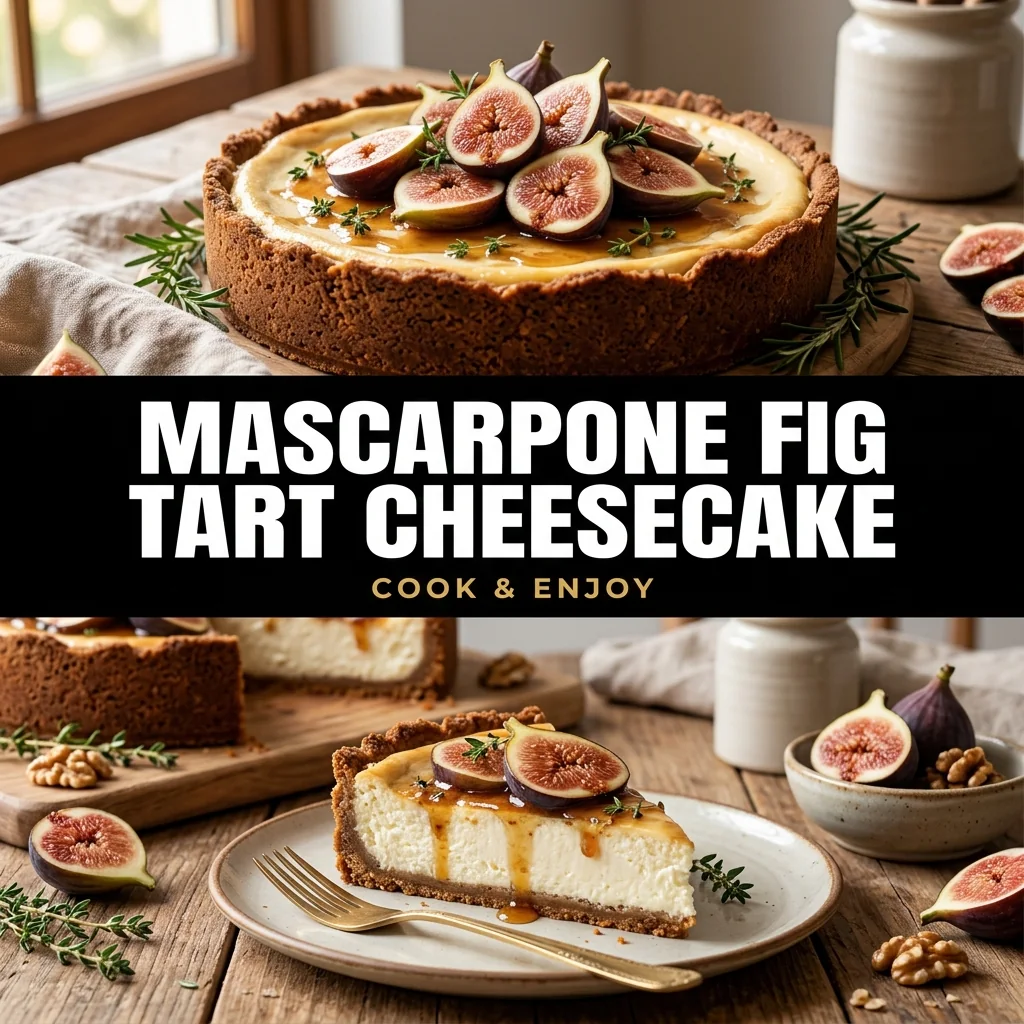
Mascarpone Fig Tart Cheesecake unites the crisp, flaky architecture of French laminated pastry with the gentle tang of a classic Italian cheese filling. Traditional heavy cheesecakes often require extensive water baths and dense crusts, but this hybrid presentation uses a single sheet of puff pastry as a swift, butter-rich foundation. The filling balances lush mascarpone with standard block cream cheese, lemon juice, and aromatic lemon zest, producing a custard that remains supple without turning runny. Ripe Mission figs caramelize subtly on top of the custard during baking, releasing honeyed sweetness that pairs with the gentle citrus notes underneath. It provides an elegant, sliceable centerpiece suitable for afternoon gatherings and special home dinners alike.
Balancing Mascarpone with Firm Cream Cheese
Pure mascarpone provides a delightfully silky texture and delicate buttery flavor, but its high butterfat content can easily liquefy under heat if used alone in a shallow tart. Integrating a measured portion of standard block cream cheese introduces essential lactic tang and stabilizing structure. The subtle acidity cuts through rich dairy fat, while the denser curd prevents the filling from weeping moisture onto the pastry bottom during the baking process. Always select brands certified with microbial enzymes or halal-suitable cultures to ensure complete compliance.
Pastry Handling and Oven Technique
Puff pastry requires rapid steam generation to lift its laminated butter layers into crisp, distinct flakes. Scoring a clean border around the pastry dough acts as an expansion joint, allowing the perimeter to rise independently while the docked interior holds the dairy weight securely. Baking at 375°F (190°C) ensures the base cooks completely through before the tender fruit releases excess juice. Placing the baking sheet on the lower-middle oven rack directs radiant heat toward the base, avoiding the common pitfall of a pale, soggy bottom crust.
Selecting and Preparing Mission Figs
Black Mission figs provide both vibrant deep-purple color and rich, berry-like sweetness. When selecting fruit, look for figs that yield softly to gentle pressure without appearing collapsed or weeping liquid at the stem. Trim only the fibrous woody top of each stem before quartering the figs vertically. Pat each cut piece lightly with a clean paper towel before arranging them over the batter. This quick drying step prevents surface moisture from creating localized pockets of unset custard beneath the fruit during baking.
Before you start
Ensure both the mascarpone and cream cheese sit at room temperature for roughly twenty minutes before mixing. Cold mascarpone is prone to curdling if beaten aggressively while firm. Use a gentle hand or low mixer speed once adding the egg to prevent whipping excess air into the delicate filling, which would cause the center to puff up excessively in the oven and collapse rapidly upon cooling.
THE RECIPE
Mascarpone Fig Tart Cheesecake
8 servings · 25 minutes preparation · 35 minutes cooking · 180 minutes cooling, chilling or resting
Ingredients
Step-by-step instructions
- Preheat the oven to 375°F (190°C) and line an 11x7-inch rectangular tart pan or standard baking sheet with parchment paper.
- Unroll the thawed puff pastry onto the prepared pan, lightly score a 1/2-inch border around all edges with a paring knife, and prick the inner rectangle repeatedly with a fork.
- In a medium mixing bowl, beat 250 grams mascarpone, 150 grams softened cream cheese, and 75 grams granulated sugar on medium speed for 2 minutes until creamy and uniform.
- Add 1 beaten egg, 1 teaspoon lemon zest, 1 tablespoon lemon juice, 1 teaspoon alcohol-free vanilla extract, and a pinch of fine sea salt, beating on low speed for 1 minute until completely smooth.
- Spread the mascarpone cheesecake mixture evenly across the pastry, staying strictly inside the scored 1/2-inch pastry border.
- Arrange the sliced Mission fig quarters cut-side up in neat rows over the creamy cheesecake layer, pressing them down very gently.
- Bake in the preheated oven at 375°F (190°C) for 32 to 35 minutes until the pastry border is golden brown and puffed, and the custard filling is set, reaching an internal temperature of 160°F (71°C).
- Transfer the baking pan to a wire rack to cool completely at room temperature for 30 minutes, brush the warm figs with 2 tablespoons honey, then refrigerate for 150 minutes before slicing.
Kitchen notes
Ensure both the mascarpone and cream cheese sit at room temperature for roughly twenty minutes before mixing. Cold mascarpone is prone to curdling if beaten aggressively while firm. Use a gentle hand or low mixer speed once adding the egg to prevent whipping excess air into the delicate filling, which would cause the center to puff up excessively in the oven and collapse rapidly upon cooling.
Storage & make-ahead
Refrigerate leftovers promptly within 2 hours of baking. Store slices in an airtight container lined with wax paper in the refrigerator for up to 3 days. Because puff pastry gradually absorbs moisture from the cheese filling, this tart is best enjoyed within the first 24 hours. Serve chilled or reheat single slices in a 325°F (165°C) oven for 6 to 8 minutes until the pastry regains crispness and the internal temperature reaches 165°F (74°C).
An original recipe guide inspired by themes in our Pinterest research. Recipe has not been independently kitchen-tested. AI-generated image is illustrative; your finished dish may look different.
Frequently asked questions
Can I substitute dried figs if fresh Mission figs are out of season?
Dried figs are far too dense and sugary to bake directly atop this tart. If fresh figs are unavailable, gently rehydrate dried figs in hot water for fifteen minutes, pat thoroughly dry, and slice thin, or swap them for fresh ripe pears or blackberries.
How do I ensure the center bottom crust turns out crispy?
Preheat your oven thoroughly and bake the tart on the lower-middle oven rack. Pricking the raw dough thoroughly with a fork prevents trapped steam from lifting the center, ensuring the base maintains direct contact with the hot baking sheet for even browning.
Why did my mascarpone mixture look separated during beating?
Over-mixing cold mascarpone shears its delicate fat emulsion, causing it to split into liquid whey and buttery grain. Always use room-temperature cheese, beat only until ingredients are combined, and incorporate the egg on low speed to maintain a silky emulsion.


