WHY MAKE IT
A little comfort, a lot of flavor.
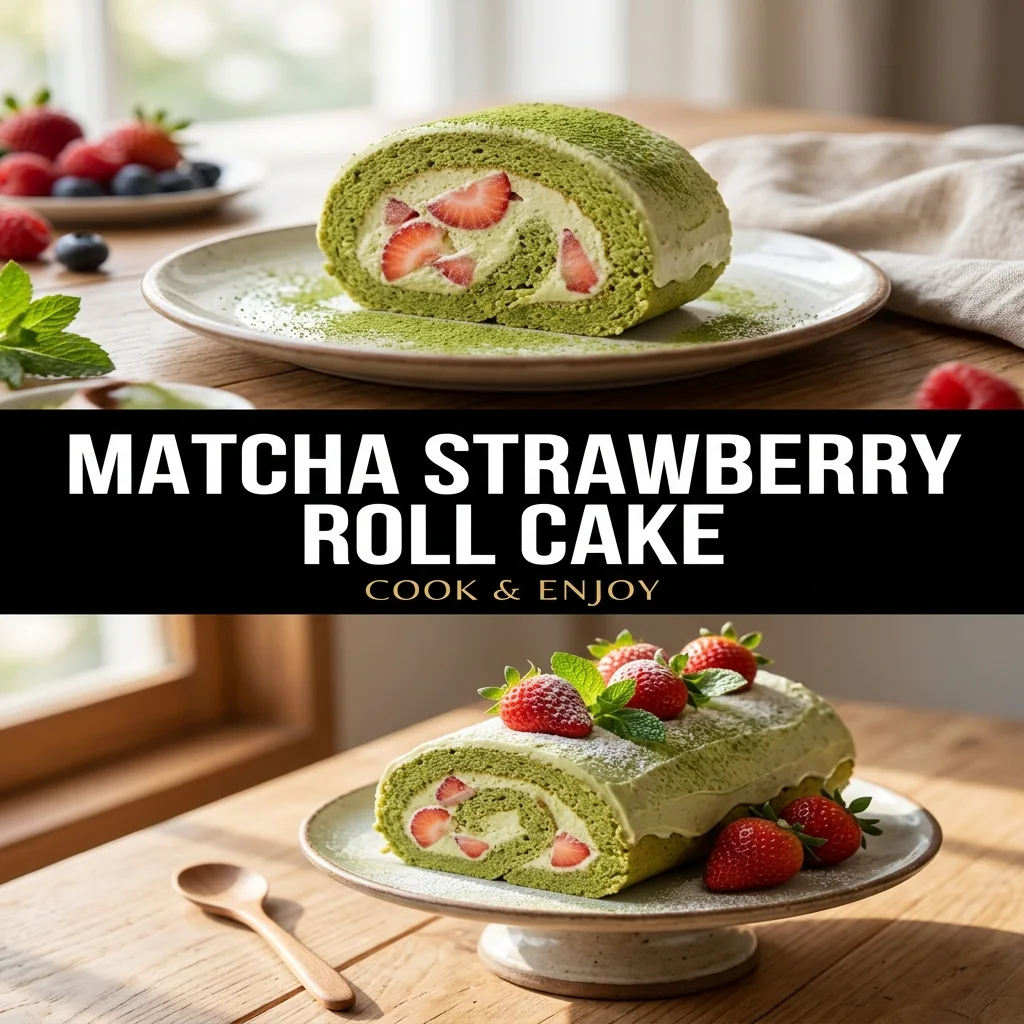
The matcha strawberry roll cake is a stunning study in complementary flavors and vibrant visual contrast. Earthy, bittersweet Japanese green tea powder infuses a feather-light chiffon sponge with natural color and botanical depth. Paired against the cake is a clean, pillowy filling of fresh chantilly cream scented with alcohol-free vanilla extract and studded with ripe, tart strawberries. Mastered through proper egg-separation technique, the sponge achieves remarkable elasticity without rubberiness, allowing it to coil neatly around the fruit filling without fracturing. This sophisticated dessert avoids heavy butter frostings, relying instead on clean dairy and vibrant fruit to highlight the matcha. It provides an exquisite finale for dinner parties, seasonal gatherings, or an elegant afternoon tea display.
Selecting Quality Matcha Powder
The success of this sponge rests heavily on using fresh, authentic green tea powder. Choose a vibrant green culinary or latte-grade Japanese matcha. Dull, brownish matcha indicates oxidation, which yields an unappealing swampy hue and an unpleasantly bitter aftertaste once baked. Sifting the matcha together with the low-protein cake flour is essential; green tea powder tends to clump rapidly upon contact with moisture, and sifting guarantees uniform dispersion through the batter without requiring over-mixing that could deflate the whipped eggs.
Perfecting Meringue and Folding
Chiffon cakes gain their entire lift and pliable structure from whipped egg whites. Beat the whites until they form firm peaks with a slight curl at the tip. Over-whipped whites become dry and clumpy, resisting incorporation and resulting in deflated sponges with large air pockets. Fold the meringue into the matcha base using slow, sweeping strokes from the bottom of the bowl upward. This gentle handling preserves the trapped air bubbles that expand during the quick 12-minute bake.
Rolling and Chilling for Clean Slices
Pre-rolling the warm cake with clean parchment shapes the cake fibers without stress fractures. Once filled with cream and fruit, the roll must be wrapped tightly in parchment and chilled for a full 90 minutes. This refrigeration window allows the whipped dairy fat to firm up around the strawberries, locking the spiral in place. For pristine, bakery-quality presentation, wipe a sharp chef's knife with a warm, damp cloth between every single slice.
Before you start
Rolling the matcha sponge while it is still warm straight from the oven is critical to preventing cracks. The hot steam keeps the delicate gluten structure pliable, establishing a gentle crumb memory as it cools. When whipping the heavy cream for the filling, take it to firm peaks rather than soft peaks. Soft cream will squish out of the sides when rolled around the strawberries, making clean slices difficult to achieve.
THE RECIPE
Matcha Strawberry Roll Cake
8 servings · 35 minutes preparation · 12 minutes cooking · 135 minutes cooling, chilling or resting
Ingredients
Step-by-step instructions
- Preheat the oven to 340 F (170 C) and line a 10 x 15-inch (25 x 38 cm) rimmed baking sheet with parchment paper, smoothing out any air bubbles underneath.
- Whisk 4 egg yolks and 25 grams granulated sugar in a large bowl until pale, then whisk in 40 milliliters vegetable oil, 50 milliliters milk, and 1 teaspoon alcohol-free vanilla extract until emulsified.
- Sift 60 grams cake flour and 10 grams matcha powder directly into the yolk mixture, whisking gently until just combined into a smooth, green batter.
- In a clean, grease-free bowl, whip 4 egg whites with 1/2 teaspoon cream of tartar on medium speed until foamy, then gradually add the remaining 45 grams sugar in three additions while whipping on medium-high until firm, glossy peaks form.
- Fold one-third of the whipped meringue into the matcha batter using a silicone spatula to lighten the base, then gently fold in the remaining meringue in two batches until no white streaks remain, working carefully to retain volume.
- Pour batter onto the prepared pan, level the surface smoothly with an offset spatula, tap the pan firmly twice against the counter to release large air bubbles, and bake at 340 F (170 C) for 10 to 12 minutes until springy to the touch.
- Turn the hot cake out immediately onto a fresh sheet of parchment dusted lightly with powdered sugar, peel away the baking parchment, and roll the cake up gently from the short end along with the clean paper; cool completely rolled for 45 minutes on a wire rack.
- Whip 240 milliliters cold heavy cream with 25 grams powdered sugar until stiff peaks form.
- Carefully unroll the cooled sponge, spread the whipped cream evenly over the surface leaving a 2-centimeter border at the top edge, arrange sliced strawberries in neat rows across the cream, roll the cake firmly back up without the paper, wrap in parchment, and chill in the refrigerator for at least 90 minutes before trimming the ends and slicing.
Kitchen notes
Rolling the matcha sponge while it is still warm straight from the oven is critical to preventing cracks. The hot steam keeps the delicate gluten structure pliable, establishing a gentle crumb memory as it cools. When whipping the heavy cream for the filling, take it to firm peaks rather than soft peaks. Soft cream will squish out of the sides when rolled around the strawberries, making clean slices difficult to achieve.
Storage & make-ahead
Keep the assembled roll cake wrapped in parchment paper inside the refrigerator within 2 hours of preparation. Store refrigerated and consume within 2 days to ensure the strawberries remain plump and do not release excess juice into the whipped cream. Do not freeze, as fresh strawberries turn soft and watery upon thawing.
An original recipe guide inspired by themes in our Pinterest research. Recipe has not been independently kitchen-tested. AI-generated image is illustrative; your finished dish may look different.
Frequently asked questions
Why did my sponge crack when I rolled it around the cream?
Cracking typically occurs if the cake was overbaked and dried out, or if it was allowed to cool flat rather than being rolled while still warm from the oven. Ensure you monitor the bake closely and pre-roll immediately upon leaving the oven.
Can I use frozen strawberries for the filling?
Fresh strawberries are strongly recommended. Frozen strawberries release substantial amounts of liquid as they thaw, which will weep into the whipped cream, dilute the filling, and make the delicate sponge soggy and unstable.
How can I prevent the cake skin from peeling off?
Dust the parchment paper lightly with sifted powdered sugar before turning the hot cake out onto it. This creates a fine barrier that prevents the delicate baked golden crust from sticking and pulling away.