WHY MAKE IT
A little comfort, a lot of flavor.
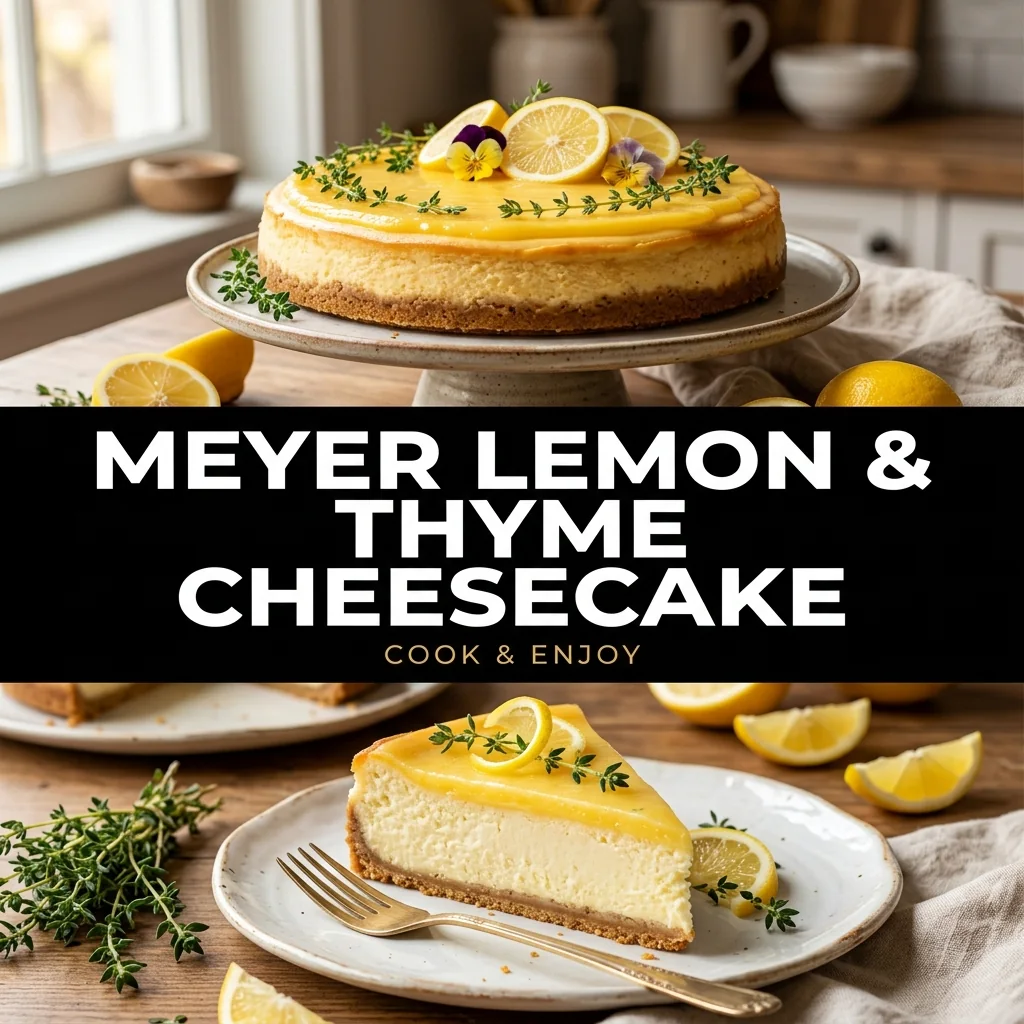
Meyer Lemon and Thyme Cheesecake pairs delicate sweet citrus with botanical herbal warmth. Meyer lemons possess a thinner skin, lower acidity, and subtle floral sweetness compared to standard Eureka lemons, harmonizing effortlessly with fresh thyme. Infusing whole thyme sprigs directly into warm heavy cream imparts a gentle herbal undercurrent without leaving rough plant matter inside the silky custard. Paired with a delicate, buttery shortbread crust, this baked dessert balances sweetness, citrus brightness, and earthy freshness for an elevated dining finish.
Extracting Herbal and Citrus Aromatics
The success of this recipe hinges on gentle flavor extraction. Whole sprigs of fresh garden thyme are steeped in warm cream to extract essential oils without bitter chlorophyll notes. Straining the cream ensures an impeccably smooth batter. Meanwhile, working finely grated Meyer lemon zest into dry granulated sugar with your fingertips bruises the zest cells, releasing natural citrus oils directly into the sugar crystals. This technique guarantees an intense Meyer lemon fragrance that permeates the entire cheesecake rather than settling into pockets.
Working with Meyer Lemon Acidity
Meyer lemons are a natural hybrid between standard lemons and mandarin oranges, offering higher sugar content and reduced acidity. This mild acidity allows you to incorporate 60 milliliters of fresh juice directly into the cheesecake base without causing the dairy proteins to separate or tighten excessively during baking. Always use freshly squeezed juice rather than bottled concentrates, which lack delicate floral top notes and can introduce artificial preservatives that dull the fresh herbal infusion.
Texture and Water Bath Care
A delicate shortbread crust provides a melt-in-the-mouth texture that complements the velvety custard batter better than standard graham crackers. Baking the assembled cheesecake in a 325 F (163 C) water bath ensures steady, indirect heat transfer through the pan walls. The cheesecake is properly baked when the perimeter is stable and the center registers 160 F (71 C). The extended cooling protocol inside the oven and on the counter prevents structural thermal shock and surface fissures.
Before you start
Do not let the cream boil during the thyme infusion stage, as excessive heat can scorch the dairy and make the herbal flavor bitter. A gentle simmer followed by off-heat steeping draws out pure, fragrant thyme oils. Rubbing the Meyer lemon zest into the granulated sugar before mixing releases citrus oils from the peel, dispersing bright flavor uniformly throughout the batter without altering its delicate moisture balance.
THE RECIPE
Meyer Lemon and Thyme Cheesecake
12 servings · 30 minutes preparation · 65 minutes cooking · 400 minutes cooling, chilling or resting
Ingredients
Step-by-step instructions
- Combine 120 milliliters heavy cream and 8 sprigs fresh thyme in a small saucepan over medium-low heat; bring to a bare simmer for 5 minutes, remove from heat, cover, and let steep for 20 minutes before straining out the herb sprigs.
- Preheat the oven to 350 F (177 C), grease a 9-inch (23 cm) springform pan, and wrap the exterior with heavy-duty aluminum foil.
- Mix 200 grams shortbread crumbs and 60 grams melted butter in a bowl, press into the bottom of the prepared springform pan, and bake for 10 minutes until lightly golden; set aside to cool.
- Lower the oven temperature to 325 F (163 C).
- Rub 15 milliliters Meyer lemon zest into 200 grams granulated sugar in a small bowl with your fingertips until the sugar is fragrant and moist.
- Beat 900 grams softened cream cheese, the lemon-infused sugar, and 1 gram sea salt in a stand mixer on medium-low speed for 3 minutes until smooth and lump-free.
- Pour in the strained thyme-infused cream, 60 milliliters Meyer lemon juice, and 5 milliliters alcohol-free vanilla extract, mixing on low speed until combined.
- Add 4 large eggs one at a time on low speed, mixing just until each yolk disappears into the batter.
- Pour the filling over the shortbread crust, place in a large roasting pan with 1 inch of boiling water, and bake at 325 F (163 C) for 50 minutes until the edges are firm and internal temperature reaches 160 F (71 C).
- Turn off heat, prop the oven door open, and leave the pan inside for 60 minutes, cool on a counter wire rack for 60 minutes, and refrigerate for 280 minutes (4 hours 40 minutes) before garnishing with fresh thyme leaves.
Kitchen notes
Do not let the cream boil during the thyme infusion stage, as excessive heat can scorch the dairy and make the herbal flavor bitter. A gentle simmer followed by off-heat steeping draws out pure, fragrant thyme oils. Rubbing the Meyer lemon zest into the granulated sugar before mixing releases citrus oils from the peel, dispersing bright flavor uniformly throughout the batter without altering its delicate moisture balance.
Storage & make-ahead
Keep the cheesecake refrigerated in an airtight container or under a cake dome at 40 F (4 C) or below. Store leftovers within 2 hours of slicing. It stays fresh and maintains ideal texture for up to 4 days. If garnishing with fresh thyme sprigs, add them just prior to serving so the herbs remain perky and aromatic. Freezing is not advised as citrus custards can weep liquid upon defrosting.
An original recipe guide inspired by themes in our Pinterest research. Recipe has not been independently kitchen-tested. AI-generated image is illustrative; your finished dish may look different.
Frequently asked questions
Can I substitute regular lemons if Meyer lemons are unavailable?
Yes. If using standard Eureka or Lisbon lemons, use 45 milliliters of fresh lemon juice combined with 15 milliliters of fresh orange juice to mimic the milder acidity and floral profile of Meyer lemons.
Will dried thyme work instead of fresh sprigs?
No. Dried thyme has an intense, woodier flavor that easily overpowers delicate citrus custard. Fresh sprigs provide clean, bright essential oils that infuse smoothly into the warm heavy cream.
Why did my filling crack around the edges?
Cracking typically indicates overbaking, baking at too high a temperature, or cooling too rapidly. Ensure your water bath stays filled with hot water and follow the full resting protocol in the warm, propped-open oven.


