WHY MAKE IT
A little comfort, a lot of flavor.
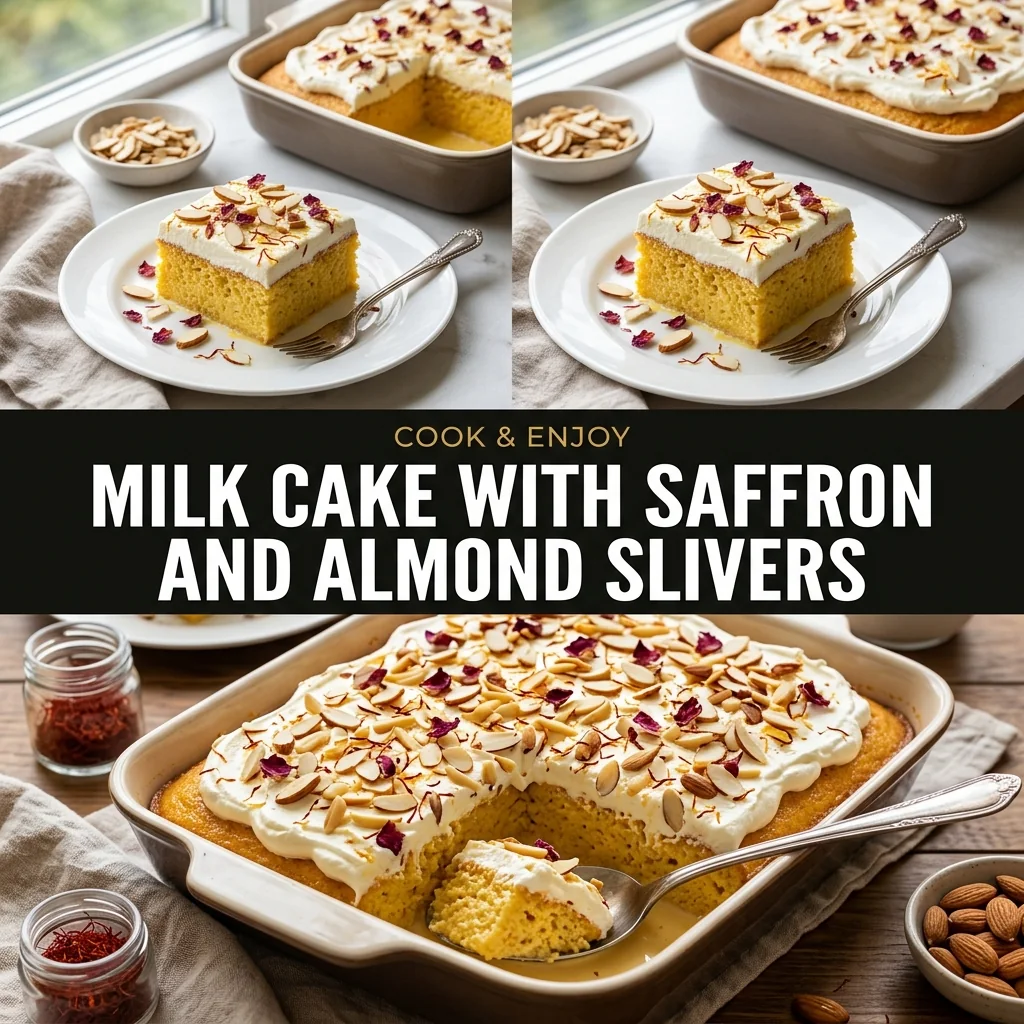
Milk cake, also celebrated in South Asian confectionery traditions as alwar ka mawa, is a confection celebrated for its moist, granular crumb and caramelized dairy profile. This version enriches whole milk with heavy cream to establish a lush base before a subtle curdling step creates the distinct micro-grain texture classic to the sweet. Saffron introduces a bright floral undercurrent alongside crushed cardamom, offsetting the inherent richness of the reduced dairy. Making it requires attentive patience at the stovetop, as continuous stirring coaxes liquid milk into a cohesive, golden mass. Finished with toasted slivered almonds, these dense squares present an elegant, sliceable confection suitable for family gatherings and celebratory spreads.
Curdling Technique and Texture
Achieving the signature grainy crumb of traditional milk cake relies entirely on a controlled, subtle curdling step. Instead of dumping in a heavy dose of acid, which produces tough paneer curds, a tiny measure of dissolved citric acid introduces gentle acidity across the hot reduction. This causes delicate curds to cluster together while retaining moisture. Stirring gently rather than whipping maintains these individual grains. As the remaining moisture evaporates and the sugar dissolves into the mass, the grains absorb the sweet syrup, producing a soft, cohesive interior that yields smoothly when bitten rather than crumbling dryly onto the plate.
Managing Dairy Reduction and Caramelization
The slow reduction of whole milk and cream requires an appropriate pan and constant vigilance. A wide, heavy-gauge stainless steel pan or cast-iron kadai provides broad surface area for rapid evaporation without generating hot spots that lead to scorching. Once milk solids begin clinging to the bottom, frequent scraping ensures those caramelized dairy proteins are reincorporated evenly into the body of the fudge. This continuous incorporation yields a warm golden hue throughout the mixture. Maintaining medium-low heat during the final stage prevents the sucrose from darkening prematurely before the moisture content has dropped sufficiently for the fudge to hold shape.
Forming and Serving Squares
After reaching the point where the fudge pulls completely away from the pan walls in a glossy mass, it must be molded while still steaming hot. Transferring it quickly into a compact, parchment-lined square pan allows the internal heat to complete the settling process. Pressing the slivered almonds onto the warm surface anchors them securely as the ghee solidifies. Resist the urge to slice the cake prematurely; allow the fudge to cool for an hour at room temperature before chilling for three hours to knit into clean, structurally sound portions that will not break when cut with a sharp, warm chef's knife.
Before you start
Controlling the curd formation is the most critical stage of preparing this sweet. If you pour in the dissolved citric acid too quickly or use lemon juice with irregular acidity levels, the curd pieces will turn rubbery and large rather than granular. Stir with broad, sweeping motions rather than rapid whisking once the curdling agent enters the pan. Keep the heat steady on medium-low during the final reduction so the sugars caramelize evenly without sticking to the base.
THE RECIPE
Milk Cake with Saffron and Almond Slivers
16 servings · 15 minutes preparation · 55 minutes cooking · 240 minutes cooling, chilling or resting
Ingredients
Step-by-step instructions
- Line a 7x7-inch square metal baking dish with parchment paper, leaving an overhang on the sides, and grease the paper lightly with 0.5 tablespoon of ghee.
- In a small prep bowl, combine the saffron threads with 1 tablespoon of warm whole milk, crush gently with the back of a spoon, and let steep for 10 minutes.
- Pour the remaining whole milk and heavy cream into a wide, heavy-bottomed stainless steel kadai or Dutch oven set over medium-high heat, bringing the liquid to a rolling boil while stirring continuously with a heatproof spatula to avoid scorching.
- Lower heat to medium and reduce the mixture for 30 minutes, scraping the milk solids off the sides and bottom constantly, until it reduces to roughly one-third of its initial volume and forms a thick, creamy consistency.
- Drizzle the dissolved citric acid solution gradually around the edges while stirring gently to form fine, delicate curds rather than large solid clumps.
- Incorporate the granulated white sugar in three intervals over 8 minutes, allowing each batch to dissolve fully while continuing to stir as the mixture loosens and bubbles.
- Add the bloomed saffron milk, ground green cardamom powder, and the remaining 2.5 tablespoons of ghee, cooking over medium-low heat for 12 to 15 minutes until the fudge leaves the pan sides and turns pale golden.
- Transfer the dense fudge into the prepared pan, smooth the top flat with an offset spatula, press the blanched slivered almonds firmly into the warm surface, cover loosely, let cool at room temperature for 1 hour, then refrigerate for 3 hours until fully set before slicing into 16 squares.
Kitchen notes
Controlling the curd formation is the most critical stage of preparing this sweet. If you pour in the dissolved citric acid too quickly or use lemon juice with irregular acidity levels, the curd pieces will turn rubbery and large rather than granular. Stir with broad, sweeping motions rather than rapid whisking once the curdling agent enters the pan. Keep the heat steady on medium-low during the final reduction so the sugars caramelize evenly without sticking to the base.
Storage & make-ahead
Store sliced milk cake in an airtight container lined with wax paper in the refrigerator for up to 4 days. Allow pieces to sit at room temperature for 15 minutes before serving to soften the ghee. For longer preservation, wrap individual squares in parchment and freeze in a sealed container for up to 1 month; thaw completely in the refrigerator before serving.
An original recipe guide inspired by themes in our Pinterest research. Recipe has not been independently kitchen-tested. AI-generated image is illustrative; your finished dish may look different.
Frequently asked questions
Why did my milk cake turn out rubbery instead of soft and granular?
A rubbery texture occurs if too much citric acid is added or if the mixture is cooked over aggressive heat after curdling. Use precise measurements for the acid and reduce heat immediately to medium-low to maintain tender curds.
Can I substitute store-bought mawa or khoya to speed up the cooking time?
Store-bought unsweetened khoya can be grated and melted with cream and sugar, but it will lack the authentic micro-curd crumb created by gently curdling fresh milk as it reduces down in the pan.
How can I prevent the milk from scorching on the bottom of the pot?
Use a heavy-bottomed stainless steel Dutch oven or cast-iron kadai, and scrape the base continuously with a flat-edged wooden spatula or heatproof silicone spatula throughout the entire simmering and reduction process.