WHY MAKE IT
A little comfort, a lot of flavor.
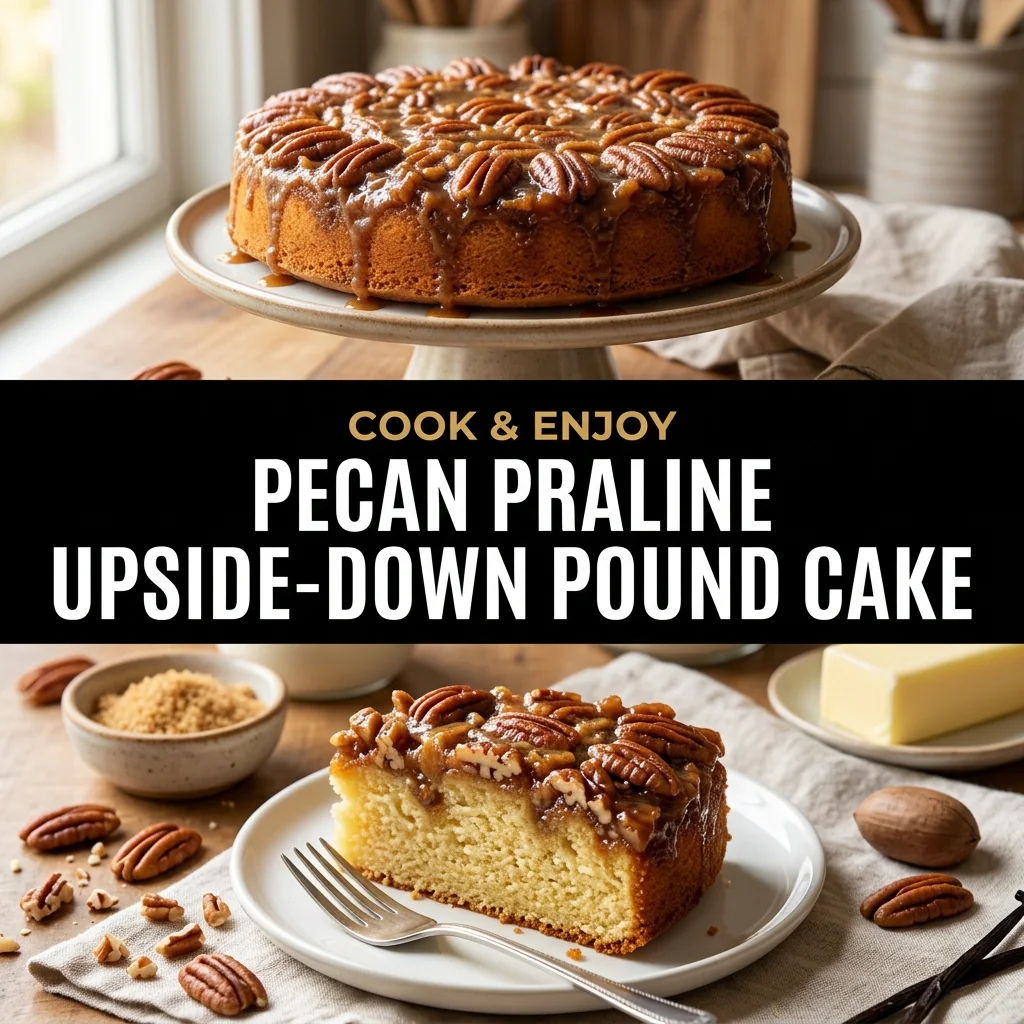
Pecan Praline Upside-Down Pound Cake combines the dense, fine-grained crumb of an old-fashioned butter pound cake with the rich, caramelized finish of southern praline candy. By lining the bottom of a heavy loaf pan with a reduction of butter, dark brown sugar, and toasted pecans, the cake essentially creates its own sauce during baking. As heat penetrates the metal pan, the sugar mixture bubbles and infuses the lower layer of batter, creating a chewy, sticky crust once inverted. Cake flour and careful creaming ensure the crumb remains tight and velvety, robust enough to carry the heavy nut layer without collapsing. This classic loaf offers deep molasses notes and buttery crunch in every generous slice.
Toasting Pecans for Deep Flavor
Raw pecans contain moisture and mild oils that soften under high heat. Toasting the chopped nuts on a dry baking sheet for a few minutes before assembling drives off moisture and releases aromatic oils, ensuring the nuts retain a crisp crunch beneath the bubbling praline topping. Skipping this step can lead to soggy nuts that blend into the cake crumb rather than offering a distinct textural bite. Let the nuts cool before scattering them over the warm brown sugar syrup so the syrup does not thin out prematurely.
The Science of Pound Cake Crumb
Traditional pound cake relies on a low-aeration crumb that remains dense yet tender. Cake flour is essential here because its lower protein content limits gluten formation during the alternating milk and flour additions. Creaming the room-temperature butter and granulated sugar for a full four minutes incorporates fine, uniform air pockets that expand gently in the oven. Room-temperature eggs are critical; cold eggs will break the emulsion of the creamed fat, resulting in a curdled batter that bakes into an uneven, coarse crumb.
Managing the Pan Inversion
The critical moment in this recipe is the inversion. The caramelized base remains molten and fluid while hot, acting as a release agent. At ten minutes post-bake, the loaf has set enough structurally to hold its shape, yet the praline remains warm enough to slide freely from the metal. Always run a thin, flexible knife around the perimeter to release any caramelized sugar adhering to the pan sides. Place your serving platter firmly over the loaf pan, invert both with one fluid movement, and let gravity release the cake.
Before you start
Inverting the cake precisely 10 minutes after removing it from the oven is critical. If inverted too soon, the warm crumb may fall apart under the weight of the molten topping. If left too long, the brown sugar praline will cool, stick firmly to the pan metal, and tear the loaf when turned out. Use a heavy rimmed platter so the hot caramel glaze does not run off the edges during the flip.
THE RECIPE
Pecan Praline Upside-Down Pound Cake
10 servings · 25 minutes preparation · 65 minutes cooking · 70 minutes cooling, chilling or resting
Ingredients
Step-by-step instructions
- Preheat the oven to 325°F (165°C) and generously butter a 9x5-inch metal loaf pan.
- Spread the chopped pecan halves on a rimmed baking sheet and toast in the oven for 7 minutes until fragrant, then remove and cool slightly.
- In a small bowl, whisk together the melted butter, dark brown sugar, and heavy cream until a smooth, thick syrup forms.
- Pour the brown sugar syrup evenly into the bottom of the buttered loaf pan and scatter the toasted pecans in an even layer over the syrup.
- In a medium bowl, sift together the cake flour, baking powder, and fine sea salt.
- In a large mixing bowl, beat the 3/4 cup softened butter and granulated sugar with an electric mixer on medium speed for 4 minutes until light and creamy.
- Add the eggs one at a time, beating thoroughly after each addition, then incorporate the alcohol-free vanilla extract.
- With the mixer on low speed, alternate adding the sifted flour mixture and the whole milk in three batches, mixing just until the batter is smooth and fully combined.
- Gently dollop the thick batter over the pecan layer in the pan, carefully smoothing the top with an offset spatula so the nuts remain undisturbed beneath.
- Bake at 325°F (165°C) for 55 to 58 minutes until a wooden skewer inserted into the center comes out clean.
- Cool the cake in the pan on a wire cooling rack for exactly 10 minutes, run a thin butter knife along the edges, then invert onto a serving platter and rest for 60 minutes to cool completely before slicing.
Kitchen notes
Inverting the cake precisely 10 minutes after removing it from the oven is critical. If inverted too soon, the warm crumb may fall apart under the weight of the molten topping. If left too long, the brown sugar praline will cool, stick firmly to the pan metal, and tear the loaf when turned out. Use a heavy rimmed platter so the hot caramel glaze does not run off the edges during the flip.
Storage & make-ahead
Cover leftover pound cake loosely with foil or place in a cake dome at room temperature for up to 3 days. For longer freshness, refrigerate in an airtight container for up to 6 days. To restore the sticky praline texture, warm individual slices in a 300°F (150°C) toaster oven for 5 minutes before serving.
An original recipe guide inspired by themes in our Pinterest research. Recipe has not been independently kitchen-tested. AI-generated image is illustrative; your finished dish may look different.
Frequently asked questions
What if some pecans stick to the bottom of the pan after inverting?
If pecans stick, use a small silicone spatula or butter knife to scrape them out while the pan is still hot, then gently press them back onto the top of the warm cake.
Can I use all-purpose flour instead of cake flour?
Yes, you can substitute 1 1/2 cups of all-purpose flour mixed with 1/4 cup of cornstarch, sifted together thoroughly, to mimic the lower protein content of cake flour.
Why did my praline turn out hard rather than sticky?
Praline hardens excessively if baked at too high a temperature or left in the pan too long before inverting. Ensure the oven is calibrated to 325°F (165°C) and invert promptly at 10 minutes.