WHY MAKE IT
A little comfort, a lot of flavor.
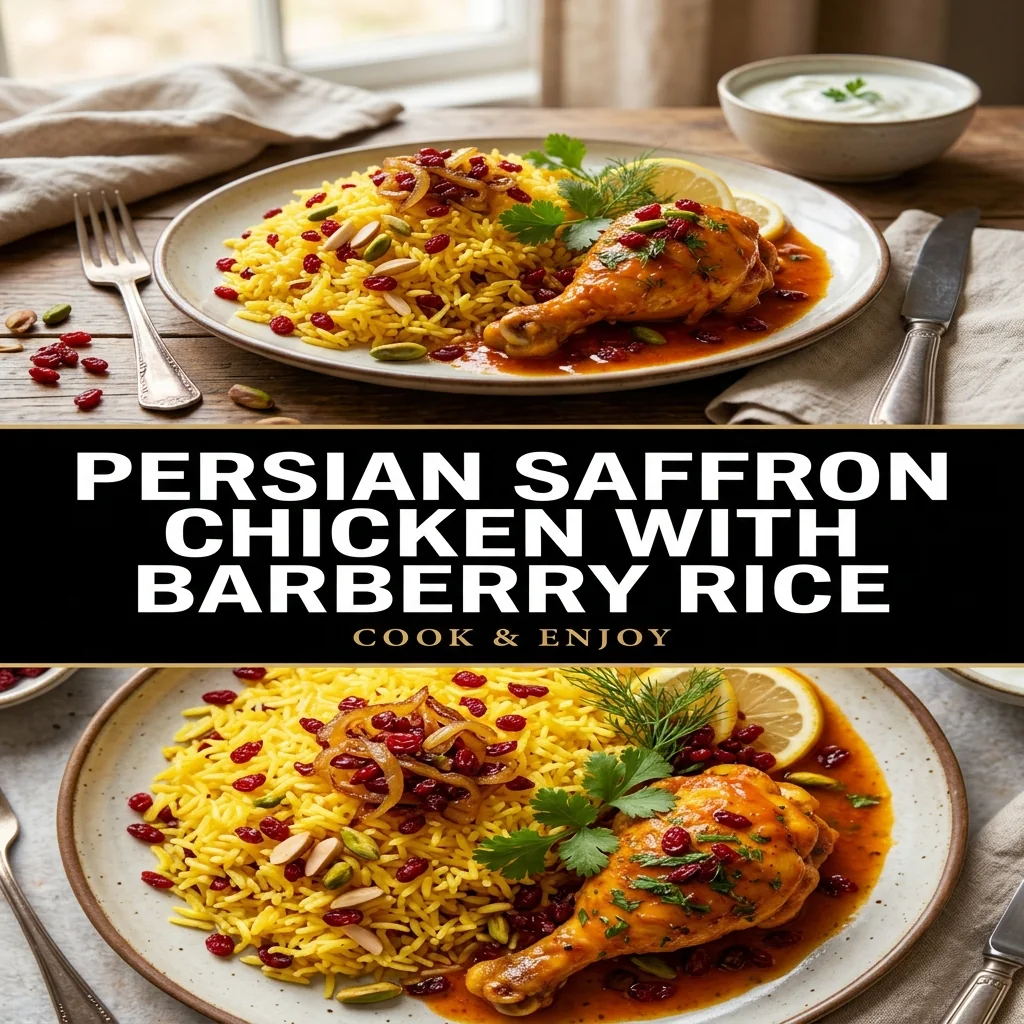
Persian Saffron Chicken with Barberry Rice, traditionally known as Zereshk Polo Morgh, stands as one of the most celebrated culinary masterpieces of Persian heritage. This majestic dish balances deep savory richness with bright, sweet-tart fruit notes and the incomparable floral essence of red saffron. Halal bone-in chicken thighs and drumsticks gently braise in a base of caramelized onions, warm turmeric, tomato paste, and steeped saffron essence until fork-tender. The chicken is served over long, fluffy basmati grains adorned with buttery, ruby-red barberries that pop with mouthwatering tartness. Highly aromatic and visually captivating with contrasting golden yellow and deep crimson hues, this centerpiece meal transforms any family dinner into an unforgettable feast.
Blooming Saffron for Pure Flavor
True Iranian saffron is the defining soul of this recipe. Grinding whole crimson stigmas with a tiny pinch of coarse sugar creates a fine powder that dissolves completely, maximizing surface area. Pouring freshly boiled water over the powder—a process known as blooming—draws out rich water-soluble crocin pigments and delicate volatile oils. Never dump raw saffron threads directly into an oily pan, as high heat degrades its complex aroma. Steeping the spice quietly in water produces a liquid of astonishing brilliance that paints both the rich braising liquid and the fluffy basmati rice.
Braising Chicken on the Bone
Using bone-in halal leg quarters or bone-in thighs yields an incomparable depth of flavor impossible to recreate with boneless cuts. As the chicken simmers over low heat, the connective tissues break down, naturally thickening the tomato and turmeric broth into a silky sauce. The gentle braise keeps the interior meat remarkably succulent while infusing every layer with aromatic citrus and saffron. Regular checking with a food thermometer ensures the dark meat safely surpasses the required 165°F (74°C) threshold, reaching optimum tender perfection without falling into dry overcooking.
The Sweet-Tart Contrast of Zereshk
Persian barberries, or zereshk, provide an irreplaceable flavor contrast to the buttery, savory elements of this dish. These tiny, intensely tart berries require careful handling. Rinsing them under cold water rehydrates their skins and eliminates surface dust. Sautéing them very briefly in warm melted butter with a spoonful of sugar tempers their mouth-puckering sourness into a pleasantly balanced tart garnish. Scattered lavishly over pristine white and saffron-dyed rice grains, barberries provide textural intrigue, visual luxury, and an indispensable palate-cleansing snap with every forkful.
Before you start
Barberries (zereshk) are delicate and contain high natural fruit sugars that scorch quickly over direct heat. When sautéing them with butter and sugar, maintain the stovetop flame on its lowest setting, stirring constantly for no longer than two minutes until they swell plumply. Rinsing barberries in cold water prior to cooking removes any lingering orchard debris and restores their bright ruby luster.
THE RECIPE
Persian Saffron Chicken with Barberry Rice
4 servings · 25 minutes preparation · 50 minutes cooking · 10 minutes cooling, chilling or resting
Ingredients
Step-by-step instructions
- Grind 0.5 teaspoon saffron threads with a small pinch of sugar in a mortar, transfer to a small glass, stir in 3 tablespoons boiling water, and steep for 10 minutes.
- Heat 2 tablespoons neutral oil in a large Dutch oven over medium-high heat, add the chicken leg quarters, and sear for 4 minutes per side until lightly colored, then set chicken aside on a plate.
- Reduce heat to medium, add diced yellow onion to the Dutch oven, and cook for 6 minutes until soft and golden.
- Stir in 3 minced garlic cloves, 1 teaspoon turmeric, and 2 tablespoons tomato paste, cooking for 2 minutes while stirring constantly until the tomato paste darkens.
- Pour in 1.5 cups halal-certified chicken broth, 2 tablespoons lemon juice, 1 tablespoon of the steeped saffron liquid, and 1 teaspoon salt, stirring thoroughly to lift browned bits.
- Return chicken pieces to the Dutch oven, reduce heat to low, cover tightly, and simmer for 35 to 40 minutes until chicken registers 165°F (74°C) at the thickest bone-adjacent point.
- Meanwhile, cook 1.5 cups rinsed basmati rice in 2.5 cups lightly salted boiling water covered on low heat for 15 minutes, then remove from heat and let rest covered for 10 minutes.
- Melt 2 tablespoons butter in a small skillet over low heat, add 0.5 cup rinsed barberries and 1 tablespoon sugar, sautéing gently for 2 minutes without burning.
- Toss one-third of the cooked rice with remaining steeped saffron water and the sweetened barberries, layering this vibrant golden mixture across the remaining white rice alongside the braised chicken.
Kitchen notes
Barberries (zereshk) are delicate and contain high natural fruit sugars that scorch quickly over direct heat. When sautéing them with butter and sugar, maintain the stovetop flame on its lowest setting, stirring constantly for no longer than two minutes until they swell plumply. Rinsing barberries in cold water prior to cooking removes any lingering orchard debris and restores their bright ruby luster.
Storage & make-ahead
Allow both chicken and barberry rice to cool to room temperature before packing into separate airtight containers within 2 hours of cooking. Refrigerate for up to 3 days. To reheat, warm the chicken gently in a saucepan over medium-low heat to 165°F (74°C), adding two tablespoons of water or chicken broth to maintain the rich tomato-saffron braising gravy.
An original recipe guide inspired by themes in our Pinterest research. Recipe has not been independently kitchen-tested. AI-generated image is illustrative; your finished dish may look different.
Frequently asked questions
Can I substitute dried cranberries for the Persian barberries?
If barberries are unavailable, dried tart cherries or unsweetened dried cranberries finely chopped make acceptable substitutes. Reduce the added sugar to one teaspoon, as commercial dried cranberries generally carry added sweeteners unlike pure, naturally sour sun-dried barberries.
Why is parboiling recommended for Persian basmati rice?
Parboiling in abundant salted water drains excess surface starches, creating extraordinarily long, distinct grains that steam without sticking. However, this simplified one-pot absorption method preserves moisture and produces tender, reliable grains ideal for home weeknight preparations.
Can I make this dish using skin-on chicken?
Yes. If keeping the skin, sear the pieces skin-side down until deep golden and crisp before braising. Note that the braising steam softens the skin during cooking, which is typical for authentic homestyle stewed Persian poultry.