WHY MAKE IT
A little comfort, a lot of flavor.
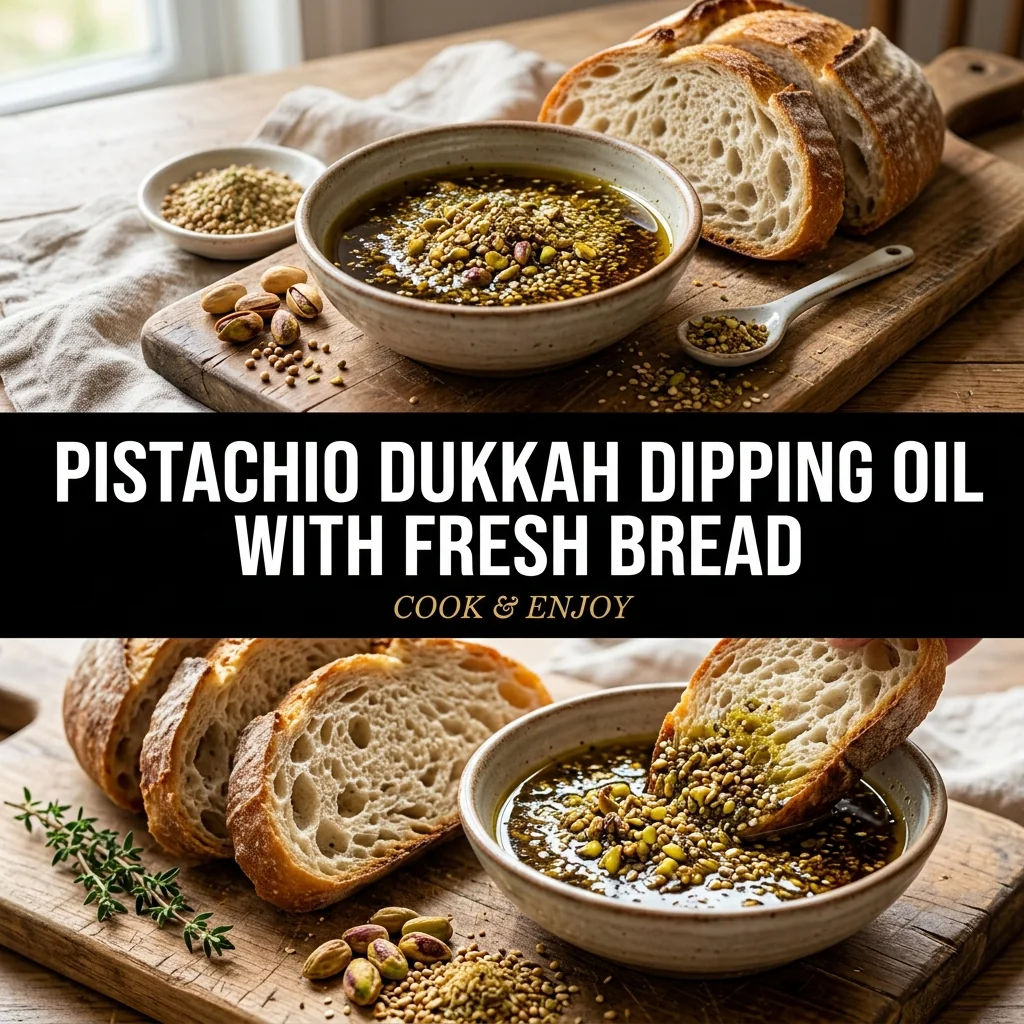
Pistachio dukkah dipping oil transforms simple pantry ingredients into a deeply aromatic, textural appetizer rooted in Egyptian culinary tradition. The foundation relies on carefully dry-toasting whole cumin, coriander, and fennel seeds alongside raw pistachios and sesame seeds. This gentle thermal process activates the essential oils within the botanicals, releasing a warm, earthy fragrance that permeates the room. Crushing the toasted mixture by hand creates a coarse, uneven texture that crackles pleasantly with every bite. When paired with high-quality, cold-pressed extra virgin olive oil and thick wedges of freshly baked crusty bread, this dish encourages communal sharing. Guests can dredge bread through fruity oil before plunging it into the crunchy, savory spice blend.
Selecting the Spices and Nuts
The quality of the whole spices dictates the vibrancy of the dukkah. Always purchase whole coriander and cumin seeds rather than pre-ground powders, which lose their volatile flavor compounds rapidly on supermarket shelves. Shelled, unsalted raw pistachios provide a sweet, buttery richness and striking green color that sets this version apart from traditional hazelnut variations. Ground sumac introduces a delicate fruity tartness that lifts the heavy roasted profile. Choose an unrefined, cold-pressed extra virgin olive oil with peppery or grassy notes to complement the roasted seeds.
The Importance of Gradual Toasting
Dry-toasting is the definitive step that awakens raw seeds. Keep the skillet over moderate heat rather than cranking it high, which risks scorching the exterior of small sesame and cumin seeds while leaving the core raw and bitter. Toast the nuts separately from the spices because larger pistachios require twice as much heating time to turn golden. Constant movement in the skillet prevents hot spots. Remove spices from the hot pan immediately once aromatic, as residual skillet heat will continue darkening them if left stationary.
Serving Etiquette and Presentation
There are two traditional ways to present dukkah dipping oil. The first is Egyptian style, featuring two separate shallow bowls: one filled with grassy extra virgin olive oil and another filled with dry dukkah. Diners dip their torn bread first into the oil, then press it firmly into the dry spiced nut blend so it adheres. Alternatively, sprinkle generous tablespoons of dukkah directly across the surface of the pooled oil in a single wide rimmed plate for an immediate visual contrast.
Before you start
Cooling the toasted nuts and seeds completely before crushing is vital for maintaining a dry, crunchy texture. If you grind nuts while warm, their natural oils release quickly, turning the mixture into a wet paste rather than a light, crumbly condiment. A mortar and pestle gives far superior control compared to an electric spice grinder, which pulverizes soft pistachios into dust within seconds.
THE RECIPE
Pistachio Dukkah Dipping Oil with Fresh Bread
6 servings · 15 minutes preparation · 8 minutes cooking · 15 minutes cooling, chilling or resting
Ingredients
Step-by-step instructions
- Preheat a dry, heavy 10-inch stainless steel or cast-iron skillet over medium-low heat for 2 minutes.
- Add the raw shelled pistachios to the dry pan and toast for 4 to 5 minutes, shaking the skillet frequently until the nuts are fragrant and lightly golden.
- Transfer the warm pistachios to a clean plate and allow them to cool completely for 15 minutes to restore their natural crispness.
- Add the coriander seeds, cumin seeds, fennel seeds, and whole black peppercorns to the same skillet over medium heat, swirling constantly for 2 minutes until intensely aromatic and popping.
- Add the sesame seeds to the spice mixture and toast for an additional 1 minute until lightly golden, then pour everything onto a separate plate to cool.
- Place the cooled toasted spices, sea salt, and ground sumac into a heavy mortar and pestle; crush firmly until you achieve a coarse, textured meal with small cracked seeds.
- Add the cooled pistachios to the mortar and pound briefly until coarsely shattered, taking care not to crush them into a powdery paste.
- Pour the extra virgin olive oil into shallow wide ceramic dipping bowls, spoon generous mounds of the pistachio dukkah directly over the oil or serve it side by side, and serve with thick warm slices of artisan bread.
Kitchen notes
Cooling the toasted nuts and seeds completely before crushing is vital for maintaining a dry, crunchy texture. If you grind nuts while warm, their natural oils release quickly, turning the mixture into a wet paste rather than a light, crumbly condiment. A mortar and pestle gives far superior control compared to an electric spice grinder, which pulverizes soft pistachios into dust within seconds.
Storage & make-ahead
Store leftover dry pistachio dukkah in a clean, airtight glass jar at cool room temperature away from direct light for up to 3 weeks. Do not mix oil into the bulk storage jar; only combine dukkah with olive oil immediately before serving. Slice and freeze leftover bread in airtight bags for up to 1 month, reheating slices at 350 F (175 C) until crisp. Refrigerate perishable leftovers within 2 hours of preparation (within 1 hour in temperatures above 90 F / 32 C).
An original recipe guide inspired by themes in our Pinterest research. Recipe has not been independently kitchen-tested. AI-generated image is illustrative; your finished dish may look different.
Frequently asked questions
Can I use a food processor instead of a mortar and pestle?
Yes, you can pulse the cooled ingredients in a food processor using very short one-second bursts. However, monitor the texture closely to avoid creating nut butter. The finished mixture must remain coarse, distinct, and crunchy rather than powdery or paste-like.
Why did my dukkah turn greasy instead of light and dry?
Dukkah turns greasy if the pistachios were crushed while still warm from the skillet, or if the mixture was over-processed in an electric machine. Letting all ingredients cool completely to room temperature before cracking ensures the nut oils stay encapsulated within the crunchy fragments.
What kind of bread pairs best with this dipping oil?
Sturdy artisan loaves with an open crumb and a thick, crackly crust work best. Sourdough boules, rustic Italian ciabatta, or traditional flatbreads like pita and naan are ideal vessels for catching the olive oil and supporting the dense layer of crunchy crushed nuts.