WHY MAKE IT
A little comfort, a lot of flavor.
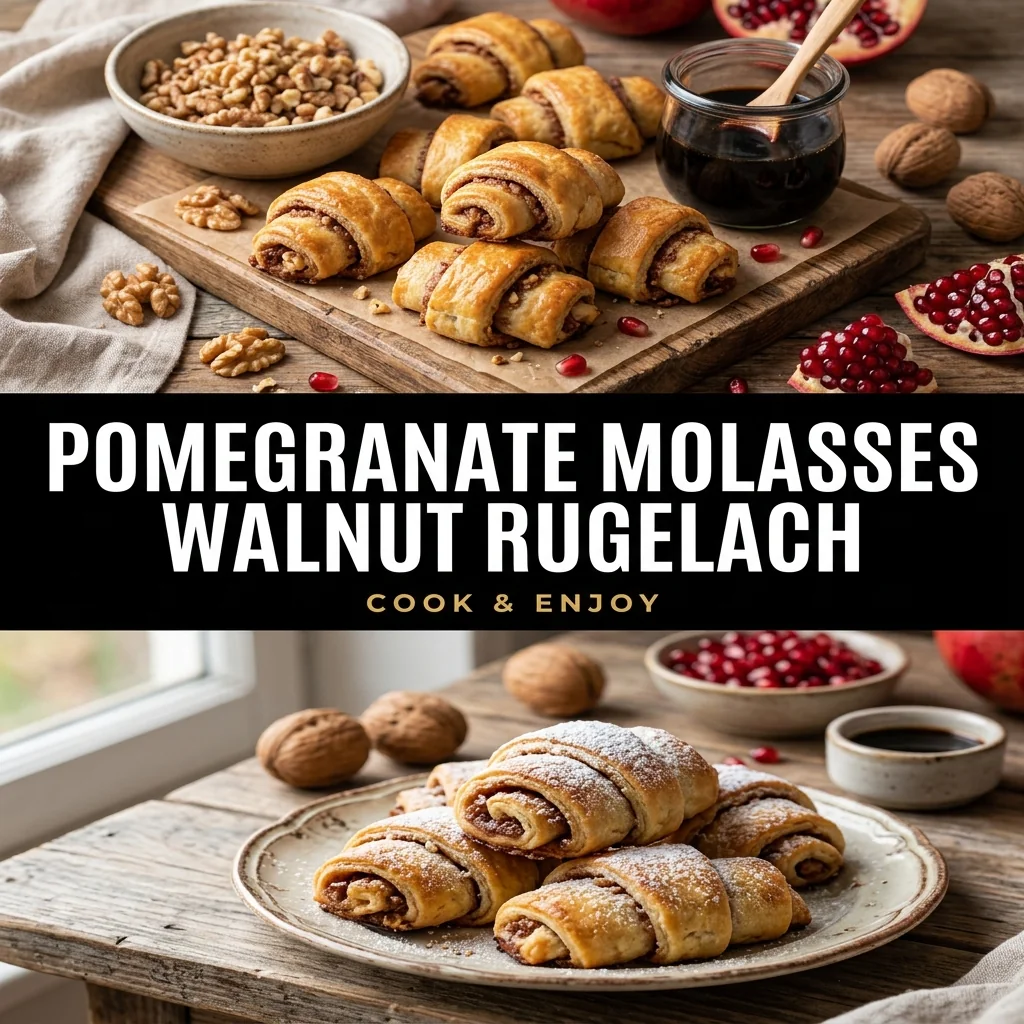
These pomegranate molasses walnut rugelach present an inspired twist on a classic rolled pastry, bringing a bright, tangy counterpoint to rich walnut and cream cheese dough. The pastry dough relies on equal weights of chilled unsalted butter and halal-certified cream cheese, yielding tender, flaking layers reminiscent of puff pastry. Inside, pure pomegranate molasses introduces deep fruit acidity, cutting through the nutty warmth of toasted walnuts, aromatic cinnamon, and molasses-rich brown sugar. Formed into neat crescent rolls, brushed with egg wash, and finished with crunchy turbinado sugar, these bite-sized treats offer balanced texture with a crisp outer crust and a chewy, flavorful interior that pairs beautifully with freshly brewed mint tea.
Selecting Pure Pomegranate Molasses
For the cleanest flavor profile, choose pure halal pomegranate molasses made solely from boiled, reduced pomegranate juice, devoid of added refined sugars or artificial colorants. A high-quality concentrate is thick, pourable, and distinctly tart with deep burgundy undertones. If your pomegranate molasses contains added sugar syrups, it will caramelize much faster in the oven and may scorch before the pastry dough fully bakes through. Taste your molasses before assembly; if it leans intensely sour, ensure you do not reduce the measured brown sugar in the walnut mixture.
Pastry Assembly and Rolling Technique
The cream cheese pastry dough is delicate and requires quick, confident handling. Always roll the chilled discs on a well-floured board to avoid sticking. Pressing the chopped toasted walnuts and cinnamon sugar firmly into the brushed molasses layer anchors the filling securely before slicing. When rolling each wedge inward from base to tip, keep the roll relatively compact so air pockets do not cause the rugelach to unwind as the butter steams during baking. Position the pointed tail tucked underneath against the baking sheet.
Baking for Flakiness and Color
Baking at 375°F (190°C) allows the moisture in the butter and cream cheese to turn rapidly to steam, creating visible flaky strata before the fat completely melts. The rugelach should achieve a rich, amber hue across their fluted tops, with the sugar crystals glittering on the surface. Because escaping juices from the pomegranate molasses can stick firmly to bare metal, using parchment paper or nonstick silicone mats is mandatory to ensure effortless release and prevent messy scorching along the bottoms.
Before you start
Keeping the butter and cream cheese cold during every stage is essential for creating crisp, distinct pastry layers. Work with one portion of dough at a time while leaving the remaining dough discs in the refrigerator. When brushing on the pomegranate molasses, apply a thin, even coat rather than a heavy layer; too much liquid filling can seep out during baking, causing the brown sugar to caramelize too aggressively against the baking sheet.
THE RECIPE
Pomegranate Molasses Walnut Rugelach
32 servings · 35 minutes preparation · 24 minutes cooking · 90 minutes cooling, chilling or resting
Ingredients
Step-by-step instructions
- In a food processor, pulse the all-purpose flour and fine sea salt twice to combine; add the chilled cubed butter and chilled cubed cream cheese, pulsing 10 to 12 times until the dough clumps together into coarse pebbles.
- Turn the dough onto a clean surface, gather it gently into a cohesive ball without kneading, divide into four equal rounds, flatten each into a 1/2-inch disc, wrap tightly in plastic film, and chill in the refrigerator for 60 minutes.
- In a small mixing bowl, stir together the finely chopped toasted walnuts, dark brown sugar, and ground cinnamon until thoroughly combined.
- Preheat the oven to 375°F (190°C) and line two large rimmed baking sheets with silicone baking mats or parchment paper.
- On a lightly floured surface, roll one dough disc into a 9-inch circle about 1/8-inch thick; brush the surface with 4 teaspoons (about 20 ml) of pomegranate molasses, leaving a 1/4-inch border at the outer rim.
- Scatter 1/4 of the walnut-sugar mixture evenly over the pomegranate molasses, pressing down gently with your palms to adhere the filling to the pastry.
- Using a pizza cutter or sharp chef's knife, slice the circle into 8 equal wedges; roll each wedge up tightly from the wide base toward the pointed tip, bending slightly into a crescent shape.
- Transfer the rolled crescents to the baking sheet point-side down, spaced 1.5 inches apart; repeat with the remaining three dough discs to produce 32 pastries in total.
- Whisk together the egg and 1 tablespoon of water in a small ramekin, brush the tops lightly with egg wash, sprinkle with turbinado sugar, and bake at 375°F (190°C) for 22 to 25 minutes until deep golden brown; cool on sheets for 10 minutes, then move to a wire rack for 20 minutes (total cooling 30 minutes).
Kitchen notes
Keeping the butter and cream cheese cold during every stage is essential for creating crisp, distinct pastry layers. Work with one portion of dough at a time while leaving the remaining dough discs in the refrigerator. When brushing on the pomegranate molasses, apply a thin, even coat rather than a heavy layer; too much liquid filling can seep out during baking, causing the brown sugar to caramelize too aggressively against the baking sheet.
Storage & make-ahead
Store baked rugelach in a tightly covered container at cool room temperature for up to 5 days, or refrigerate for up to 4 days. To refresh chilled pastries, warm them on a baking sheet in a 325°F (165°C) oven for 6 to 8 minutes until crisp. Unbaked rolled rugelach can be frozen on a tray for 2 hours, transferred to a freezer bag for up to 1 month, and baked directly from frozen with 3 additional minutes of oven time.
An original recipe guide inspired by themes in our Pinterest research. Recipe has not been independently kitchen-tested. AI-generated image is illustrative; your finished dish may look different.
Frequently asked questions
Can I replace the walnuts with pecans or pistachios?
Yes, raw or lightly toasted pecans or unsalted pistachios make exceptional substitutes. Chop them finely to the same size as the walnuts so the pastry dough rolls up smoothly without tearing along the edges.
Why did my rugelach unravel during baking?
Unraveling occurs when the tip of the triangular wedge is not tucked securely underneath the roll when placed on the baking sheet. Always position the tip firmly on the parchment paper and press lightly downward before brushing with egg wash.
Can I prepare the pastry dough a day ahead?
Yes, wrapped tightly in plastic film, the unrolled dough discs can rest in the refrigerator for up to 2 days. Let cold dough sit on the counter for 5 minutes before rolling to prevent cracking along the perimeter.