WHY MAKE IT
A little comfort, a lot of flavor.
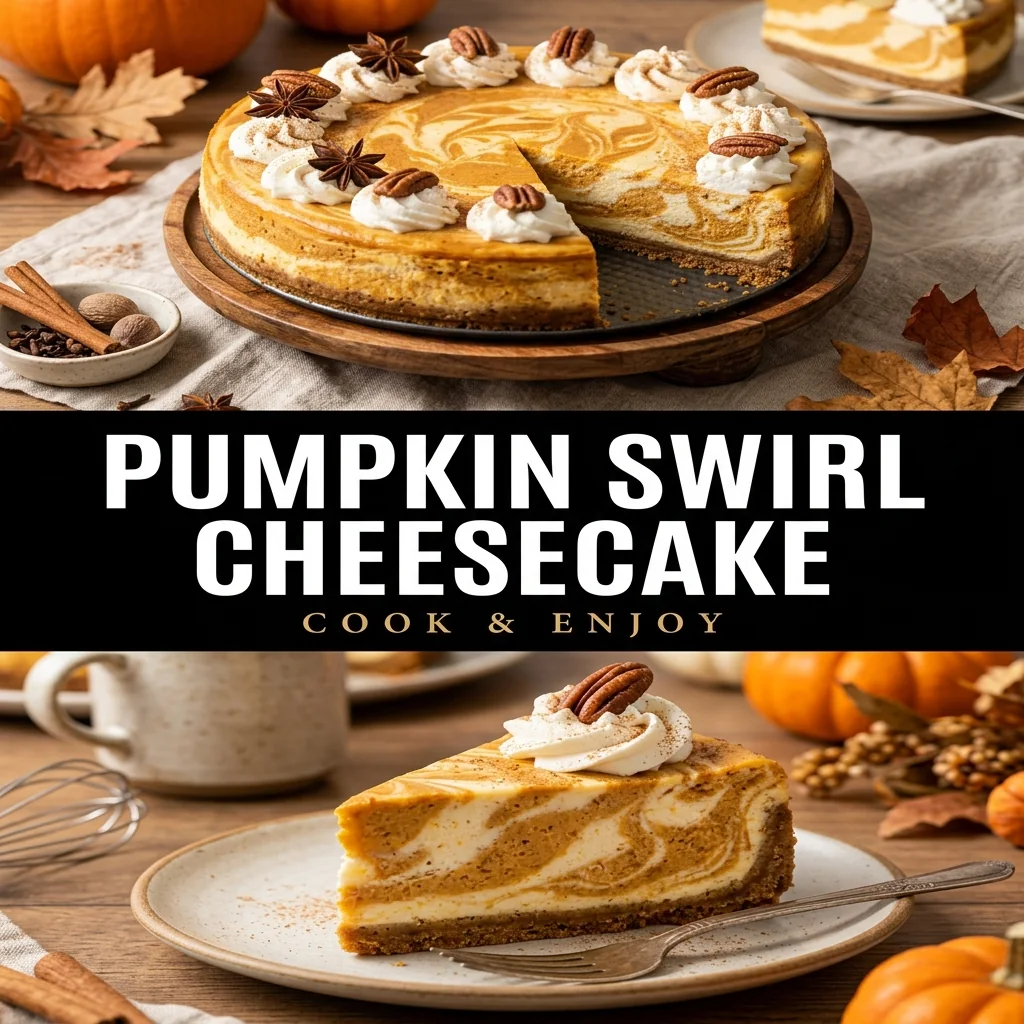
Pumpkin Swirl Cheesecake captures the cozy, aromatic essence of autumn while preserving the bright, tangy profile of a traditional baked cheesecake. Rather than committing fully to an all-pumpkin pie texture, this recipe maintains contrast by dividing the velvety batter into two distinct components: a sweet, clean vanilla cream cheese base and a spiced, rich pumpkin custard laced with cinnamon, ginger, nutmeg, and cloves. When layered and gently marbelized in a nine-inch springform pan, the visual result is striking, offering warm autumnal hues across every slice. Resting atop a cinnamon-scented graham crust and tempered by a slow, moist water-bath bake, this cheesecake delivers a silky, crack-free finish that effortlessly outshines ordinary holiday pies.
Canned Pure Pumpkin vs. Pumpkin Pie Mix
It is critical to use 100% pure canned pumpkin puree for this recipe, not canned pumpkin pie mix. Pure pumpkin contains only cooked, pureed squash with no added sweeteners, thickeners, or spices. Pumpkin pie mix contains extra water, starches, and liquid sugars that alter the batter's hydration balance and throw off the setting point of the cream cheese custard. By using pure pumpkin, you retain full control over the sugar balance and spice intensity, ensuring the pumpkin swirl sets at the identical rate as the vanilla base.
Balancing Batter Densities
Adding pumpkin puree introduces extra moisture and fiber to one half of the batter, naturally making it slightly heavier than the plain cream cheese mixture. To keep the swirl pattern defined and prevent the pumpkin portion from sinking straight to the bottom of the crust, alternate dollops of plain and spiced batter across the pan. When you run your knife through the layers, use shallow, sweeping strokes that loop upward and downward, lifting the lower batter into the surface to create balanced marbling.
Preventing Surface Cracks
Surface cracks in baked cheesecakes typically result from three factors: trapped air bubbles, overbaking, or rapid temperature swings. Mixing eggs at low speed minimizes incorporated air. The water bath provides uniform, ambient heat that keeps egg proteins from over-coagulating and contracting violently. Finally, letting the cheesecake rest inside the turned-off oven with the door cracked permits the interior to cool gradually, allowing the proteins to stabilize gently without shrinking away from the edges.
Before you start
When creating the marble pattern, run a dull knife or wooden skewer through the batter in gentle figure-eight motions. Resist the urge to swirl excessively; over-swirling will blend the two contrasting batters into a homogenous, muddy orange rather than producing crisp, distinct ribbons of ivory vanilla and deep spiced pumpkin throughout each slice.
THE RECIPE
Pumpkin Swirl Cheesecake
12 servings · 30 minutes preparation · 78 minutes cooking · 480 minutes cooling, chilling or resting
Ingredients
Step-by-step instructions
- Preheat your oven to 325 degrees Fahrenheit (163 degrees Celsius) and wrap the outside of a 9-inch springform pan thoroughly with heavy-duty foil.
- Combine graham cracker crumbs, melted butter, 1/4 cup sugar, and 1/2 teaspoon cinnamon; press the mixture into the bottom and slightly up the sides of the pan, then bake for 8 minutes and cool.
- Beat cream cheese, 1 cup granulated sugar, and brown sugar on medium-low speed in a stand mixer until smooth, fluffy, and completely free of lumps, about 3 minutes.
- Add eggs one at a time on low speed, mixing just until each yolk disappears, then blend in the sour cream and vanilla extract until smooth.
- Transfer 1 1/2 cups of the plain batter to a separate medium bowl, stirring in the pumpkin puree, 1 teaspoon cinnamon, ginger, nutmeg, and cloves until completely combined.
- Pour half of the remaining plain batter into the prepared crust, dollop half of the spiced pumpkin batter on top, repeat with the remaining portions, and gently swirl with a butter knife.
- Place the springform pan into a roasting pan, pour boiling water halfway up the sides of the pan, and bake at 325 degrees Fahrenheit for 65 to 70 minutes until edges are set and center gently wobbles.
- Turn off the oven, crack the door open 1 inch, and allow the cheesecake to cool inside the water bath for 60 minutes.
- Remove the pan from the water, strip away the foil, cool on a wire rack for no more than 1 hour, and chill in the refrigerator for at least 6 hours before releasing the springform ring.
Kitchen notes
When creating the marble pattern, run a dull knife or wooden skewer through the batter in gentle figure-eight motions. Resist the urge to swirl excessively; over-swirling will blend the two contrasting batters into a homogenous, muddy orange rather than producing crisp, distinct ribbons of ivory vanilla and deep spiced pumpkin throughout each slice.
Storage & make-ahead
Store the cooled, chilled cheesecake tightly covered in the refrigerator for up to 5 days. For freezing, freeze the whole cheesecake or individual slices on a parchment-lined sheet pan until solid, wrap tightly in two layers of plastic wrap and one layer of heavy foil, and store frozen for up to 2 months. Thaw slowly in the refrigerator for 24 hours before serving to maintain structural integrity.
An original recipe guide inspired by themes in our Pinterest research. Recipe has not been independently kitchen-tested. AI-generated image is illustrative; your finished dish may look different.
Frequently asked questions
Can I make this dessert ahead of time?
Yes, cheesecake is an ideal make-ahead dessert. In fact, it tastes significantly better on day two after the spices have had time to infuse and the cream cheese custard has set completely in the refrigerator. Bake it 24 to 48 hours in advance.
Can I substitute gingersnap cookies for the graham cracker crust?
Absolutely. Replace the graham cracker crumbs with an equal weight (about 1 3/4 cups) of finely crushed hard gingersnap cookies. Omit the ground cinnamon in the crust step, as gingersnaps already provide substantial clove, ginger, and molasses flavor.
Why does my swirl look muddy instead of marbled?
A muddy swirl occurs when the batter is stirred too many times after dolloping. Limit your knife movements to 4 or 5 wide figure-eight passes across the pan. The batter will spread naturally in the oven, emphasizing the design without additional mixing.


