WHY MAKE IT
A little comfort, a lot of flavor.
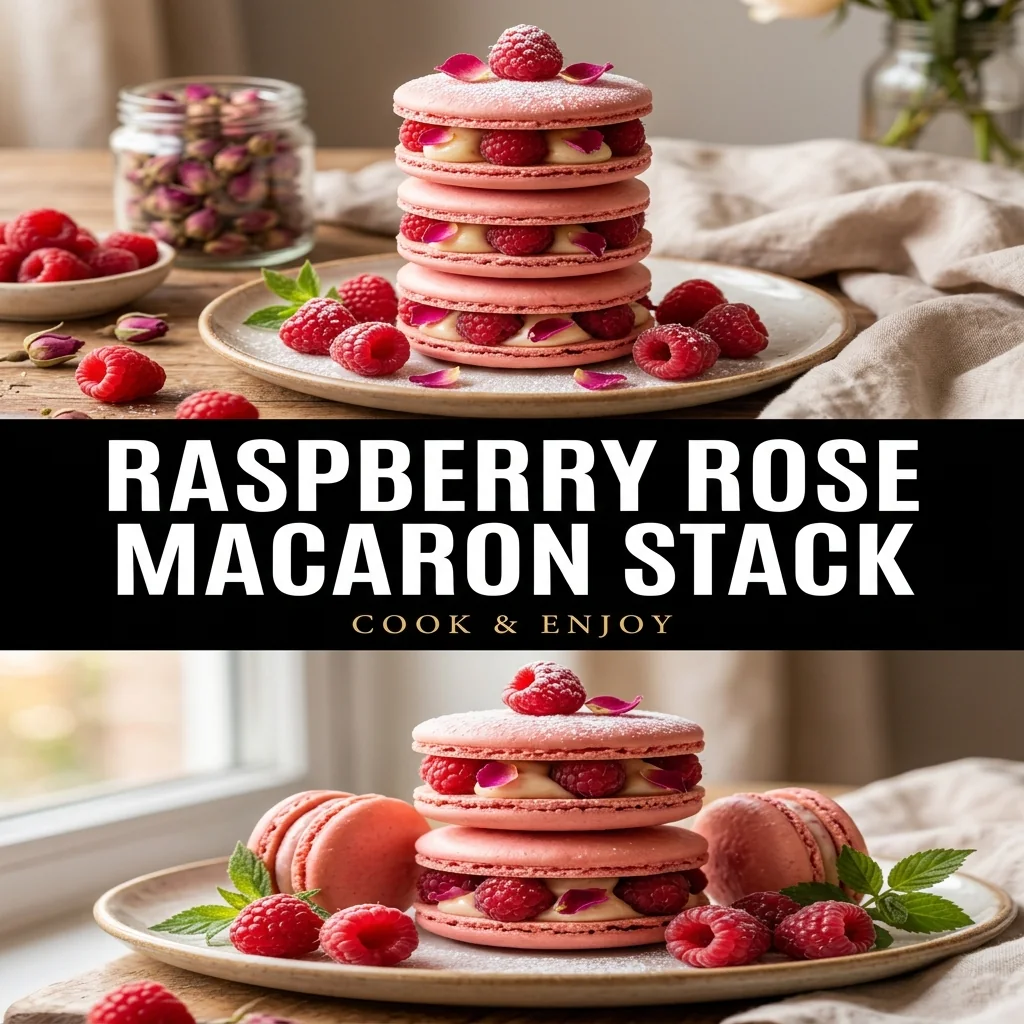
Macarons represent the height of refined patisserie, offering a crisp shell that yields to a chewy, almond-scented interior. This presentation elevates the classic cookie into an impressive individual plated dessert by stacking larger shells with fresh, tart whole raspberries and an aromatic dark chocolate ganache infused with culinary rose water. The floral perfume of rose water lifts the deep cocoa solids, cutting the inherent sweetness of the meringue. Precision is paramount when working with meringue, requiring careful folding and structured resting to achieve smooth tops and ruffled feet. Assembled just before presentation, this dessert balances contrasting textures of crunchy shells, silky ganache, and bright, bursting fresh fruit.
Understanding the Macaronage Stage
The macaronage process controls the final structure of the cookie. Folding the dry almond flour into stiff meringue intentionally deflates excess air pockets while preserving enough volume to generate lift. Under-folding leaves the batter too stiff, causing peaked tops that will not flatten during the rest. Over-folding destroys the protein network, resulting in runny batter that spreads uncontrollably and bakes into flat, footless disks. The ideal consistency flows from the spatula in a continuous ribbon that slowly folds upon itself.
Floral and Cocoa Synergy
Culinary rose water brings an ethereal quality to dense dark chocolate. High-cocoa chocolate contains natural tannins and earthy notes that ground the top-note floral aromatics of the distilled petals. When heating the cream, avoiding a full boil prevents scorching delicate dairy proteins. Emulsifying the ganache with soft butter creates a glossy sheen and a pliable texture that holds its form between the delicate macaron shells without oozing outward when sliced.
Drying and Oven Aerodynamics
Allowing the piped disks to rest on the counter before baking produces the defining signature of authentic macarons: the pied, or foot. As the surface air dries, it forms a cohesive, leather-like skin. When the heat of the oven vaporizes moisture beneath, steam cannot escape through the top surface. Instead, the rising moisture lifts the entire shell upward, forcing steam out around the base and generating the classic ruffled rim.
Before you start
Moisture is the primary enemy of crisp macaron shells. Ensure your mixing bowls, beaters, and spatulas are entirely grease-free by wiping them with a paper towel dampened with lemon juice or white vinegar. Measure ingredients by weight using a digital scale whenever possible. Avoid excessive rose water; authentic culinary distillate is intensely concentrated, and adding too much can introduce an overpowering soapy note.
THE RECIPE
Raspberry Rose Macaron Stack
6 servings · 40 minutes preparation · 40 minutes cooking · 160 minutes cooling, chilling or resting
Ingredients
Step-by-step instructions
- Line two large baking sheets with silicone baking mats. Draw twelve 2.5-inch circles spaced 2 inches apart on template paper placed under the mats.
- Sift the almond flour and powdered sugar together twice through a fine-mesh sieve into a large bowl to eliminate clumps, discarding any large coarse almond pieces.
- In a clean glass or metal bowl, beat the egg whites and cream of tartar on medium speed until frothy. Gradually add granulated sugar one tablespoon at a time while increasing speed to high, whipping until stiff, glossy peaks form and beating in the optional gel red food coloring during the final 30 seconds.
- Fold the sifted almond flour mixture into the meringue in three additions using a broad silicone spatula. Gently press the batter against the bowl sides until it flows smoothly like lava in ribbons.
- Transfer the batter to a piping bag fitted with a 0.5-inch round tip. Pipe twelve 2.5-inch disks onto the prepared mats. Tap the baking sheets firmly on the counter three times to release air bubbles.
- Let the piped shells rest at room temperature for 40 minutes until a dry, dull skin forms and they are no longer tacky when touched gently.
- Preheat the oven to 300 F (150 C). Bake one sheet at a time for 16 to 18 minutes until the shells develop feet and do not wobble on their bases. Cool completely on the pans for 30 minutes.
- Place chopped dark chocolate in a heatproof bowl. Heat heavy cream in a small saucepan over medium heat for 4 minutes until it just begins to simmer, then pour over the chocolate. Let stand 2 minutes, then whisk until smooth.
- Stir the softened butter, rose water, and alcohol-free vanilla into the chocolate ganache. Cover and chill in the refrigerator for 90 minutes until firm enough to pipe.
- Transfer the ganache to a piping bag. Pipe a mound of ganache onto six bottom shells, arrange 5 fresh raspberries around the perimeter of each, pipe a small dollop in the center, and crown each with a top macaron shell.
Kitchen notes
Moisture is the primary enemy of crisp macaron shells. Ensure your mixing bowls, beaters, and spatulas are entirely grease-free by wiping them with a paper towel dampened with lemon juice or white vinegar. Measure ingredients by weight using a digital scale whenever possible. Avoid excessive rose water; authentic culinary distillate is intensely concentrated, and adding too much can introduce an overpowering soapy note.
Storage & make-ahead
Store assembled macaron stacks in an airtight container in the refrigerator for up to 24 hours. Because fresh raspberries release moisture into the ganache and shells, assembly is best done within 4 hours of serving. Unfilled baked shells can be stored in an airtight container at room temperature for up to 4 days, or frozen for up to 1 month between layers of parchment paper.
An original recipe guide inspired by themes in our Pinterest research. Recipe has not been independently kitchen-tested. AI-generated image is illustrative; your finished dish may look different.
Frequently asked questions
Why did my macaron shells crack on top during baking?
Cracked shells typically result from an insufficient resting period or an overly hot oven. If the skin is too thin before entering the heat, rising steam will rupture the top rather than lifting the batter from the bottom edges.
Can I use frozen raspberries instead of fresh?
Fresh raspberries are essential for this structural stack. Frozen raspberries release substantial water as they thaw, which will quickly dissolve the delicate almond meringue shells and dilute the firm chocolate ganache.
Is food coloring necessary for the meringue?
No, coloring is purely aesthetic. If omitted, the macaron shells will bake into an attractive natural ivory-cream shade that contrasts beautifully against the dark chocolate ganache and vibrant red berries.