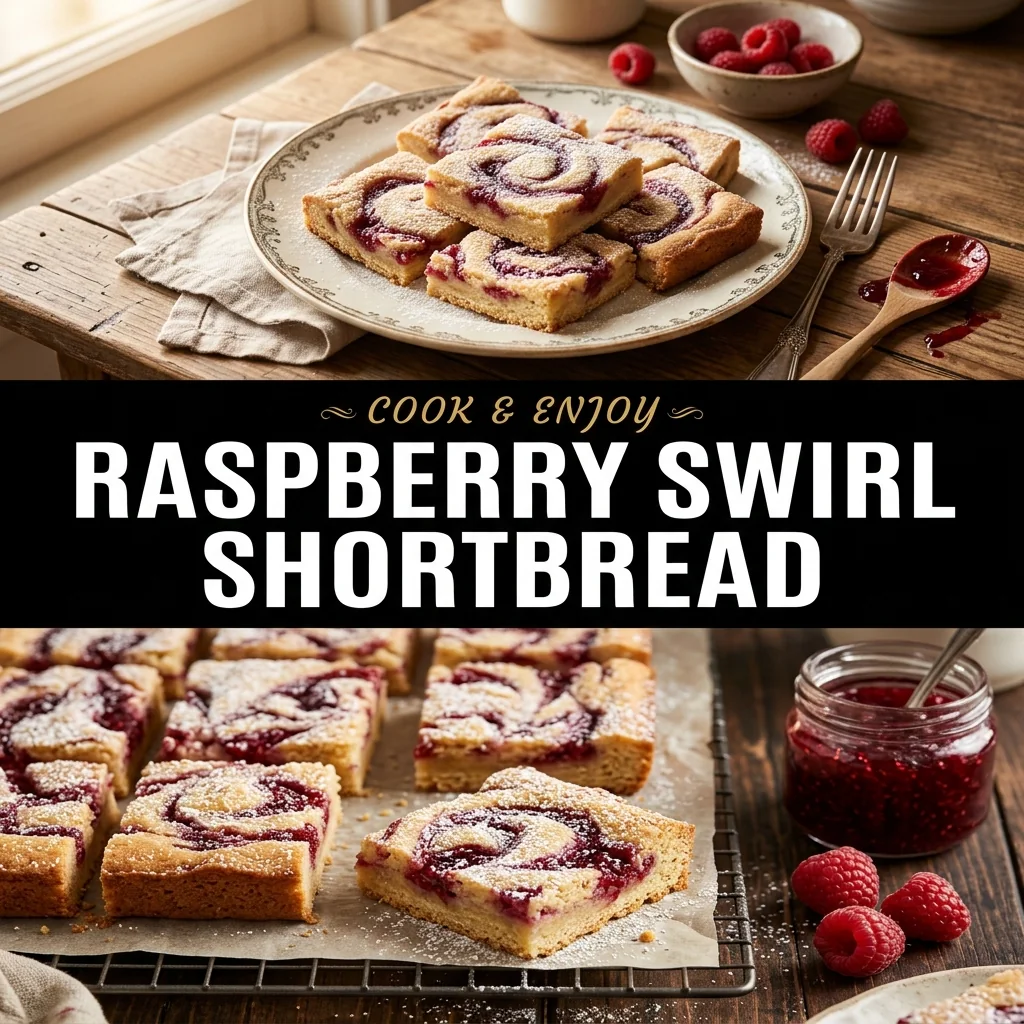
WHY MAKE IT
A little comfort, a lot of flavor.
Classic Scottish shortbread relies on a high ratio of butter to flour, yielding a crisp, meltingly tender crumb that dissolves cleanly on the palate. In this variation, a bright, concentrated raspberry swirl cuts through the richness of the pastry. Commercial jams often contain high levels of pectin and excessive moisture, which can cause the underlying shortbread dough to become soggy during baking. By preparing a quick, concentrated reduction using strained raspberry puree and a touch of cornstarch, you achieve vibrant fruit flavor and vivid color without compromising the structural integrity of the delicate buttery base.
Achieving the Tender Shortbread Texture
The crumb of traditional shortbread depends upon limiting gluten formation. Combining standard all-purpose flour with a measured portion of cornstarch dilutes the total protein percentage, yielding a noticeably more delicate, melt-in-your-mouth bite. Incorporating a blend of granulated sugar for structural crispness and powdered sugar for tenderness balances the bar's density. Beat the butter and sugars until smooth, but avoid incorporating excessive air, which would cause the dough to puff up during baking and collapse unevenly beneath the fruit ribbon.
Controlling Moisture in Fruit Swirls
Fruit purees contain significant water content that can steam the top of the shortbread rather than allowing it to bake crisp. Cooking fresh or frozen raspberries down with lemon juice breaks down cell walls and evaporates excess liquid, while straining removes rough seeds that disrupt the smooth pastry texture. The addition of a modest cornstarch slurry binds the remaining free moisture into a stable gel. Chilling this reduction before swirling guarantees that the cold butter in the crust stays solid until heated by the oven.
Slicing and Pan Selection
Baking shortbread in a straight-sided, light-colored aluminum pan ensures even thermal transfer and prevents the base corners from scorching before the center sets. Glass or ceramic bakeware retains heat differently and often results in pale centers with overly dark edges. Once baked, shortbread requires a complete cooldown at room temperature so the butter recrystallizes and solidifies the structural matrix. Slicing warm shortbread results in crumbling, whereas a fully cooled slab yields clean, razor-sharp edges when cut with a large chef's knife.
Before you start
Never swirl hot or warm raspberry sauce into the raw shortbread dough, as the radiant heat melts the butter pockets and prevents the crust from developing its characteristic delicate crumb. Boil the fruit reduction until it coats the back of a spoon thickly before chilling. If your kitchen is warm, chill the pressed base in the pan for 15 minutes prior to topping and baking to keep the edges crisp and defined.
THE RECIPE
Raspberry Swirl Shortbread
16 servings · 25 minutes preparation · 35 minutes cooking · 60 minutes cooling, chilling or resting
Ingredients
Step-by-step instructions
- Simmer raspberries, 2 tablespoons granulated sugar, and lemon juice in a small saucepan over medium heat for 6 to 8 minutes until the fruit breaks down completely into juice and pulp.
- Strain the hot fruit through a fine-mesh sieve into the saucepan to discard seeds, stir in the cornstarch slurry, and cook over medium-low heat for 2 minutes until glossy and thickened, then chill completely in the refrigerator.
- Preheat your oven to 325°F (163°C) and line an 8x8-inch metal baking pan with parchment paper, allowing a 2-inch overhang on opposite sides for lifting the cooled bars later.
- Beat the softened butter, 1/2 cup granulated sugar, and powdered sugar in a stand mixer fitted with the paddle attachment on medium speed for 3 minutes until smooth, pale, and emulsified, then mix in the vanilla extract.
- Whisk together the all-purpose flour, 1/4 cup cornstarch, and fine sea salt in a separate bowl, then add to the butter mixture on low speed, mixing just until a cohesive, soft dough forms without overworking.
- Reserve 1/2 cup of dough, then press the remaining shortbread dough evenly into the bottom of the lined 8x8-inch pan using the flat base of a measuring cup lightly dusted with flour.
- Spread the chilled raspberry reduction over the crust, drop small pinch-sized pieces of the reserved dough across the top, and drag a butter knife through the surface in gentle figure-eight patterns to create a decorative marble effect.
- Bake at 325°F (163°C) for 32 to 36 minutes until the edges are light golden brown and the center appears firm and dry, then cool completely in the pan on a wire rack for 60 minutes before slicing into 16 squares.
Kitchen notes
Never swirl hot or warm raspberry sauce into the raw shortbread dough, as the radiant heat melts the butter pockets and prevents the crust from developing its characteristic delicate crumb. Boil the fruit reduction until it coats the back of a spoon thickly before chilling. If your kitchen is warm, chill the pressed base in the pan for 15 minutes prior to topping and baking to keep the edges crisp and defined.
Storage & make-ahead
Store sliced shortbread bars in a single layer or separated by sheets of parchment paper inside an airtight container at cool room temperature for up to 4 days, or refrigerate for up to 7 days. For longer storage, freeze the baked, cooled bars in an airtight container for up to 2 months; thaw uncovered at room temperature for 30 minutes before serving.
An original recipe guide inspired by themes in our Pinterest research. Recipe has not been independently kitchen-tested. AI-generated image is illustrative; your finished dish may look different.
Frequently asked questions
Can I use store-bought raspberry jam instead of making the reduction?
Yes, but select a high-fruit, low-sugar seedless jam. Warm 1/2 cup of jam with 1/2 teaspoon of cornstarch in a small saucepan for 2 minutes to thicken it, then chill thoroughly before swirling over the crust so it does not weep liquid into the butter base.
Why did my shortbread turn out greasy on the bottom?
Greasy shortbread typically occurs when butter is too soft or warm during mixing, causing the emulsion to break, or when the oven temperature runs too low. Maintain cool room-temperature butter around 65°F (18°C) and verify oven accuracy with an internal oven thermometer.
Can I freeze this dough ahead of baking?
You can press the dough into the parchment-lined pan, wrap it tightly in plastic wrap, and freeze for up to 1 month. When ready, thaw in the refrigerator for 2 hours, top with the chilled puree and reserved dough, and bake as directed, adding 2 to 3 minutes.