WHY MAKE IT
A little comfort, a lot of flavor.
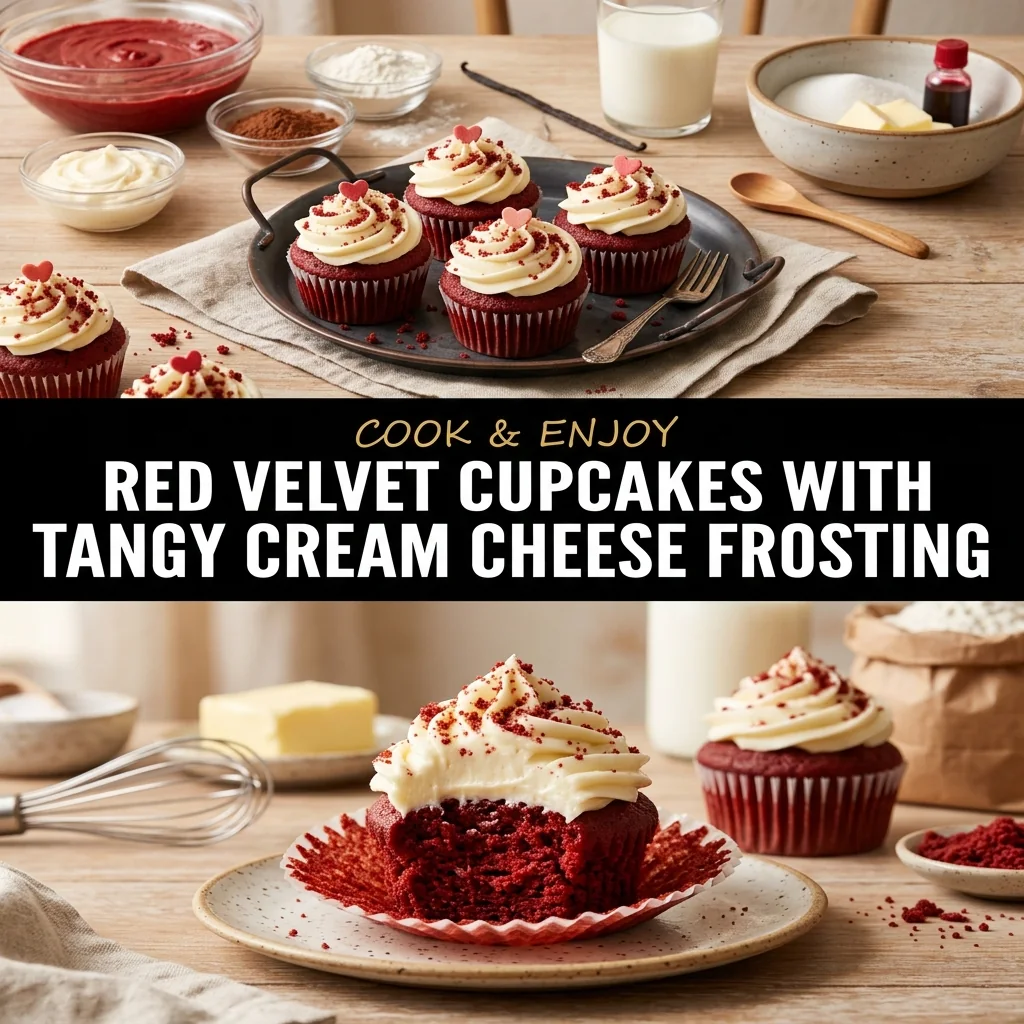
Red velvet cupcakes owe their enduring culinary status to an unmistakable combination of delicate cocoa flavor, subtle acidity, and an extraordinarily fine crumb. Unlike standard chocolate cakes that rely on heavy cocoa percentages, genuine red velvet utilizes just enough Dutch-process cocoa to tint and deepen the flavor profile while allowing the tangy sharpness of cultured buttermilk and vinegar to shine through. The reaction between acidic buttermilk and alkaline baking soda tenderizes the flour proteins, producing an exceptionally soft, melt-in-the-mouth texture reminiscent of velvet cloth. Paired with a luscious, halal-certified cream cheese frosting that balances sweet and tart notes, these cupcakes deliver both visual appeal and comforting balance.
The Chemistry of the Red Velvet Crumb
The unique texture of red velvet relies on the precise balance of acidic buttermilk, distilled vinegar, and baking soda. The instant the vinegar meets the baking soda in the presence of buttermilk, a vigorous bubbling reaction creates fine carbon dioxide pockets. This chemical leavening happens rapidly, puffing up the batter gently before the oven heat sets the crumb structure. Because vegetable oil is used instead of creaming solid butter, the cake matrix remains soft, light, and supple even when stored in cooler environments.
Ensuring Halal Compliance for Cream Cheese
When purchasing brick-style cream cheese for frosting, verifying ingredients is paramount. Some commercially processed soft cheeses employ animal-derived enzymes or non-halal rennet to coagulate milk solids, alongside stabilizers like animal-sourced gelatin. To maintain strict halal integrity, select cream cheese brands explicitly labeled as halal-certified or those verified to use microbial, vegetarian enzymes and plant-derived carob or guar gums. Brick-style cheese should always be preferred over tub spreads, which contain excess moisture that turns frosting soupy.
Frosting Consistency and Piping Technique
Achieving a stable, swirl-holding cream cheese frosting requires managing moisture and temperature carefully. Butter provides structure, while cream cheese introduces moisture and tang. Beating the fat base thoroughly before introducing sifted powdered sugar ensures that sugar crystals dissolve without dissolving the emulsion. If your kitchen is warm and the frosting feels slightly slack after mixing, chill the piping bag for 15 minutes before piping over the completely cooled cupcakes to guarantee clean, towering bakery-style swirls.
Before you start
Bring the cream cheese and butter to room temperature before whipping the frosting; cold cream cheese will leave stubborn lumps that cannot be smoothed out without overworking the mixture into a runny consistency. For the cupcake batter, do not omit the distilled white vinegar, as its interaction with the baking soda and cultured buttermilk generates essential carbon dioxide gas, producing the characteristically light, velvety texture.
THE RECIPE
Red Velvet Cupcakes with Tangy Cream Cheese Frosting
12 servings · 25 minutes preparation · 20 minutes cooking · 45 minutes cooling, chilling or resting
Ingredients
Step-by-step instructions
- Preheat the oven to 350°F (175°C) and line a standard 12-cup muffin tin with paper cupcake liners.
- Sift 200 g all-purpose flour, 15 g cocoa powder, 1/2 tsp baking soda, and 1/2 tsp fine sea salt into a medium bowl and whisk together.
- Whisk 180 g granulated sugar, 120 ml vegetable oil, and 1 large egg in a large mixing bowl until smooth, pale, and fully incorporated.
- Stir 160 ml buttermilk, 1 tsp distilled white vinegar, 1 tsp alcohol-free vanilla extract, and halal-certified red food coloring gel as directed on its label into the wet mixture until uniformly colored.
- Gradually fold the sifted dry ingredients into the liquid batter using a silicone spatula just until combined, avoiding overmixing.
- Divide the batter evenly among the 12 lined cupcake cups, filling each approximately two-thirds full.
- Bake at 350°F (175°C) for 18 to 20 minutes until the cupcake tops spring back lightly when touched and a toothpick inserted into the center comes out clean.
- Transfer the cupcakes immediately to a wire cooling rack and let them cool completely for 45 minutes before frosting.
- Beat 225 g softened cream cheese and 115 g softened butter in a stand mixer on medium-high speed for 3 minutes until fluffy, gradually beat in 240 g powdered sugar until silky, then pipe onto the cooled cupcakes.
Kitchen notes
Bring the cream cheese and butter to room temperature before whipping the frosting; cold cream cheese will leave stubborn lumps that cannot be smoothed out without overworking the mixture into a runny consistency. For the cupcake batter, do not omit the distilled white vinegar, as its interaction with the baking soda and cultured buttermilk generates essential carbon dioxide gas, producing the characteristically light, velvety texture.
Storage & make-ahead
Store frosted cupcakes in an airtight container in the refrigerator at 40°F (4°C) or colder for up to 4 days, as the dairy-based cream cheese frosting requires refrigeration. For the best flavor and texture, remove the cupcakes from the refrigerator 20 to 30 minutes before serving to take the chill off the crumb and soften the frosting. Unfrosted cupcakes can be frozen wrapped in plastic for up to 2 months.
An original recipe guide inspired by themes in our Pinterest research. Recipe has not been independently kitchen-tested. AI-generated image is illustrative; your finished dish may look different.
Frequently asked questions
Can I make my own buttermilk with milk and lemon juice?
While stirring 1 tablespoon of lemon juice into whole milk works in an emergency, store-bought cultured buttermilk provides a consistent viscosity and acidity level that delivers superior leavening and tenderness. Commercial buttermilk ensures the baking soda neutralizes completely without residual metallic taste.
Why did my cream cheese frosting turn runny?
Overbeating cream cheese breaks down its protein matrix, releasing trapped water and liquefying the frosting. Use brick-style cream cheese, beat only until smooth and blended, and ensure your butter is softened but not melted. If it becomes loose, chill the bowl for 20 minutes before piping.
Can I use natural cocoa powder instead of Dutch-process?
Yes, natural cocoa powder can be used interchangeably in this specific formula. Natural cocoa has higher natural acidity, which complements the buttermilk and vinegar, while Dutch-process offers a darker background base that enhances the red food coloring gel's vivid tone.