WHY MAKE IT
A little comfort, a lot of flavor.
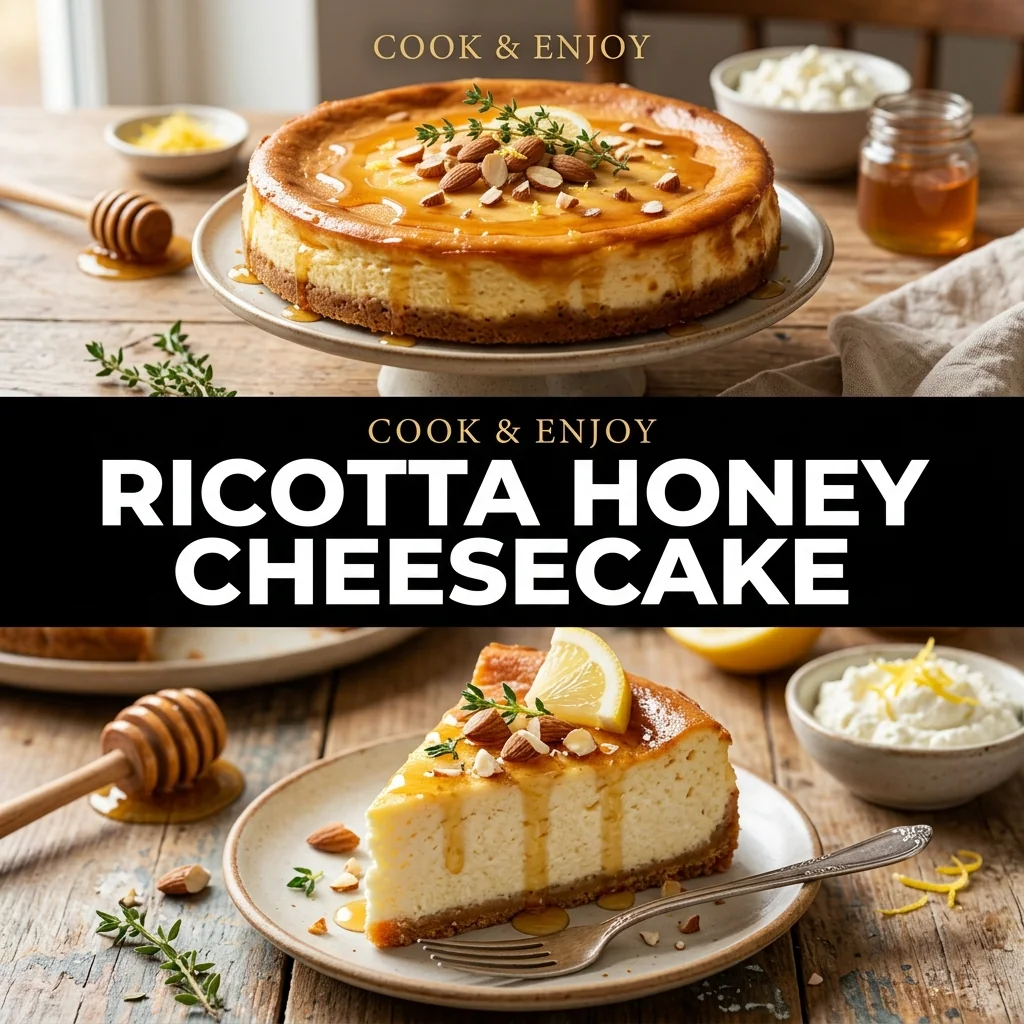
Ricotta Honey Cheesecake offers an elegant, less cloying alternative to dense cream cheese cakes, drawing inspiration from classical Italian baking. In regional Italian traditions, bakers pair rich sheep or cow milk curds with local raw honey and aromatic citrus zest to create an airy, delicate, cloud-like consistency. By combining drained whole-milk ricotta with a modest portion of standard cream cheese, this recipe achieves both structural stability and an ethereal crumb. Fragrant wildflower honey lends floral complexity without overwhelming the delicate dairy notes, while fresh lemon zest cuts cleanly through the fat. Ground almonds mixed into the shortbread base provide subtle nuttiness that beautifully complements the honey-kissed filling.
The Importance of Processing Ricotta
Traditional Italian cheesecakes frequently carry a rustic, granular texture resulting from curdled milk solids. While rustic style appeals to some, processing drained ricotta in a high-speed food processor shears curds down into a velvety emulsion resembling mascarpone. Blending this smooth ricotta with a small block of room-temperature cream cheese introduces necessary fat and moisture binding. This hybrid method guarantees a sliceable cake that feels remarkably light on the palate while preserving the sophisticated, delicate character of artisanal Italian confections.
Honey as a Structural Sweetener
Honey is hygroscopic, meaning it attracts and retains atmospheric moisture more aggressively than crystallized sucrose. Substituting part of the granulated sugar with liquid wildflower honey introduces deep aromatic nuances, ranging from delicate floral notes to mild herbal undertones. However, excessive liquid sweetener can weaken the egg protein network. To maintain balance, this recipe incorporates a single tablespoon of cornstarch alongside granulated sugar, providing structural reinforcement so the cake sets cleanly while retaining its tender texture.
Baking Without a Water Bath
Unlike dense New York cheesecakes that demand humid water baths, ricotta-based batters thrive in dry heat. The lower fat and higher moisture profile of ricotta releases steam efficiently during baking, allowing the top to acquire a faint golden hue reminiscent of rustic European tarts. Baking on a simple rimmed baking sheet reduces preparation complexity. Gradual cooling inside the cracked oven remains critical, protecting the airy matrix from collapsing inward as the trapped steam slowly cools and stabilizes.
Before you start
Draining the ricotta is an essential step that must not be skipped. Standard commercial whole-milk ricotta contains substantial free water that will separate during baking, yielding a soggy crust and a watery, split custard. Place the ricotta in a fine-mesh strainer lined with two layers of cheesecloth over a bowl, cover with plastic wrap, and let it drain in the refrigerator overnight to remove excess liquid before processing. Drain the ricotta overnight in the refrigerator before beginning; this additional preparation is not included in the recipe time.
THE RECIPE
Ricotta Honey Cheesecake
10 servings · 25 minutes preparation · 75 minutes cooking · 360 minutes cooling, chilling or resting
Ingredients
Step-by-step instructions
- Preheat your oven to 325°F (163°C) with the rack positioned in the center. Combine shortbread cookie crumbs, ground almond flour, and melted butter in a small bowl until evenly moistened. Press firmly across the bottom of a 9-inch springform pan and bake for 10 minutes until lightly browned; cool completely on a wire rack.
- Ensure the ricotta has been drained in a cheesecloth-lined sieve in the refrigerator in the refrigerator for at least 8 hours to shed whey. Transfer drained ricotta into a food processor and process on high for 1 to 2 minutes until completely smooth, glossy, and free of typical curd graininess.
- Transfer the smoothed ricotta into a large mixing bowl along with the room-temperature cream cheese. Beat with a hand mixer on low speed for 2 minutes until combined and uniform, scraping down the bowl with a silicone spatula.
- Whisk wildflower honey, granulated sugar, cornstarch, finely grated lemon zest, vanilla bean paste, and sea salt together in a separate small bowl. Pour this honey slurry into the cheese base and mix on low speed until homogeneous.
- Add the eggs one by one, mixing on the lowest speed setting just until incorporated into the batter, taking care not to whip excessive air into the mixture. Pour the batter over the cooled crust in the 9-inch springform pan.
- Place the springform pan on a rimmed baking sheet. Bake at 325°F (163°C) without a water bath for 55 to 65 minutes until the perimeter is pale golden and firm, while the center displays a soft, gentle jiggle when tapped.
- Turn off the oven heat, leave the door closed for 15 minutes, then crack the oven door open 4 inches with a wooden spoon and rest for 45 minutes. Remove to a wire rack to cool to room temperature for 1 hour, then chill in the refrigerator for at least 4 hours before serving.
Kitchen notes
Draining the ricotta is an essential step that must not be skipped. Standard commercial whole-milk ricotta contains substantial free water that will separate during baking, yielding a soggy crust and a watery, split custard. Place the ricotta in a fine-mesh strainer lined with two layers of cheesecloth over a bowl, cover with plastic wrap, and let it drain in the refrigerator overnight to remove excess liquid before processing. Drain the ricotta overnight in the refrigerator before beginning; this additional preparation is not included in the recipe time.
Storage & make-ahead
Store the ricotta cheesecake covered loosely with foil or beneath a cake dome in the refrigerator for up to 4 days. Because ricotta has a naturally light, delicate structure, avoid freezing this cake, as freezing may change the texture and cause weeping upon thawing. Serve chilled or slightly cool, drizzling fresh honey over individual slices immediately before plating.
An original recipe guide inspired by themes in our Pinterest research. Recipe has not been independently kitchen-tested. AI-generated image is illustrative; your finished dish may look different.
Frequently asked questions
Can I use part-skim ricotta cheese instead of whole-milk?
Whole-milk ricotta is recommended for the intended richness. Part-skim ricotta can give a leaner, firmer result; moisture and added stabilizers vary by brand, so drain the cheese thoroughly in the refrigerator.
What variety of honey works best for this recipe?
A medium-bodied wildflower honey or orange blossom honey yields the most balanced flavor. Darker varieties like buckwheat honey can overpower the gentle ricotta, while ultra-mild clover honey gets lost against the rich eggs and cream cheese. Choose pure, unfiltered raw honey for maximum floral expression.
Why did my ricotta cheesecake puff up like a soufflé and crack?
Excessive aeration during the egg-mixing stage causes the batter to trap pockets of air. In the oven, this air expands, forcing the cake to soufflé up rapidly and subsequently crack upon cooling. Always blend eggs on the lowest mixer speed until just combined.


